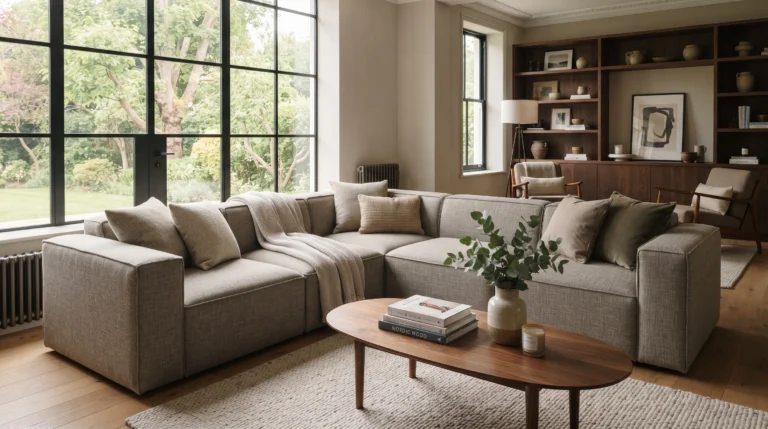

Stepping across the threshold of a Victorian terrace often reveals a masterclass in spatial proportion: narrow hallways that expand dramatically into high-ceilinged reception rooms, framed by tall sash windows and ornate ceiling cornices. Embracing maximalist living room decor within these historic footprints is not merely an interior design choice; it is an authentic nod to the late nineteenth-century ethos of collection, curiosity, and artistic abundance. When the philosophy of “more is more” meets the grand architectural bones of a Victorian build, the results are nothing short of transformative.
The Victorian Canvas
Before introducing layered jewel tones, heavy textiles, and gallery walls, it pays to understand the room’s permanent architecture. Victorian builders favored structural drama over flat, uninspired drywall. Original features such as cast-iron fireplaces, deep skirting boards, and picture rails provide natural resting points for the eye, preventing a maximalist scheme from devolving into visual chaos.
Working with a narrow terraced layout requires balancing visual weight. Because front reception rooms often feature large bay windows that flood the space with natural light, they can easily support deep, saturated paint colors that would overwhelm a modern, low-ceilinged apartment. Leaning into these structural quirks turns potential spatial limitations into distinct zones for conversation and relaxation.
Establishing a Cohesive Color Palette
Maximalism thrives on color, but successful maximalist living room decor relies on a disciplined underlying palette. Randomly throwing every shade of the rainbow into a Victorian parlor creates noise rather than harmony. Instead, draw inspiration from late-Victorian design trends by anchoring the room in rich, moody hues.
- Deep Jewel Tones: Emerald green, sapphire blue, rich plum, and burnt ochre absorb the natural shadows cast by ornate crown moldings.
- Warm Neutrals for Contrast: Creamy alabaster or soft taupe on ceilings and trim prevents the room from feeling cave-like.
- Metallic Accents: Antiqued brass, aged bronze, and heavy gold-leaf frames catch ambient lamplight, adding a warm, shimmering layer to darker walls.
Layering Patterns Without Visual Clutter
The hallmark of authentic Victorian maximalism is the unapologetic mixing of patterns. Pairing damask wallpapers with patterned wool rugs and striped velvet upholstery sounds perilous on paper, but when executed with attention to scale, it creates an atmosphere of timeless luxury.
The secret to pattern mixing lies in varying the physical scale of the motifs. Pair a large-scale botanical or floral wall covering with medium-sized geometric elements on soft furnishings, such as cushions or pouffes. Ground these competing patterns with a large, traditional Persian or Oriental rug featuring a prominent central medallion. The rug acts as a visual anchor, pulling the disparate textile elements together into a unified whole.
Curating the Ultimate Gallery Wall
Blank walls are practically a sin in maximalist interior design. Victorian homeowners loved displaying their travels, interests, and family histories across every available vertical surface, often hanging art from picture rails in dense, overlapping clusters.
To recreate this effect in a terrace living room, collect a diverse assortment of artwork ranging from classical landscape oil paintings and botanical sketches to contemporary graphic prints and framed vintage mirrors. Mix frame styles fearlessly-combine ornate, heavily carved gilded plaster frames with slim, dark wood borders. Hang the pieces close together, leaving only a few inches of wall space between them, starting just above the sofa or the picture rail and extending upward to maximize the vertical expanse of the room.
Selecting Scale-Appropriate Furniture
One of the most common mistakes in styling a Victorian terrace is under-furnishing out of a fear of overcrowding. High ceilings and generous floor-to-ceiling volumes demand substantial, grounded furniture pieces that command the space.
Invest in a deep, button-tufted velvet Chesterfield sofa or a high-backed armchair upholstered in rich jewel-toned fabrics. These tactile materials not only look opulent but also absorb sound, softening the acoustic echo often found in rooms with original wooden floorboards and high plaster ceilings. Arrange seating in a conversational, social cluster rather than pushing every chair flat against the perimeter walls. Floating a sideboard or a low bookshelf behind a central sofa helps carve out distinct functional zones within an open-plan or broken-plan layout.
Illuminating the Space with Layered Lighting
The overhead “big light” is the sworn enemy of atmospheric maximalist decor. Victorian living rooms relied on the soft, flickering glow of gas lamps and fireplaces, an effect best replicated today through a heavily layered lighting strategy.
Begin with a grand central statement fixture-such as a cascading crystal chandelier or a polished brass multi-arm pendant-hung from an original plaster ceiling medallion. Supplement this with wall sconces placed strategically to highlight architectural moldings and artwork. Finish the scheme with low-level table lamps featuring pleated silk or patterned fabric shades, creating pools of warm, diffused light that make rich wall colors and velvet textures come alive after dark.
Styling Surfaces and Displaying Collections
In a maximalist home, flat surfaces are invitations for curation. Whether dealing with a marble mantelpiece, a built-in alcove bookshelf, or a vintage coffee table, the goal is to display personal treasures with intentionality rather than cluttering them indiscriminately.
Transform your bookshelves into a modern cabinet of curiosities by mixing leather-bound volumes with small potted plants, antique brass clocks, framed family photographs, and collected ceramics. On the mantelpiece, position a large, ornate mirror as the undeniable focal point, flanked by tapered candles in heavy holders and trailing foliage that softens the rigid lines of the hearth. By honoring the historical character of your Victorian terrace while fearlessly expressing your personal aesthetic through color, texture, and pattern, you create a vibrant living space that feels both deeply rooted in history and entirely your own.