Staring at cloudy, chalky white scales across your shower enclosure can make even the most dedicated cleaner want to give up. Those stubborn marks are not ordinary dirt; they are deposits of calcium, magnesium, and other minerals left behind every time water evaporates. Standard body washes and gentle organic soaps will not cut through this crusty buildup. To restore your glass or acrylic shower panels to a crystal-clear shine, you need to understand the chemistry of mineral deposits and apply the right techniques.
Why Hard Water Stains Form on Shower Panels
Water flowing from municipal supplies or private wells often carries high concentrations of dissolved minerals. When you take a hot shower, water splashes against the walls and doors. As the moisture evaporates into the bathroom air, it leaves solid mineral crystals behind. Over weeks and months, these tiny crystals compound, forming an opaque film that dulls the appearance of glass, tile, and acrylic panels.
Unlike soap scum, which feels slick or greasy, hard water stains feel rough, gritty, and chalky to the touch. Left untreated for too long, these minerals can actually pit and etch the microscopic pores of glass surfaces. Once glass reaches this stage of permanent damage, chemical cleaners will no longer help, leaving replacement as the only true fix. Catching the buildup early is essential for effortless removal.
Essential Household Ingredients for Mineral Removal
You do not need toxic industrial chemicals to break down hard water scale. Because hard water minerals are distinctly alkaline, they require an acid to neutralize and dissolve them. Several common pantry items provide powerful cleaning action without harsh fumes:
- White Distilled Vinegar: The acetic acid in vinegar naturally breaks down calcium and lime bonds with minimal effort.
- Lemon Juice: Packed with citric acid, lemon juice offers a pleasant scent while effectively lifting mineral haze from delicate surfaces.
- Baking Soda: Acting as a mild, non-scratch abrasive, baking soda helps scour away softened deposits without scratching glass or glazed tile.
- Blue Dish Soap: Adding a few drops to your vinegar mix helps the liquid cling to vertical shower panels instead of immediately sliding down the drain.
- Microfiber Cloths and Non-Abrasive Sponges: Essential tools for wiping down treated surfaces without leaving swirl marks or scratches.
Step-by-Step Guide to Cleaning Glass Shower Panels
Glass panels show mineral deposits more clearly than any other material in the bathroom. Follow this proven method to melt away years of accumulated scaling.
- Mix the Solution: Combine equal parts white distilled vinegar and water in a spray bottle. For heavy buildup, microwave the liquid for 30 seconds, as warm acid works significantly faster than cold acid. Add a teaspoon of blue dish soap to improve surface adhesion.
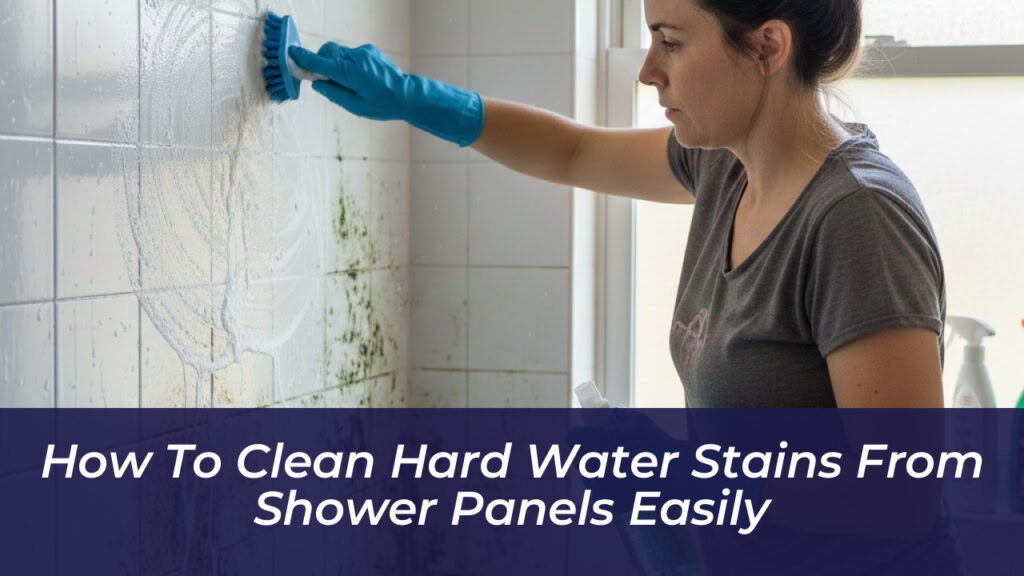
- Apply and Dwell: Spray the warm solution liberally across the entire shower panel, working from top to bottom. Allow the liquid to sit undisturbed for 15 to 20 minutes. This dwell time lets the acetic acid penetrate the mineral layers.
- Scrub Gently: Take a non-abrasive blue scrubbing sponge and work in gentle circular motions across the panel. For exceptionally thick crusts around the corners, use a fine-grade 0000 steel wool pad on completely dry glass to buff away remnants without scratching.
- Rinse and Dry: Flush the panel thoroughly with clean, cold water to wash away loosened minerals and vinegar residue. Immediately buff the glass dry with a clean microfiber cloth to prevent fresh water spots from forming instantly.
- Apply a Protective Barrier: Spray a water-repellent glass treatment onto the clean panel. This creates an invisible barrier that causes future water droplets to bead up and roll right off the surface.
Cleaning Acrylic and Fiberglass Shower Panels
If your shower features molded acrylic or fiberglass walls rather than glass, you must alter your approach. Softer plastic surfaces scratch easily, and harsh scouring pads will permanently ruin their glossy finish.
Create a thick paste by mixing baking soda with a small amount of water. Apply the paste directly to the stained areas of the panel using a soft microfiber cloth or a non-scratch sponge. Gently massage the paste into the mineral deposits using circular motions. The baking soda provides just enough grit to lift the film without abrading the acrylic. Rinse the walls thoroughly with warm water and dry them completely with a soft towel.
Preventing Future Hard Water Buildup
Deep cleaning your shower every weekend is exhausting. The most effective strategy for managing hard water is stopping the minerals from drying on your panels in the first place.
- Keep a Squeegee Handy: Mount a small squeegee inside your shower enclosure. Train everyone in the household to spend 30 seconds wiping down the panels immediately after finishing a shower.
- Improve Bathroom Ventilation: Run your exhaust fan during the shower and leave it on for at least twenty minutes afterward to lower humidity and speed up evaporation control.
- Install a Water Softener or Filter: Consider investing in a whole-home ion-exchange water softener or a specialized showerhead filter to remove calcium and magnesium directly at the source.
When DIY Methods Are Not Enough
Sometimes mineral scaling passes the point of no return. If you have scrubbed your shower panels repeatedly with vinegar and baking soda, yet the glass still feels rough and looks cloudy, the surface is likely permanently etched. At this stage, chemical solutions cannot fill microscopic pits in the material, and you may need to consult a professional glass restoration specialist or replace the panels entirely.