Bathrooms do not have to look like identical showroom displays. White subway tiles, chrome fittings, and standard white vanities create a clean environment, but they rarely reflect personal style or warmth.
The most captivating bathrooms break away from these conventions through unexpected colour choices, tactile textures, repurposed furniture, and architectural lighting. Whether you are updating a compact downstairs cloakroom or designing a spacious primary ensuite, creating an unconventional interior is not about cluttering the space with eccentric novelties. It comes down to introducing deliberate, well-considered details that shift the room from purely utilitarian to genuinely memorable.
Here are 25 distinctive bathroom ideas that bring character, depth, and individuality to your home.
1. Wrap the Room in Saturated Colour Drenching
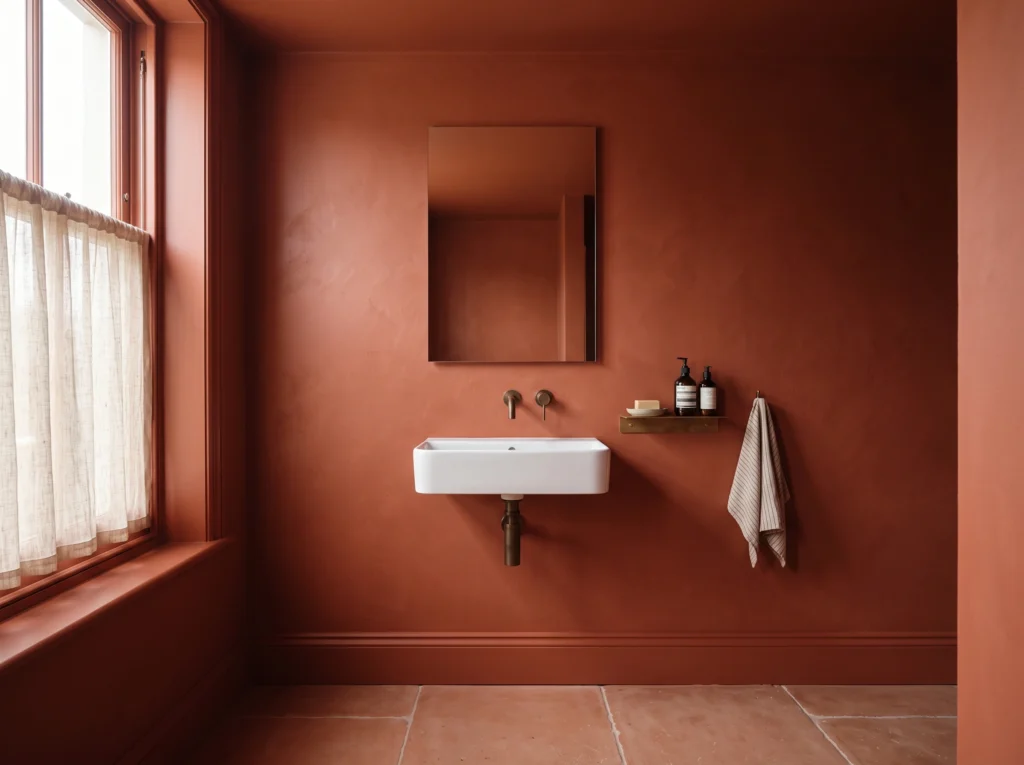
Rather than restricting bold paint to a single feature wall, extend a deep, saturated shade, such as rich terracotta, olive green, or midnight blue, across every wall, the skirting boards, and even door frames. This colour drenching technique eliminates harsh visual breaks, making fixtures stand out while giving the space an intimate, cocoon-like atmosphere.
For bathroom walls, choose dedicated moisture-resistant bathroom paints, often available in soft eggshell or satin finishes, that are formulated to cope with humidity without peeling or flashing.
2. Introduce Unconventional High-Contrast Pairings
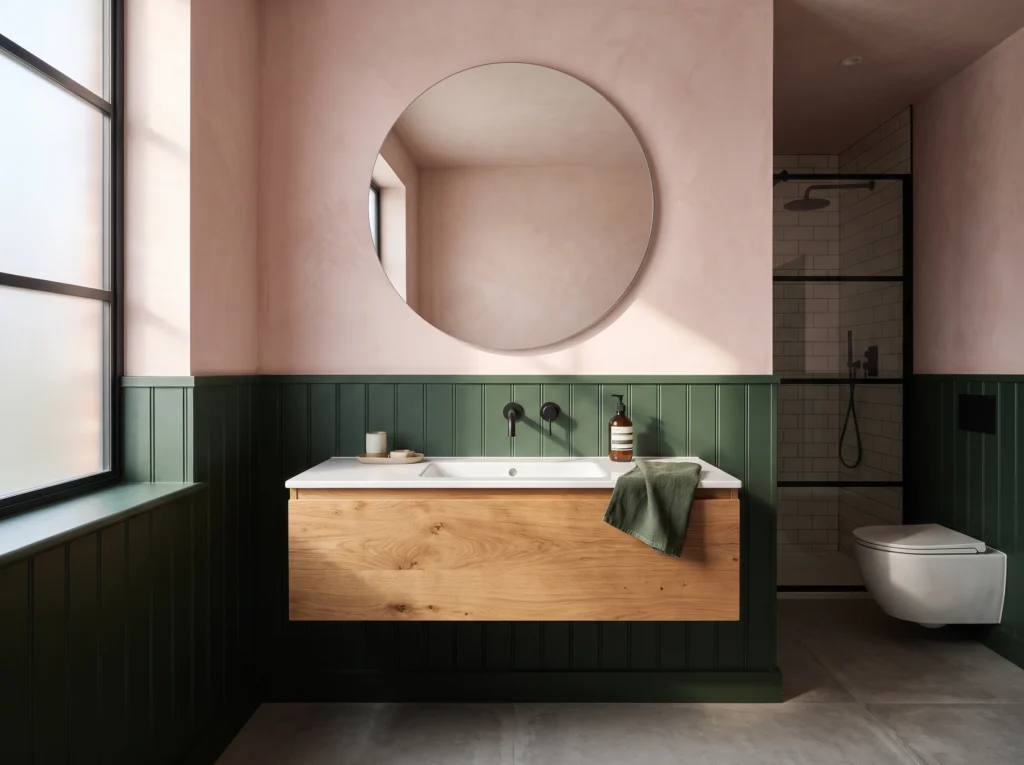
Standard bathroom palettes often stay within safe, closely matched neutrals. Creating high-contrast combinations immediately shifts the mood:
- Deep forest green paired with raw, warm oak
- Matte black fittings set against soft, plaster-pink walls
- Rich ochre accents alongside brushed unlacquered brass
- Charcoal wall panelling balanced by pale stone surfaces
Repeating one of these accent tones through towels, joinery, or hardware keeps the contrast feeling deliberate rather than haphazard.
3. Place a Freestanding Bath as an Off-Centre Sculpture
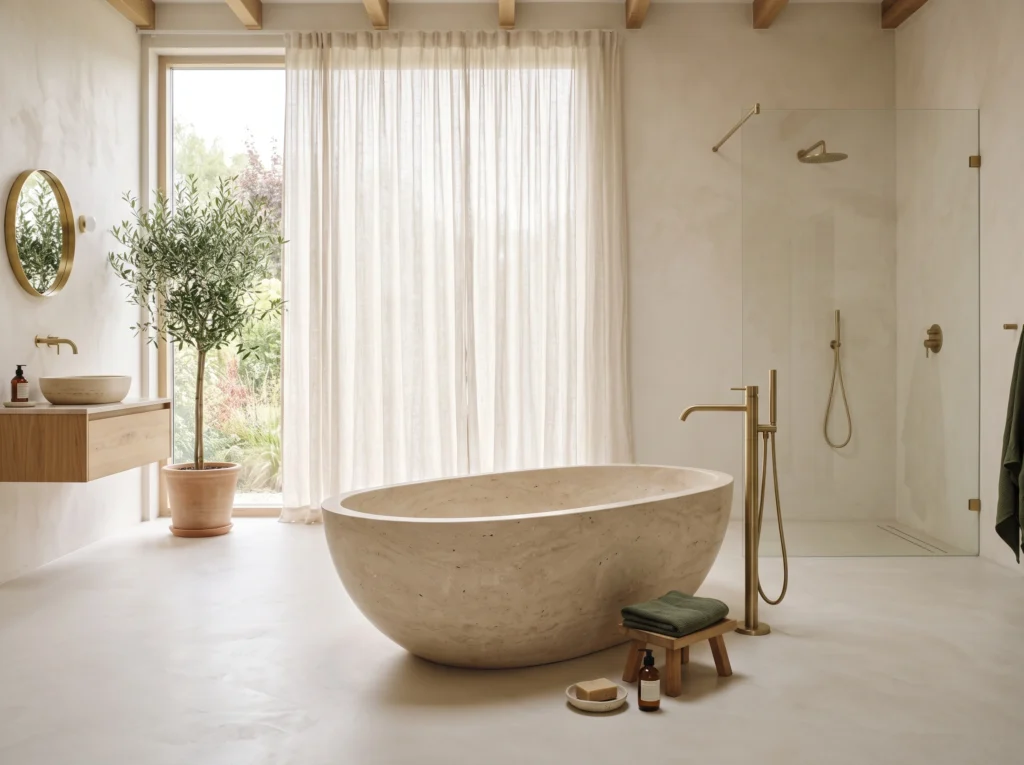
Most bathtubs are pushed neatly against walls or tucked into alcoves. If floor space permits, positioning a freestanding stone or cast-iron bath at a slight angle, or setting it forward from a feature wall, transforms it into an architectural centrepiece. Leaving clear circulation space around the tub lets the silhouette breathe, giving the bathroom the relaxed feel of an open-concept living area.
4. Break the White Ceramic Rule with a Coloured Tub
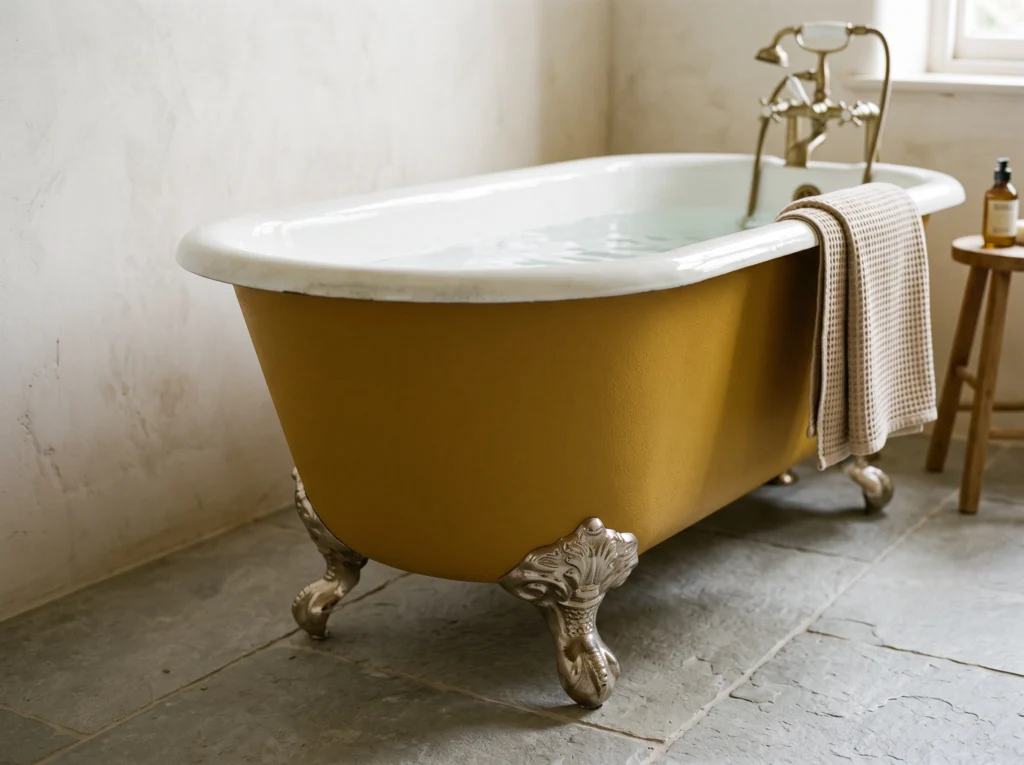
White sanitaryware is the default across modern homes, which is precisely why a coloured bathtub makes an immediate impression.
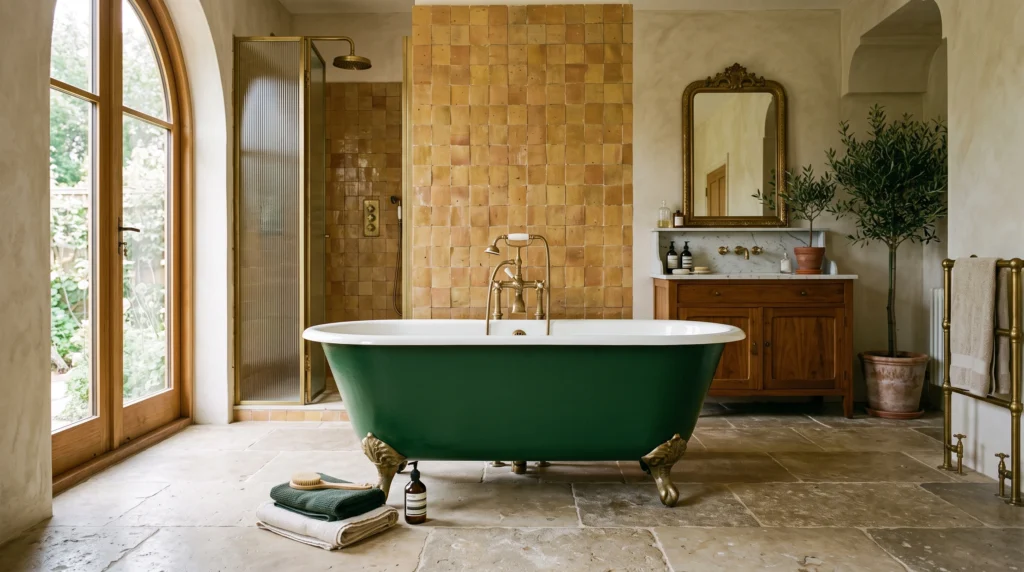
A classic roll-top bath with an exterior finished in deep racing green, mustard yellow, or matte slate provides a strong visual anchor. Keeping surrounding wall tiles subtle allows the coloured tub to remain the clear protagonist of the room.
5. Pair Contrasting Tile Formats and Textures
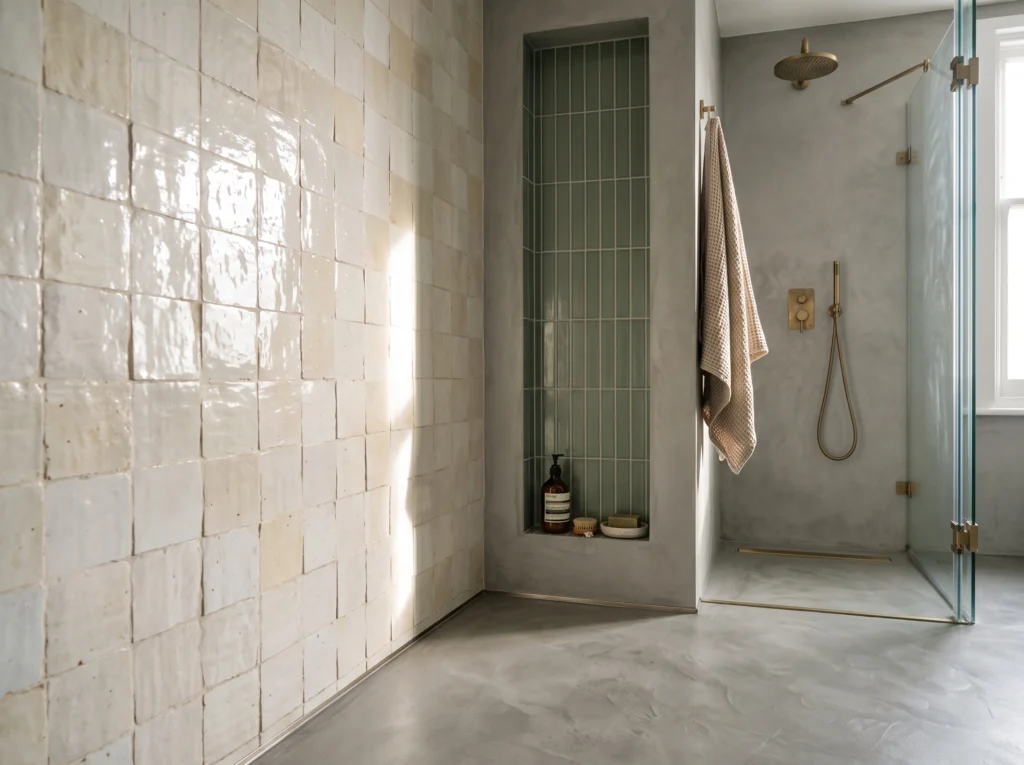
Using the same smooth ceramic tile across every wall often leaves a bathroom feeling flat. Instead, layer contrasting scales and textures:
- Handmade Zellige tiles with subtle surface irregularities on the walls to catch natural light unevenly
- Large-format microcement, slate, or poured resin across the floor to eliminate heavy grout lines
- Vertical stacked finger tiles inside shower niches to draw the eye upward
This tactile layering creates rich visual depth without relying on loud colours.
6. Ground the Space with a Graphic Statement Floor
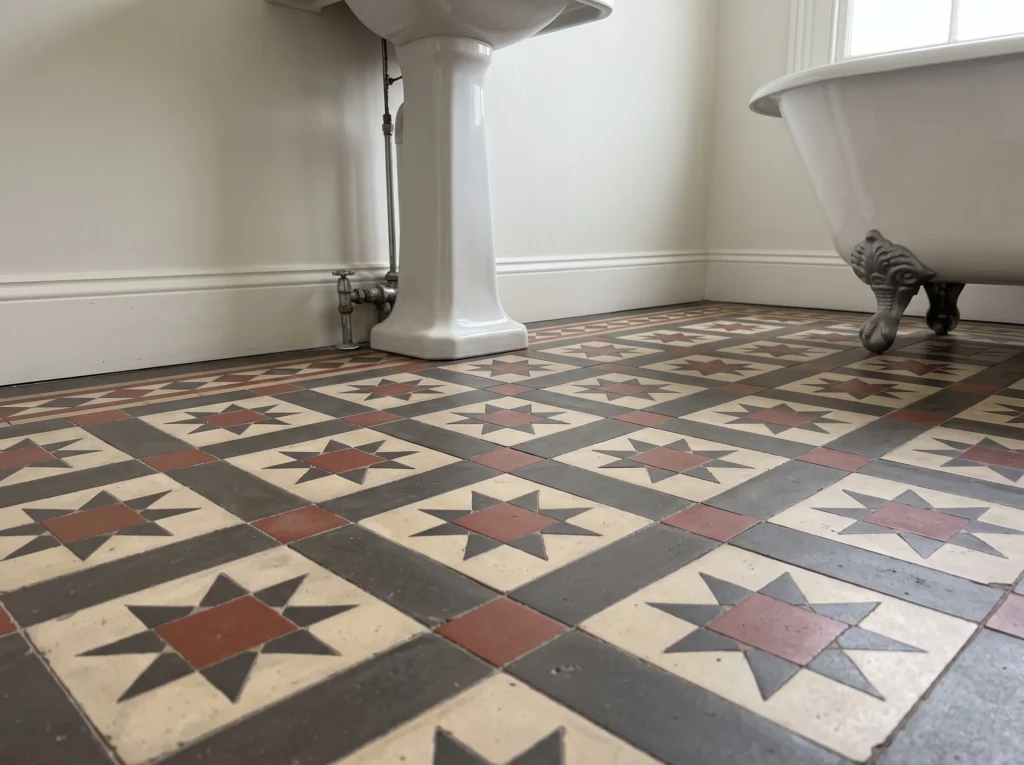
When wall space is limited by mirrors, heated towel rails, and shower screens, the floor becomes the primary canvas. Victorian-inspired geometric tiles, modern checkerboard layouts in honed marble, or encaustic patterns add substantial character. Pairing an intricate floor pattern with simple, clean wall finishes ensures the room feels grounded rather than chaotic.
7. Bring in Bathroom-Suitable Patterned Wallpaper
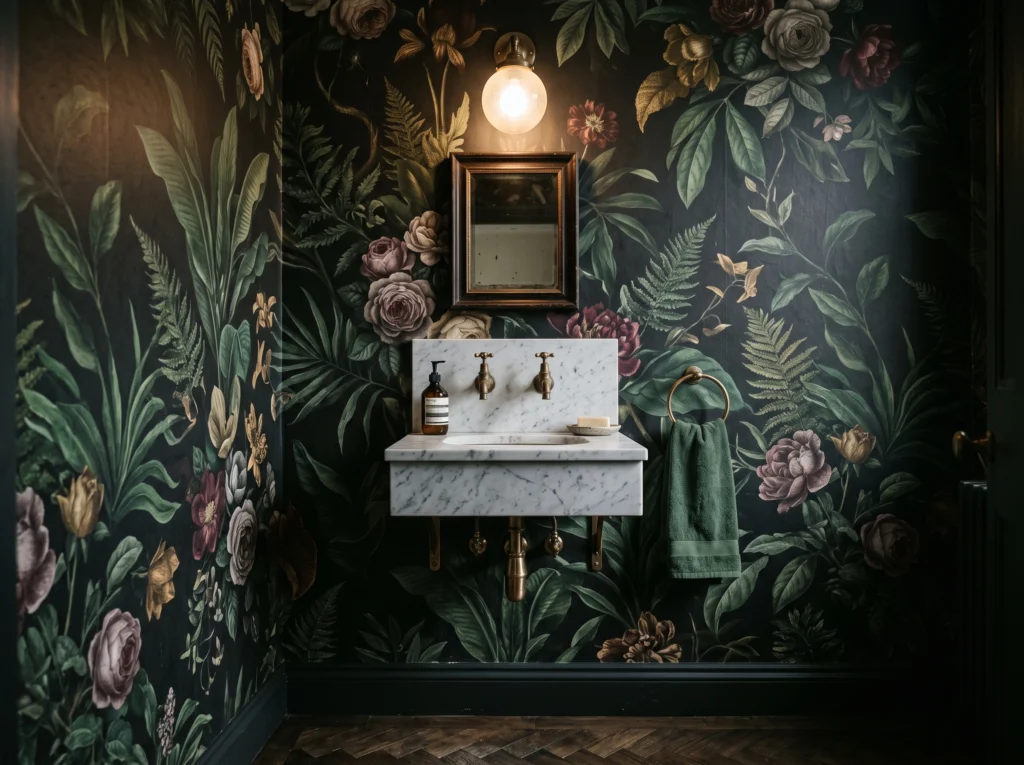
Wallpaper introduces an organic warmth that ceramic tiles simply cannot replicate. Large-scale botanical prints, moody historic damasks, or playful pictorial murals transform sterile spaces. In family bathrooms where steam is a regular factor, look for heavy-duty, scrubbable vinyl wallcoverings specifically rated for high-humidity environments, following the manufacturer’s recommended adhesive system.
Downstairs cloakrooms and well-ventilated powder rooms offer the ideal low-moisture setting to experiment freely with standard decorative papers.
8. Turn a Compact Cloakroom into a Moody Jewel Box
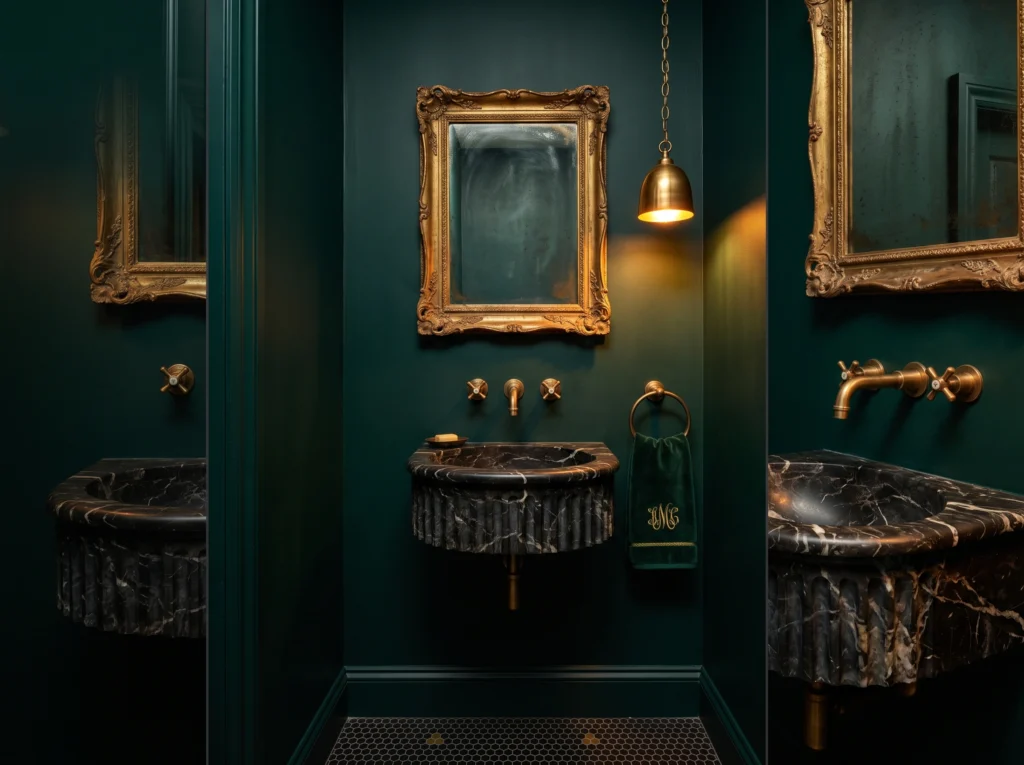
Small powder rooms do not need light, airy colours to feel successful. Because these rooms are transitional spaces used briefly by guests, you can lean into dramatic, high-impact design choices:
- Dark, enveloping paint on all surfaces
- A wall-mounted marble or fluted stone basin
- Unlacquered brass tapware that develops a natural patina over time
- A vintage pendant light providing soft, ambient warmth
9. Build Depth Through Low-Level Atmospheric Lighting
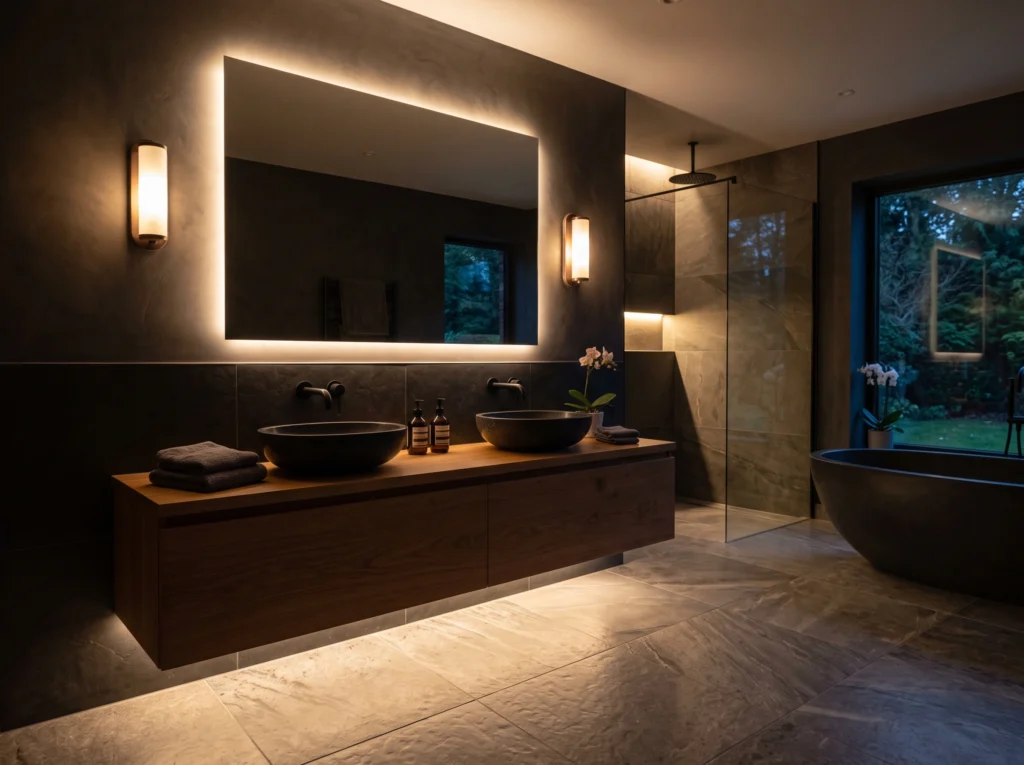
Most standard bathrooms rely exclusively on harsh, central ceiling downlights. An unconventional design uses layered, low-glare lighting to create a restorative, spa-like feel. Combine recessed LED wash channels beneath floating vanities with eye-level wall sconces rated appropriately for their specific bathroom installation zone and local electrical standards.
Selecting warm-white bulbs (around 2700K) ensures stone, wood, and tile finishes appear rich and inviting.
10. Curate Mismatched, One-of-a-Kind Accessories
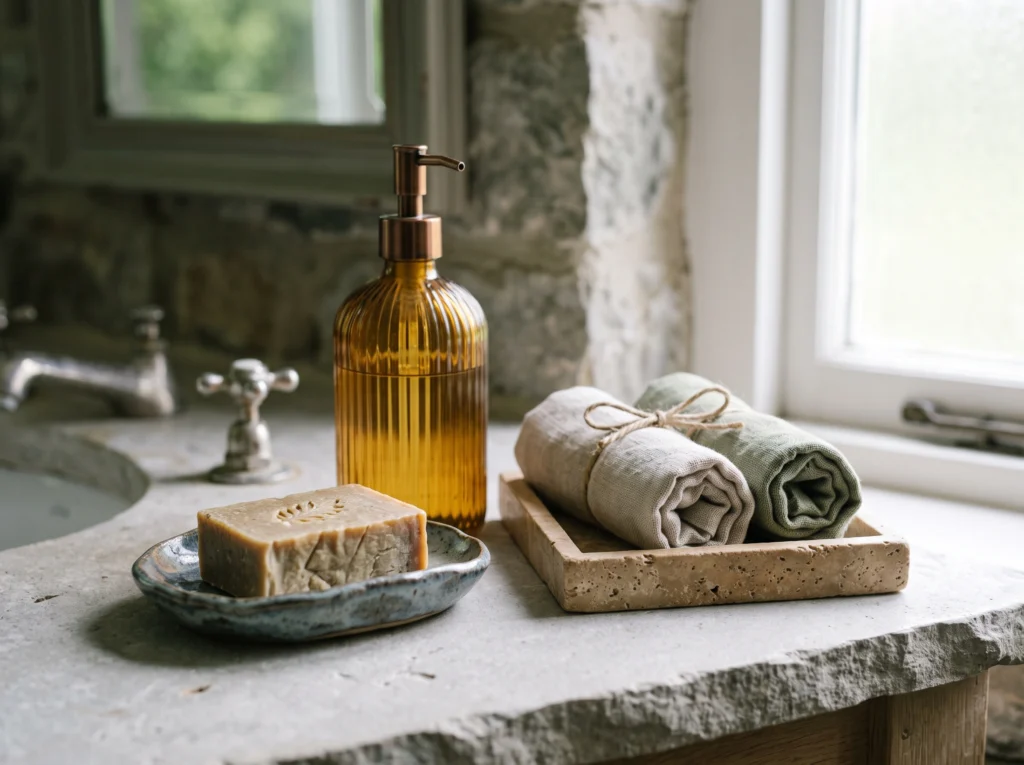
Coordinated matching sets, including identical chrome dispensers, tumblers, and bins, often give bathrooms a sterile, hotel-chain quality. Elevate everyday rituals by curating individual pieces: a hand-thrown ceramic soap dish, a ribbed glass canister for cotton pads, a vintage marble tray, or split bamboo hangers and hand-forged iron hooks for bathrobes.
11. Hang Framed Gallery Artwork Outside the Splash Zone
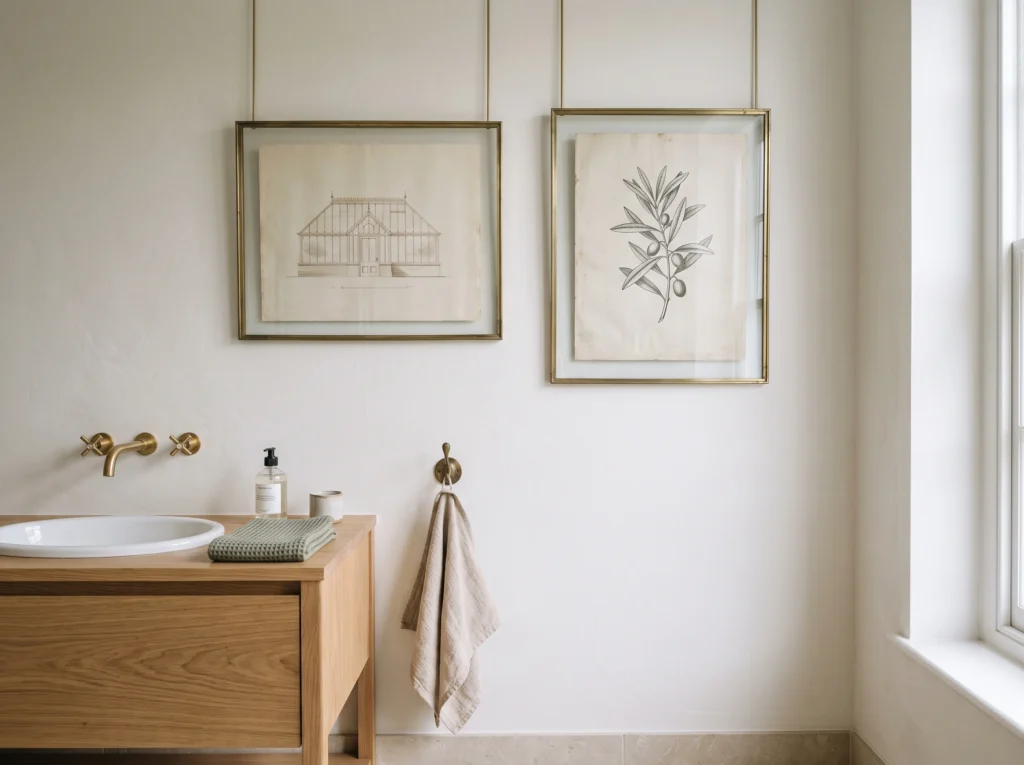
Bathrooms are frequently neglected when it comes to wall art. Treating the space like an extension of your living room by hanging framed lithographs, architectural sketches, or oil paintings immediately softens tiled walls. Ensure artwork is properly framed behind glass and positioned safely away from direct shower spray, heavy condensation, or steam paths.
12. Choose an Asymmetrical or Irregular Statement Mirror
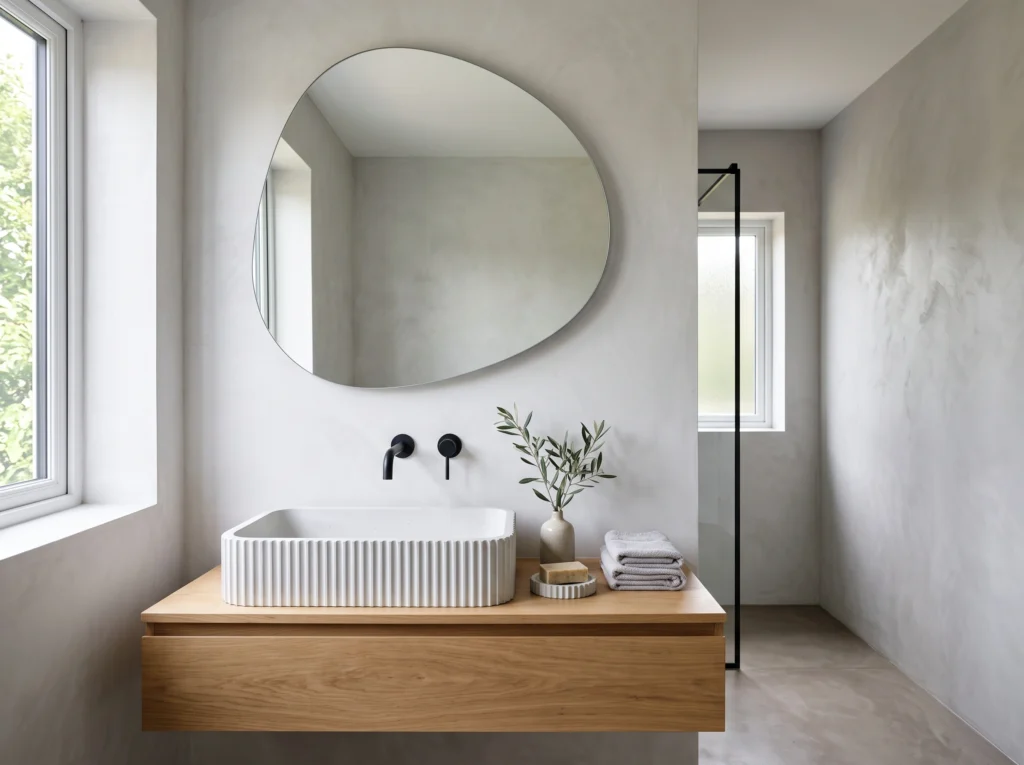
Rectangular and circular mirrors are predictable. Introducing an asymmetrical pebble mirror, an arched silhouette, or a heavy vintage wooden frame introduces a sculptural element to the vanity area. In a minimalist bathroom, an unusual mirror acts as a piece of functional wall sculpture.
13. Juxtapose Contemporary Fittings with Antique Accents
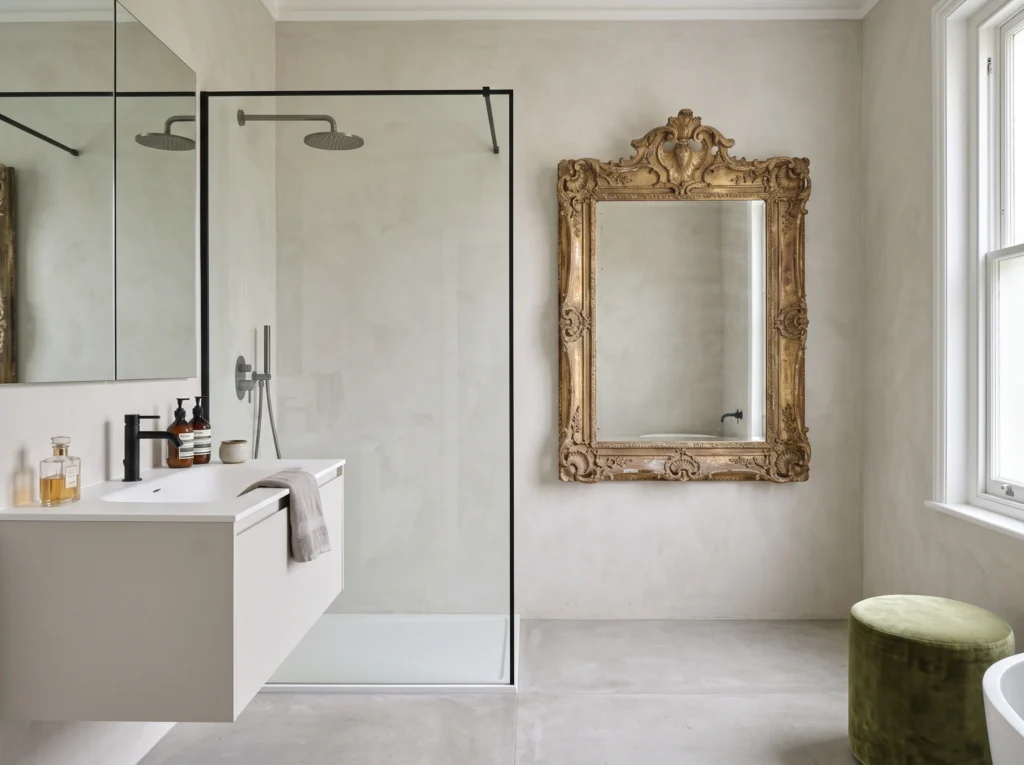
Designing an interesting bathroom rarely requires sticking to a single historical era. Combining sleek, wall-hung sanitaryware and frameless glass shower panels with a weathered antique mirror or traditional brass crosshead taps prevents the room from feeling like a catalogue cutout. The tension between old and new textures adds authenticity to the design.
14. Convert a Vintage Chest or Credenza into a Bespoke Vanity
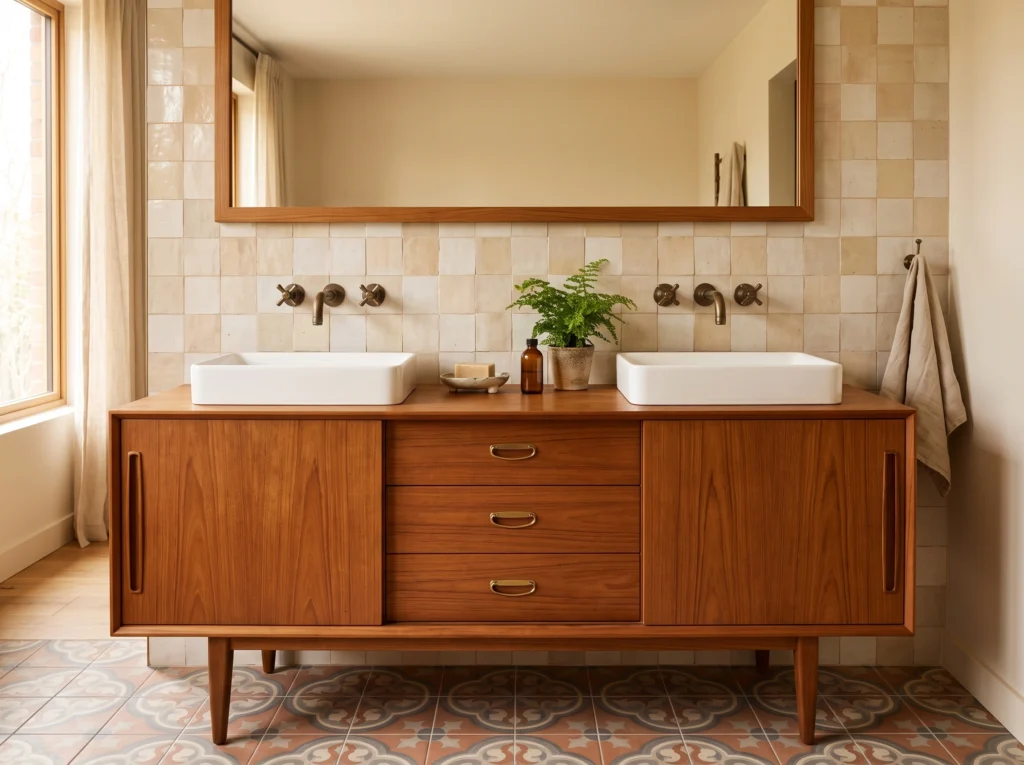
Off-the-shelf vanity units often look boxy and generic. Adapting a mid-century teak sideboard, a Victorian marble-topped washstand, or an antique wooden chest into a basin unit creates an entirely bespoke focal point, much like choosing customisable furniture pieces that are tailored specifically to your room layout.
Work with an experienced plumber to reconfigure internal drawers around the waste traps, and protect natural timber surfaces with appropriate water-resistant sealants suited to daily splash exposure.
15. Break Cold Surfaces with Reclaimed Timber Shelving
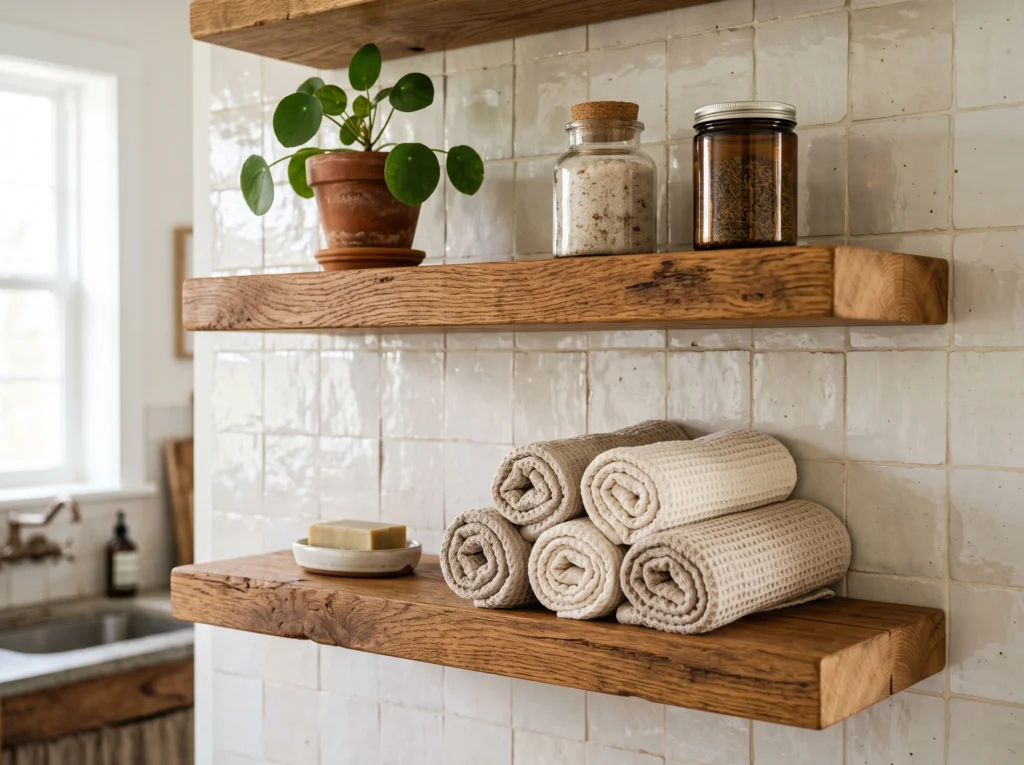
A bathroom dominated by glass, chrome, and ceramic can easily feel uninviting. Open shelving crafted from reclaimed oak or rustic scaffold boards adds natural warmth and grain. Use open shelves sparingly for neatly rolled waffle towels, artisan ceramics, and candles, keeping everyday toiletries concealed in closed storage to avoid clutter.
16. Select Humidity-Tolerant Plants Suited to Your Light Levels
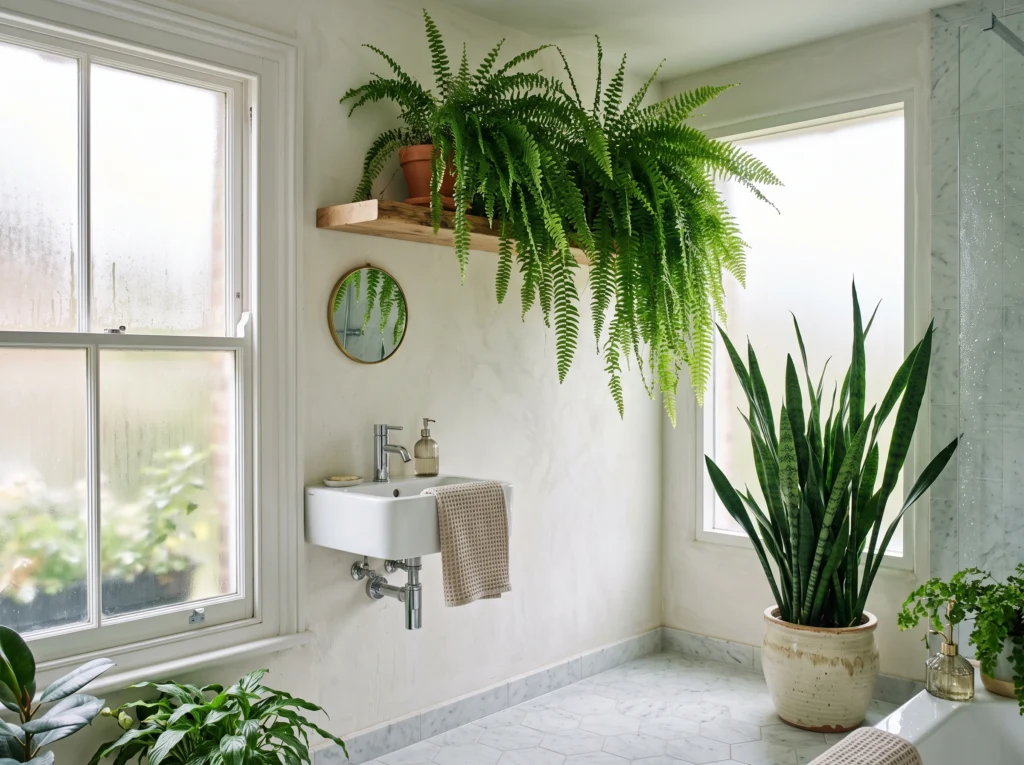
Greenery introduces life and organic movement into a tiled space. The key is matching plant species to both humidity and available daylight:
- For bright, indirect light: Boston Ferns and Maidenhair Ferns can appreciate the higher humidity found in a well-lit bathroom.
- For lower-light bathrooms: Snake Plants (Dracaena trifasciata, formerly Sansevieria), Cast Iron Plants (Aspidistra elatior), and Golden Pothos adapt well to moderate light while tolerating humid air.
Ensure pots have adequate drainage so moisture does not sit at the root level.
17. Introduce Fluted or Reeded Glass Shower Enclosures
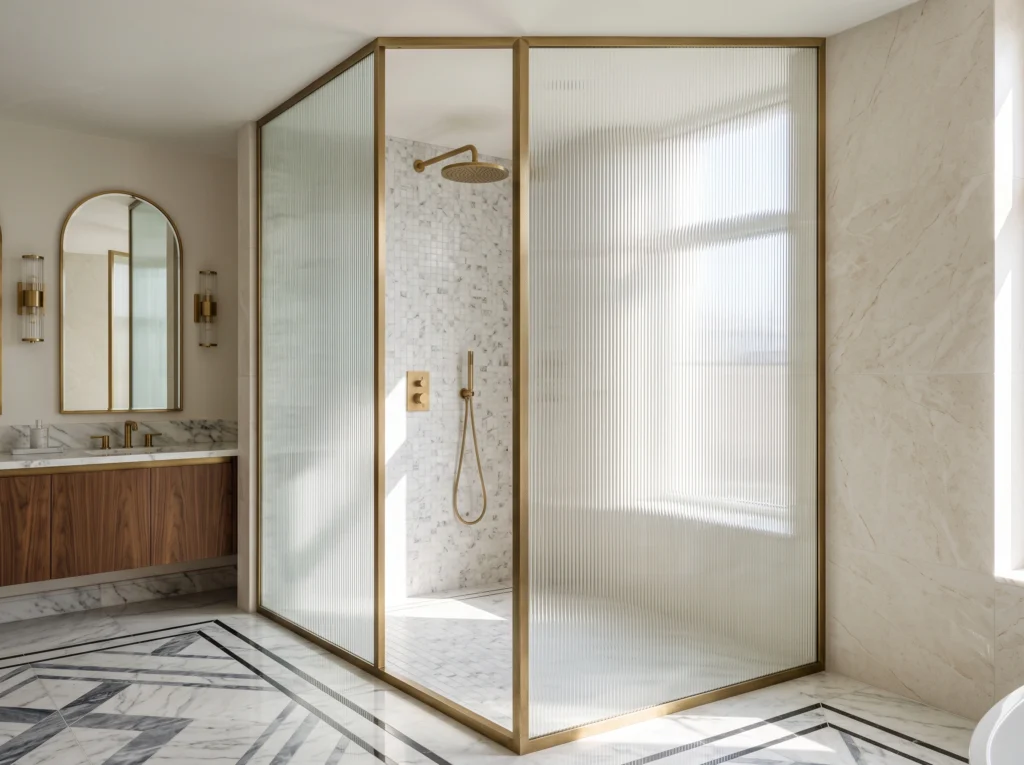
While clear glass screens are standard, fluted or reeded glass panels bring an understated Art Deco texture to the shower zone. The vertical ridges softly blur lines and diffuse light, providing privacy without blocking daylight or making the shower enclosure feel enclosed.
18. Build a Floor-to-Ceiling Vertical Splashback
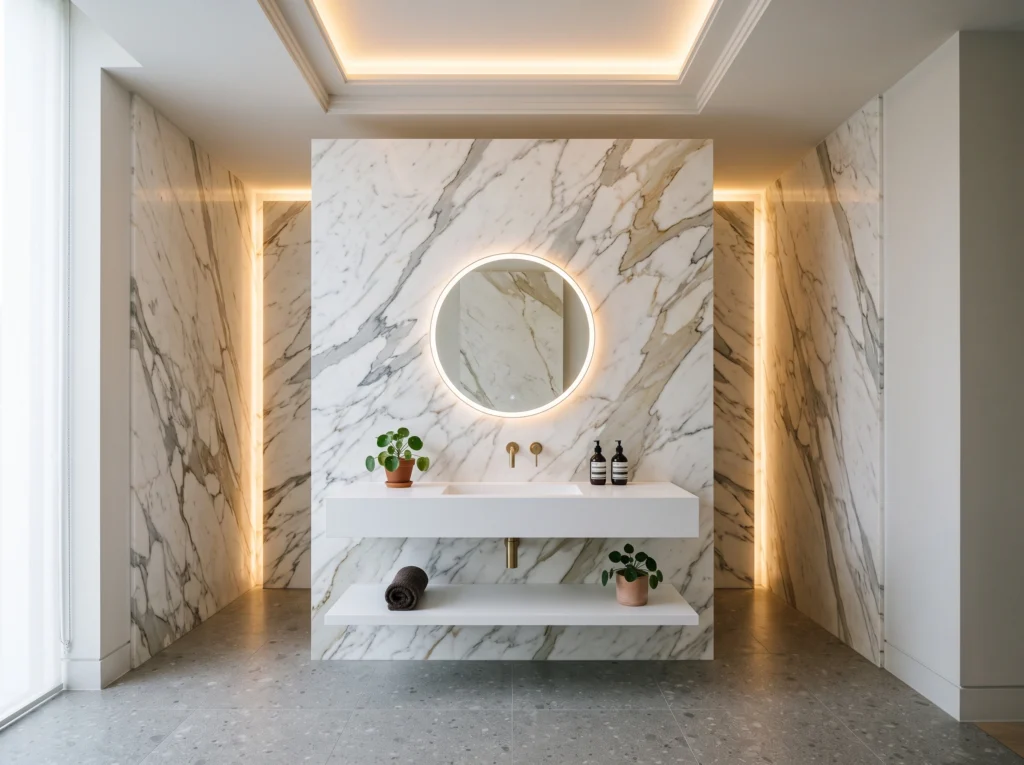
Instead of running a standard four-inch tiled lip around the sink, carry a bold material straight to the ceiling behind the vanity. A continuous slab of dramatic Calacatta marble, handmade zellige tiles laid in a vertical stack, or waterproof micro-slat panelling draws the eye upward, giving standard ceiling heights a grander proportion.
19. Experiment with Whimsical Details in the Guest WC
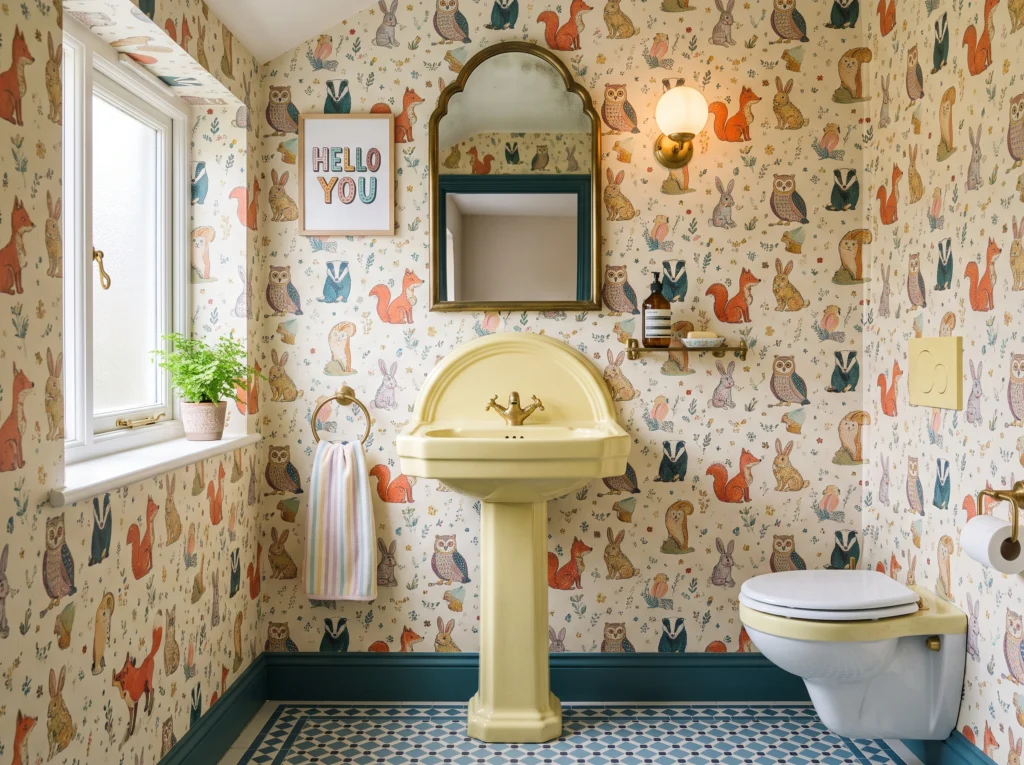
Unlike the heavy practical demands of creating a family-friendly kitchen or a busy shared bathroom, a downstairs cloakroom allows for high-concept choices that might feel overwhelming elsewhere. A statement pedestal basin in a playful pastel hue, an oversized conversational wallpaper print, or novelty vintage lighting can turn a small, functional room into a memorable talking point for visitors.
20. Layer Tactile Textures in a Neutral Palette
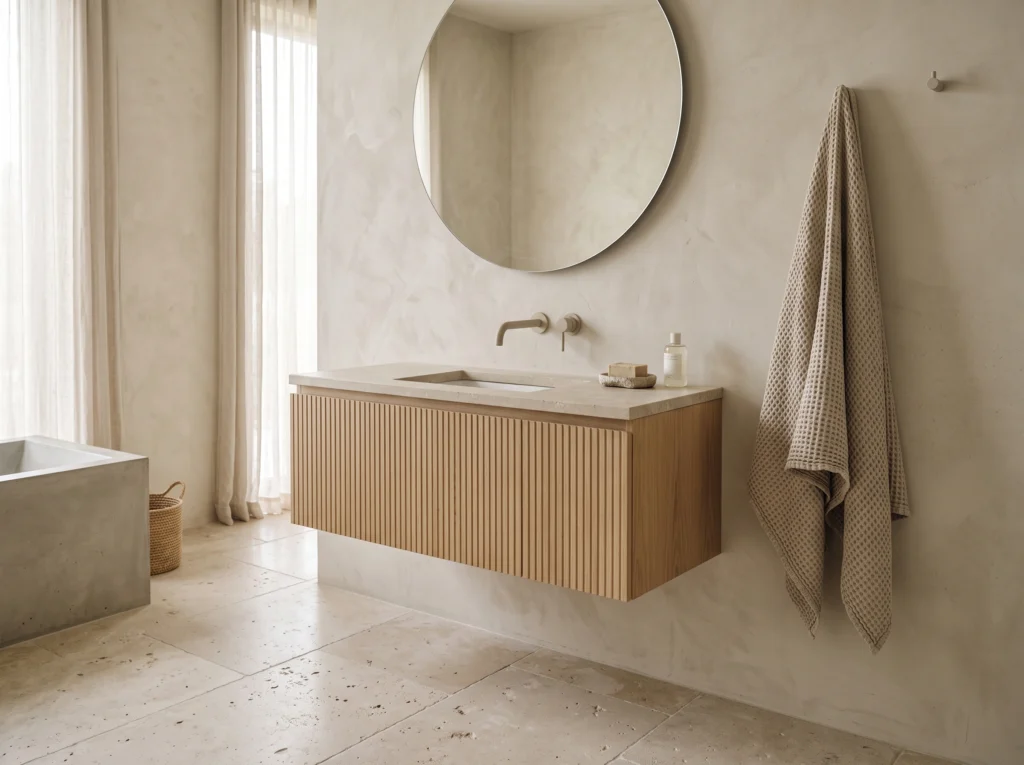
You do not need bright colours to create an unusual interior. A calm, monochromatic room becomes visually captivating when you focus entirely on physical texture:
- Matte, seamless microcement walls
- Honed limestone floor tiles with natural fossil markings
- Fluted or slatted timber vanity fronts
- Heavy waffle-weave linen towels and brushed metal hardware
This tone-on-tone approach creates a quiet, architectural luxury.
21. Install Concealed Architectural Lighting Niches
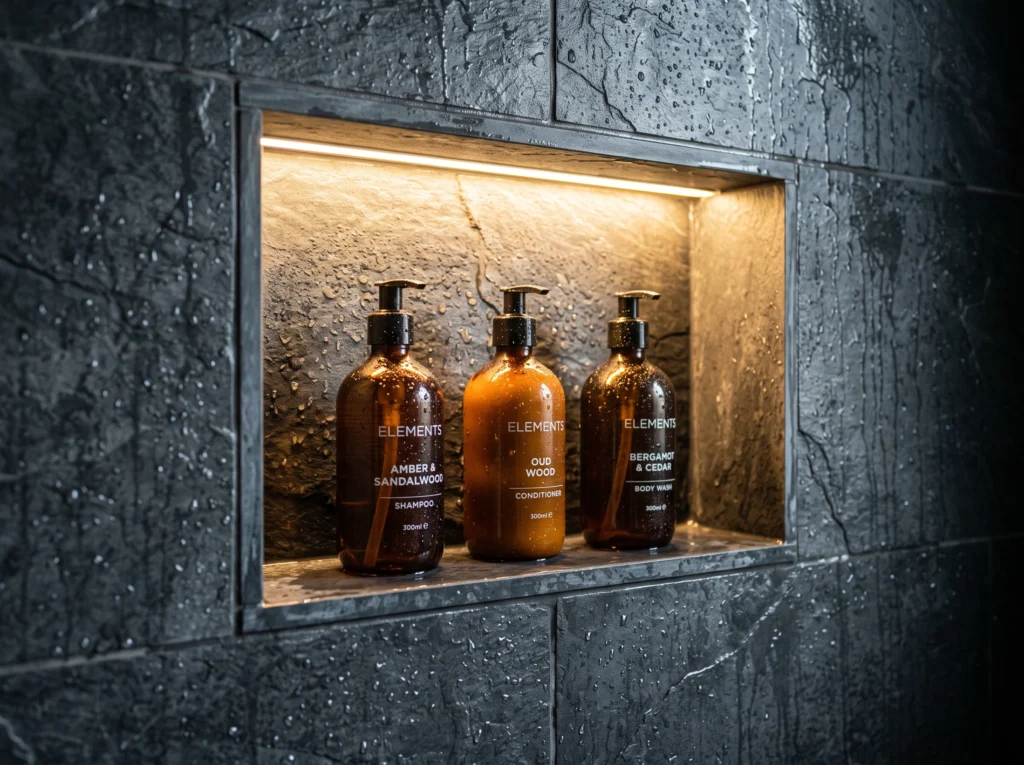
Recessed shower niches and vanity recesses often end up as afterthoughts. Designing deep, waterproof recessed boxes lined with contrasting tiles and illuminated with concealed, warm-toned LED profiles adds architectural sophistication. It creates functional storage for bottles while doubling as soft evening mood lighting.
22. Incorporate Half-Height Painted Wall Panelling
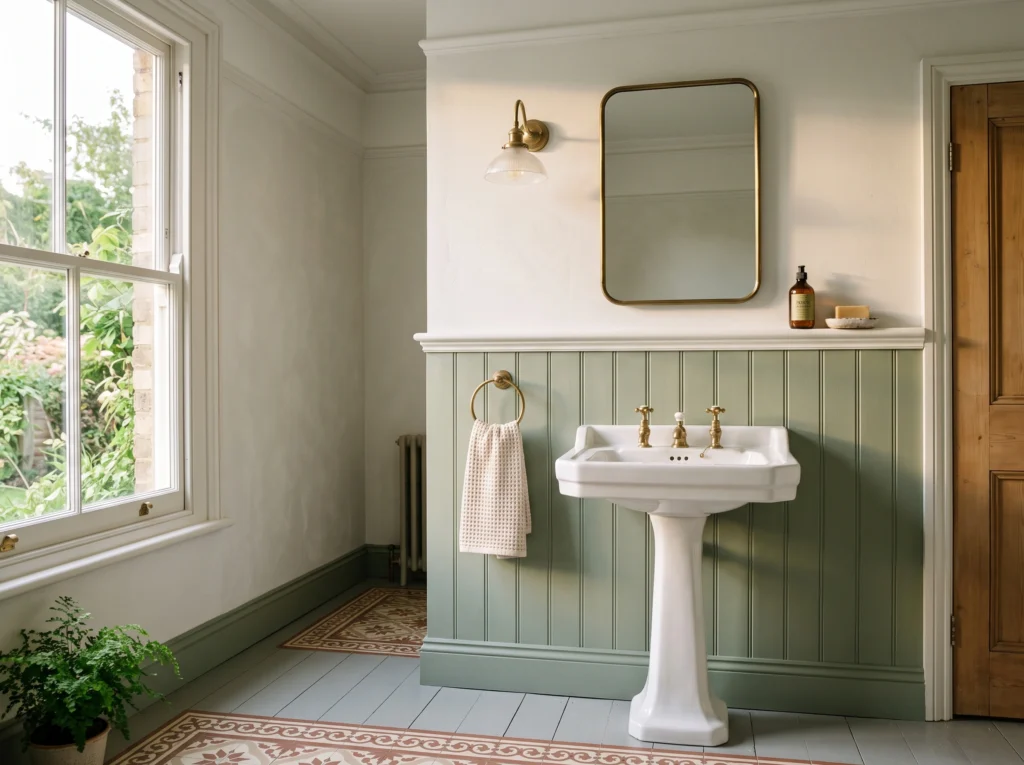
Tongue-and-groove, beadboard, or traditional wainscoting fitted to chair-rail height brings architectural structure to modern, featureless bathrooms. Finished in a durable, moisture-resistant satinwood paint, panelling provides an elegant backdrop for clean porcelain basins and mirrors while protecting the lower walls from everyday splashes.
23. Embrace Unlacquered Living Metal Finishes
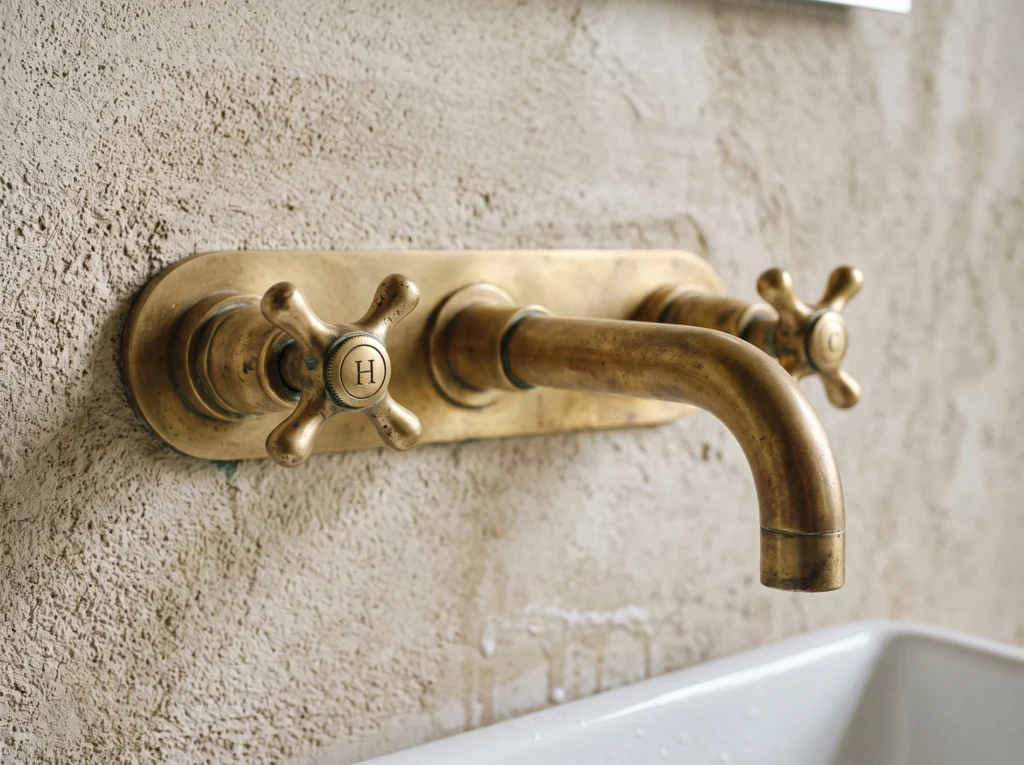
Polished chrome and standard matte black finishes maintain a consistent, uniform look, but living finishes offer evolving character. Unlacquered brass and other living finishes can naturally change in appearance over time. As they react with air, water droplets, and daily touch, they develop a distinct, evolving patina that brings an artisanal, timeless quality to the room.
24. Treat the Ceiling as the Fifth Wall
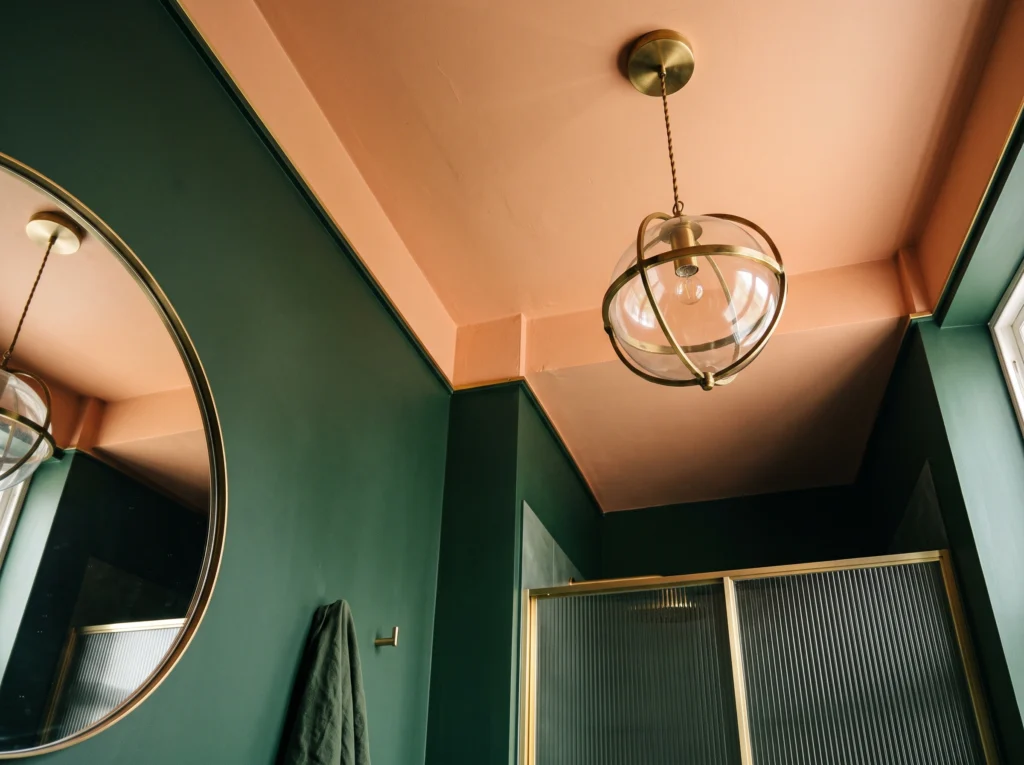
Ceilings are often left in standard trade white out of habit, which can create a jarring break in a richly decorated room. Continuing a moody wall colour straight over the ceiling creates an immersive canopy effect. Alternatively, painting the ceiling in a complementary warm tone, such as pale peach above deep green walls, draws the eye upward and adds unexpected visual warmth.
25. Swap Standard Porcelain for a Tinted Concrete or Carved Stone Basin
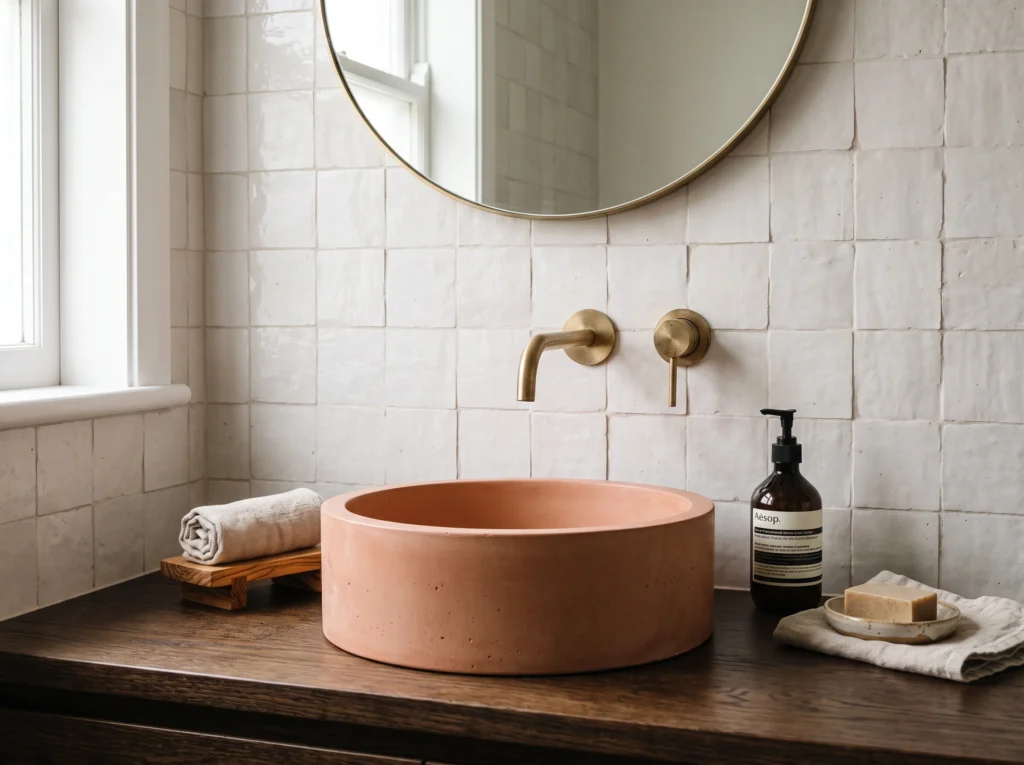
One of the most effective ways to break away from traditional bathroom aesthetics is rethinking the washbasin itself. Cast concrete basins available in muted terracotta, dusty sage, or charcoal provide a smooth, matte finish that contrasts against glazed tiles. Similarly, a basin carved from a solid block of travertine, river stone, or honed marble brings organic, raw texture directly to the vanity.
How to Make an Eclectic Bathroom Look Cohesive
Combining unusual fixtures, bold colours, and varied textures requires a clear visual thread so the space feels thoughtfully designed rather than chaotic:
- Limit Metal Finishes to Two Tones: Restricting your hardware to a dominant finish (such as brushed brass on taps and shower controls) paired with an understated secondary accent (such as matte black light fittings) keeps the design anchored.
- Echo Key Material Tones: If you introduce terracotta floor tiles, repeat that earthy tone elsewhere through timber shelving, artwork, or linen towels.
- Harmonise Silhouettes: Balance angular, rectilinear furniture with softer, rounded elements, such as an arched mirror or curved basin, to keep the visual rhythm balanced.
Smart Styling for Compact Bathrooms and Cloakrooms
Smaller rooms often provide the best canvas for creative design because their compact proportions make bold ideas feel intentional rather than overwhelming:
- Keep Floor Space Open: Wall-hung toilets with concealed cisterns and floating vanities reveal more floor area, creating an immediate sense of openness.
- Emphasise Vertical Lines: Running vertical stacked tiles or slim panelling right up to the ceiling draws the eye upward, making compact rooms feel taller.
- Position Mirrors Strategically: Hang large mirrors adjacent to light sources or windows to maximise daylight and create visual depth.
Choosing a Bathroom Style That Complements Your Property
The most successful unconventional designs respect the architectural context of the wider home:
- Period and Victorian Homes: Suit deep heritage paint palettes, reclaimed furniture vanities, traditional brassware, and classic encaustic tile patterns.
- Mid-Century and Contemporary Spaces: Benefit from clean lines, fluted glass screens, microcement finishes, and sculptural stone or concrete fixtures.
- Cottages and Country Homes: Naturally welcome half-height beadboard panelling, freestanding roll-top baths, natural timber accents, and soft botanical prints.
Just as you would balance style and utility when planning vital considerations for a home office decoration or living area, selecting two or three distinctive bathroom elements that fit your property’s character ensures the space remains practical for daily living while reflecting a style that is entirely your own.