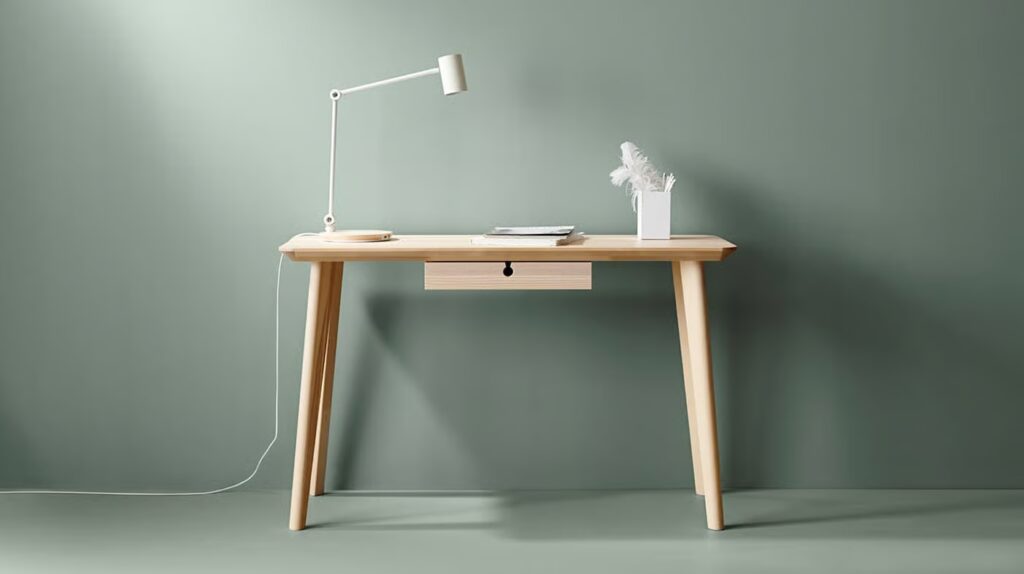
Working from home in a compact footprint can quickly turn into a daily battle against clutter, stray papers, and tangled cords. When your desk doubles as your dining table or squeezes into a narrow bedroom corner, physical disorder directly feeds mental fatigue. Reclaiming your workspace does not require a massive renovation or a sprawling executive desk. Instead, it demands a smart, intentional system that maximizes every square inch of your available space. By addressing vertical surfaces, drawer chaos, and desktop accessories, you can turn even the tightest nook into a streamlined command center that inspires focus.
The Psychology of a Cluttered Workspace
A messy surface does much more than simply look unappealing; it actively drains your cognitive energy. Research from neuroscientists and productivity experts indicates that when multiple objects compete for your eye’s attention in a confined space, your visual cortex has to work overtime to filter out the noise. This constant processing creates a low-grade, persistent stress response throughout your workday. Clearing your desk surface is therefore not merely an aesthetic choice-it is an ergonomic and psychological necessity that protects your focus, lowers stress hormones, and dramatically improves your daily output.
To break the cycle of mess, you must organize your workspace by functional zones: the primary desk surface, the immediate drawers, the surrounding walls, and the paper flow. When every item has a permanent, designated home, your desk stays clean naturally without requiring exhausting daily resets.
Smart Furniture Solutions for Tight Floor Plans
Traditional, bulky office furniture often overwhelms modest rooms, making the entire area feel cramped and unbreathable. Choosing alternative desk styles tailored for small spaces instantly opens up your floor plan while preserving your essential working area.
Maximizing Awkward Corners
Do not let dead corners sit empty. A specialized corner desk slides neatly into these overlooked spaces, offering deep surface area for dual monitors or a laptop and a notebook while keeping the central walkways entirely clear. Alternatively, a wall-mounted corner desk acts like a floating shelf, eliminating bulky legs and creating a lighter, airier look in small bedrooms or studio apartments.
Fold-Down and Floating Desks
If your home office also serves as a guest room or living area, consider a fold-down Murphy desk or a custom floating desk anchored securely to wall studs. A fold-down desk acts as a fully functioning workstation during business hours and completely disappears against the wall at night. This physical transition establishes an absolute boundary between work mode and home mode, helping you mentally disconnect at the end of the day.
Conquering Surface Clutter with Desk Accessories
Small items like paper clips, charging adapters, and sticky notes cause the biggest household headaches. Taming these supplies requires a combination of vertical desktop tools and hidden storage hacks.
- Acrylic Desktop Caddies: Keep daily writing utensils and highlighters visible within arm’s reach so you never break your workflow to search for a pen.
- Mason Jars and Muffin Tins: Repurpose glass mason jars for tall rulers and scissors, or slide a metal kitchen muffin tin inside shallow desk drawers to sort thumbtacks, rubber bands, and binder clips.
- Modular Clear Bins: Transparency forces discipline because you cannot hide disorganized messes inside clear plastic or acrylic boxes.
- Mobile Work Totes: If you frequently migrate from your designated desk to the kitchen island or patio, pack a handled caddy with your laptop charger, notebook, and pens to take your office anywhere.
Mastering Cable Management and Equipment
Nothing ruins a thoughtfully styled workspace faster than a tangled nest of power cords snaking across the floor. Effective wire management creates an instant sense of professional polish.
Start by sticking adhesive cable clips along the back edge of your desk to anchor charging cords in place, preventing them from slipping out of reach every time you unplug your laptop. Gather loose cords into a flexible fabric sleeve, and drop bulky power strips and power bricks into an enclosed cable management box on the floor.
Printers, shredders, and external routers are necessary evils that take up valuable legroom. Place your printer on a rolling utility cart with replacement paper and ink stored on the lower shelves. You can easily roll the cart into a nearby hallway closet when it is not in use, freeing up precious inches under your desk.
Going Vertical: Utilizing Walls for Storage
When you run out of floor space, your only option is to build upward. Walls represent an enormous amount of untapped potential in small home offices.
Pegboards and Rail Systems
Mounting a metal or wooden pegboard directly above your monitor provides total layout flexibility. You can attach small wire baskets for sticky notes, hooks for headphones, and tiny shelves for succulent plants. Because you can rearrange these accessories instantly as your projects change, your walls work just as hard as your desktop.
Floating Shelves and Bookcases
Install tall, shallow bookcases or floating shelves that reach toward the ceiling. Store reference books, archival binders, and decorative storage boxes on the upper tiers, keeping the items you use multiple times a day on the lowest, easiest-to-reach shelf. Coordinating the color of your wall shelves with your paint color creates a seamless, built-in appearance that reduces visual clutter.
Taming the Paper Monster
Physical paper remains the number one enemy of a clean desk. Without a strict intake system, mail, bills, and project notes quickly pile into unmanageable drifts.
| Paper Type | Recommended Management Tool | Action / Frequency |
|---|---|---|
| Active Mail & Bills | Two-Tier Wall Basket (Incoming / Outgoing) | Sort daily |
| Current Projects | Stacked Desktop Tray System | Review weekly |
| Vital Documents | Fireproof Safe / Life Binder | Scan and store digitally |
Embrace a mostly paperless workflow by scanning receipts, tax forms, and important agreements into a secure cloud storage account or external hard drive. For physical files you must keep, ditch bulky metal filing cabinets in favor of ring binders with clearly labeled spines that stand upright on your bookshelves like standard books.
Illuminating and Personalizing Your Nook
Lighting plays a monumental role in both productivity and spatial perception. Natural light boosts your mood, regulates your circadian rhythm, and makes tight rooms feel significantly larger. Position your desk perpendicular or adjacent to a window to capture daylight without creating harsh screen glare.
When natural light fails, layer your artificial sources. Combine a dimmable desk lamp for task lighting with warm ambient wall sconces or under-shelf LED strip lights to eliminate shadowy corners. Good illumination prevents eye strain and adds warmth to your workspace.
Finally, do not let your small home office become entirely sterile. Introduce personal touches that bring you joy, such as a low-maintenance houseplant like a pothos or snake plant, framed artwork hung at eye level, and a soothing candle. When your tiny workspace is clean, ergonomic, and thoughtfully decorated, you will actually look forward to sitting down and tackling your most ambitious projects.