
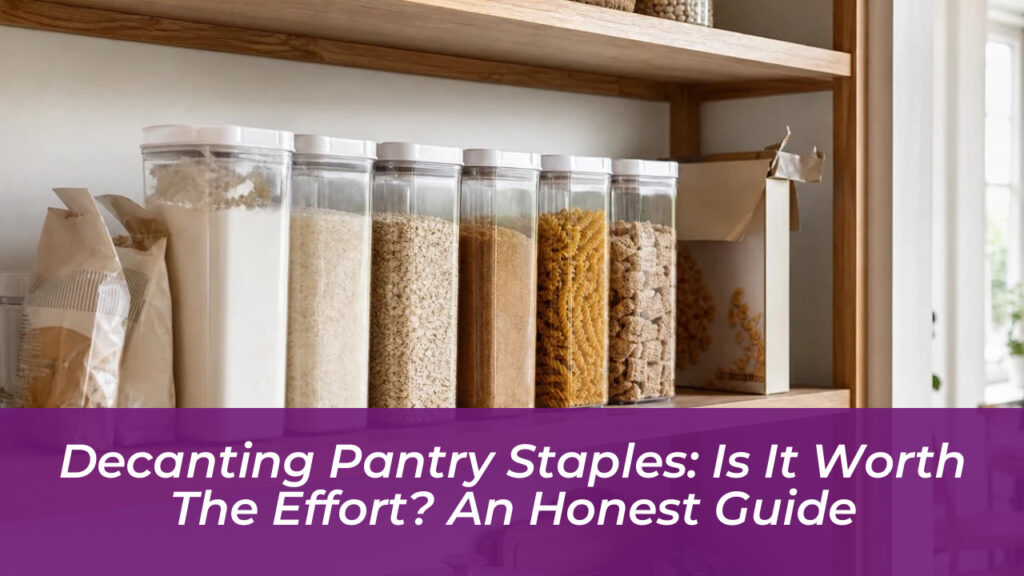
The image of a perfectly uniform pantry-rows of identical glass jars filled with neat grains and beans-has become the gold standard of modern home design. It feels like the ultimate mark of an organized life. However, beneath the aesthetic appeal lies a practical question: is decanting your pantry staples actually worth the investment, or is it just another chore designed for social media?
The Real Purpose of Decanting
At its simplest, decanting is the act of moving food from store-bought packaging into dedicated containers. While the visual result is satisfying, the functional benefits are the real reason to consider this system. When you remove bulky, crinkled bags and mismatched boxes, you gain immediate visual clarity. You no longer have to guess if you are running low on flour or if that half-empty bag of pasta is actually stale.
Visibility is a powerful tool against food waste. When you can see your inventory at a glance, you are less likely to buy duplicates during your weekly grocery run. This reduction in over-buying is where the system pays for itself. By creating a standardized storage environment, you also make it easier to maintain a clean shelf; wiping down a smooth canister is far simpler than moving a collection of dusty, flimsy paper bags.
The Freshness and Pest Protection Myth
There is a common misconception that transferring goods into a jar magically extends their shelf life indefinitely. In reality, dry goods like flour, rice, and sugar do not spoil simply because they sit in a bag; they degrade due to exposure to oxygen, moisture, and light. A high-quality, airtight container acts as a barrier against these elements, but it is not a time machine.
The most significant functional benefit of a gasket-sealed container is pest prevention. Pantry moths and weevils are notorious for chewing through paper and thin plastic. Once they infiltrate a bag, they can quickly spread to every other item on your shelf. A rigid, airtight container with a silicone gasket provides a physical defense that these pests cannot breach. If you live in a humid climate or an older home where pantry pests are a common headache, the investment in quality, sealable containers is a necessary protective measure.
Search suggestion: OXO Good Grips pantry storage container set
What to Decant and What to Leave Alone
One of the biggest mistakes people make is attempting to decant everything. This leads to burnout and a cluttered drawer full of empty, mismatched lids. To make the process sustainable, focus your efforts on items that benefit from an airtight seal and are used frequently enough to justify the shelf space.
The “Must-Decant” List
- All-purpose and bread flour: Highly susceptible to moisture and pests.
- White and brown sugar: Proper sealing prevents clumping and hardening.
- Dry pasta and grains: Rice, quinoa, and lentils stay fresh and visible in clear canisters.
- Rolled oats and cereals: These often come in flimsy boxes that invite stale air.
- Nuts and seeds: Their high oil content makes them prone to rancidity; airtight storage is essential.
The “Leave It Alone” List
- Canned goods: These are already sealed in the most effective airtight environment possible.
- Spices you rarely use: Keep them in their original jars to save space.
- Boxed items with instructions: If you struggle to remember cooking times or water ratios, keep the original packaging or write the instructions on the bottom of your container.
The Hidden Costs of the Decanting System
Before you commit to a full pantry overhaul, account for the upfront investment. High-quality, BPA-free plastic or glass containers with reliable gaskets can be expensive. A comprehensive set can easily cost over $150. If you are on a budget, start with a few key pieces for your most-used staples rather than buying a massive kit.
Beyond the financial cost, there is the investment of time. The initial setup requires cleaning, drying, and transferring every item. , you lose the expiration dates and cooking instructions printed on the original packaging. Many successful organizers use a label maker or a dry-erase marker to note these details on the bottom or side of the canister. Decide if this extra layer of maintenance fits into your current lifestyle.
Tips for a Sustainable System
To ensure your pantry remains organized long after the initial excitement fades, consider these practical strategies:
1. The Freezer Pre-Treatment
If you buy bulk grains or flour, they may already contain insect eggs. To prevent an infestation inside your new, expensive containers, place the items in the freezer for one week before transferring them. This simple step kills any potential threats and keeps your pantry pristine.
2. Match the Container to the Quantity
Do not buy containers that are too large for your typical purchase. If you usually buy a 5-pound bag of flour, choose a container that fits that amount with a little room to spare. Excess air inside a half-empty container can accelerate the degradation of the food.
3. Create an Overflow Zone
If you buy in bulk, keep a dedicated bin for “backstock.” When your primary canister is empty, refill it from the backstock bin. This keeps your main shelves looking clean while ensuring you always have enough supplies on hand.
4. Embrace the “First-In, First-Out” Rule
When refilling, try to use up the existing contents before pouring in a fresh bag. If you are constantly topping off containers, you may end up with a layer of old, stale product at the bottom that never gets used.
Is It Worth It for You?
The verdict on decanting depends entirely on your goals. If your priority is a kitchen that motivates you to cook, the effort is worth it. The psychological benefit of walking into a clean, organized space often leads to more intentional meal planning and less impulsive snacking.
If you are looking for a magic solution to make food last for years, you might be disappointed. Decanting is about management, not preservation. It is a system for people who want to take control of their kitchen workflow. By focusing on the staples you use daily and implementing a system that allows for easy cleaning, you turn your pantry into a functional tool rather than a source of stress.
Ultimately, the best pantry is the one that works for your specific habits. If you enjoy the process of maintaining your jars, keep going. If you find it to be a constant burden, pull back and only decant the items that truly need the extra protection. There is no right or wrong way to organize-only the way that helps you cook better and live more efficiently.