
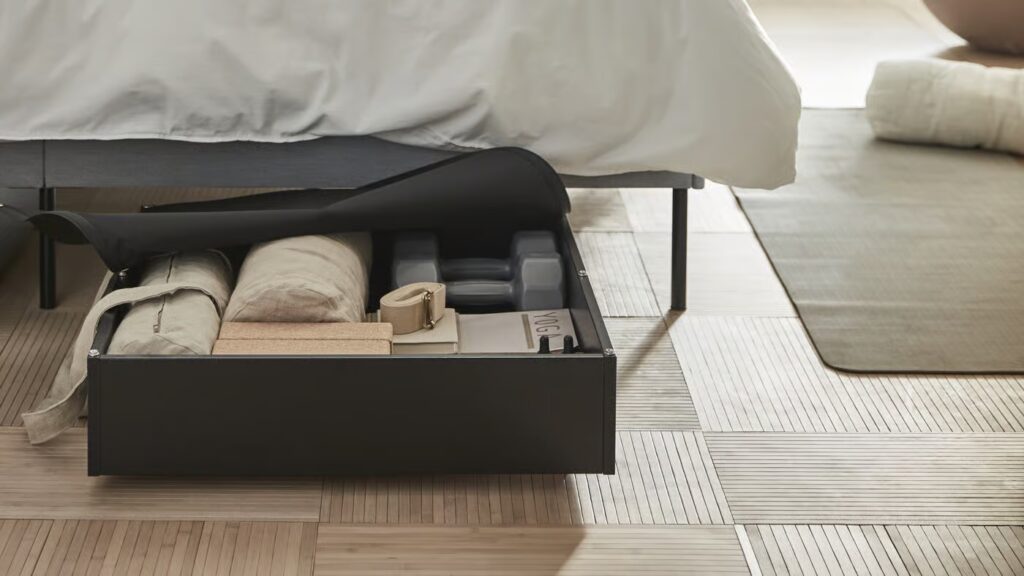
The space beneath your bed is often the most overlooked spot in the house. While it frequently becomes a graveyard for lost socks and dust bunnies, it is actually a prime location for seasonal clothes, extra linens, and bulky gear. Turning a cluttered floor into a streamlined system requires more than just shoving boxes into the dark; it demands the right equipment. High-quality roll-out storage containers provide the structural support and smooth movement needed to turn that awkward gap into a functional storage zone.
Evaluating Your Under Bed Clearance
Before buying containers, measure the vertical gap between your floor and the bottom of your bed frame. This simple step prevents the frustration of buying bins that scrape against your box spring or, worse, won’t fit at all. Use a tape measure to find the exact height, then subtract one inch to account for the container’s lid, the thickness of the material, and your carpet pile.
Most standard frames offer six to ten inches of clearance. If you have a low-profile platform bed, you may need soft fabric bags instead of rigid bins. If your bed sits on risers or a high-profile frame, you can opt for deep, heavy-duty rolling drawers. Always factor in the height of the wheels, as casters can add an inch or more to the total profile.
Choosing the Right Material
The area under your bed is dark and cool, but it is also a magnet for dust and, in some homes, moisture. The material you choose determines how well your belongings survive the season.
Rigid Plastic Containers
Plastic is the go-to for durability and protection. These bins are moisture-resistant, making them ideal if your bedroom is on a ground floor or in a basement. Look for high-density polypropylene with reinforced corners. Clear plastic lets you see what is inside at a glance, while opaque options provide a cleaner, uniform look if your bed frame sits high enough to expose the storage area.
Fabric and Canvas Bins
If you need breathability, choose fabric bins. These are perfect for wool sweaters, delicate linens, or leather goods that need air circulation to prevent mildew. Many fabric options include internal dividers to keep scarves or accessories from shifting when you slide the bin. Always ensure the fabric is treated to resist dust.
Metal and Wire Frames
For heavy-duty items like boots or sports gear, metal frames offer superior weight capacity. These often feature an open-air design that prevents odors from building up. If you choose a wire frame, line it with a fabric insert to keep smaller items from falling through the gaps.
The Importance of Smooth-Rolling Casters
The defining feature of a roll-out box is the wheel mechanism. A bin that drags across the floor is frustrating and can scratch hardwood or wear down carpet fibers. Prioritize models with high-quality, multi-directional casters.
- Rubberized Wheels: Essential for hardwood or tile, these provide a silent, smooth glide without leaving scuff marks.
- Swivel Casters: Wheels that rotate 360 degrees allow you to pull the bin out from any angle, which is a lifesaver if your bed is tucked into a corner.
- Locking Mechanisms: If your floor is slightly uneven, a bin might drift out on its own. A locking caster keeps the container securely tucked away until you need it.
Strategic Seasonal Rotation
The goal of under-bed storage is to clear your primary closet. Adopt a seasonal rotation: when the weather changes, swap your winter and summer wardrobes. This keeps your main closet from becoming overcrowded.
Categorization Tips
Group items by category rather than just by season. For example, dedicate one box to “Winter Linens” and another to “Footwear.” By using a logical system, you won’t have to pull out every bin just to find one pair of sandals.
Labeling for Quick Access
Even with clear bins, labeling is a must. Use high-contrast tags on the front-facing side of the box. If you use opaque fabric bins, labeling is non-negotiable. A simple luggage tag tied to the handle or a piece of masking tape with a marker will save you minutes of searching every time you need to retrieve an item.
Maintenance and Cleaning
Under-bed storage requires occasional care. Because this area attracts dust, vacuum beneath your bed at least once a month. When you pull your bins out for a seasonal swap, wipe down the exterior and check the wheels for hair or debris that might impede their movement.
If the bins become difficult to roll, check the axles. A quick spray of silicone lubricant can restore a smooth glide. Avoid oil-based lubricants, as they attract dust and dirt, which will eventually cause the wheels to seize up again.
Choosing Between Drawers and Bins
Deciding between a drawer-style unit and a standard bin depends on your needs. A drawer built into the frame looks seamless, but it is often expensive and stationary. A standalone roll-out bin is more versatile; you can pull it out completely and carry it to your closet or laundry room.
If you are renting, standalone bins are the smart choice. They require no installation, move easily when you relocate, and won’t damage your floor or bed frame.
Common Pitfalls to Avoid
Overstuffing: Even the strongest rolling bin has a weight limit. Overloading causes the bottom to sag, which makes the box scrape against the floor. Distribute weight evenly across the base.
Going Too Big: It is tempting to buy the largest container possible, but a massive, heavy bin is difficult to maneuver. It is often better to have two medium-sized bins that slide easily than one heavy-duty crate that requires significant effort to move.
The Aesthetic Factor
Your bedroom should feel like a sanctuary. If your storage is visible from the doorway, choose colors that complement your room’s palette. Neutral tones like white, grey, or beige blend into the background, while bright colors can create visual clutter. If you want to hide your storage completely while keeping it accessible, a simple bed skirt is the most effective solution.