
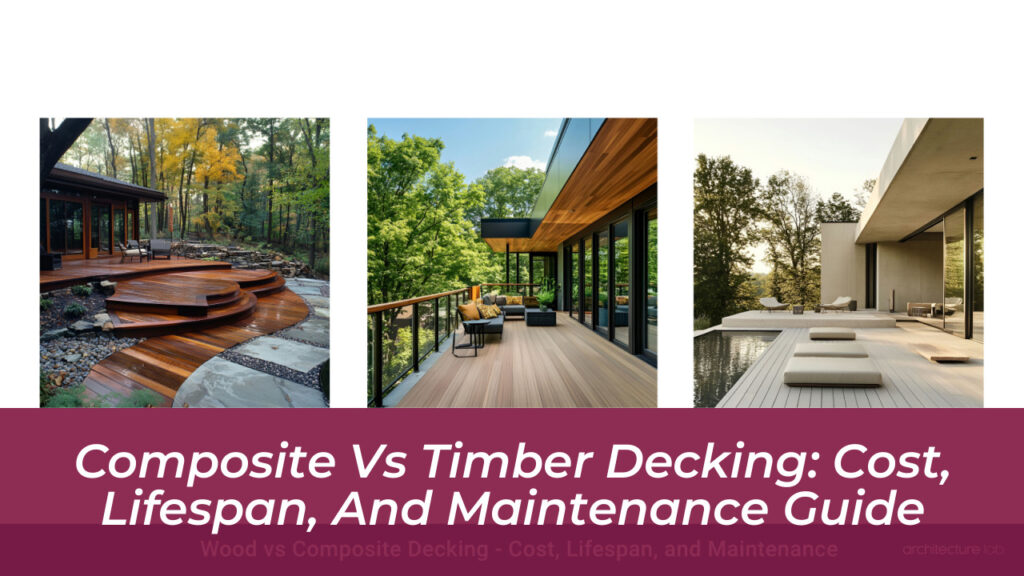
Choosing between composite and timber decking is often the most significant decision homeowners face when planning an outdoor renovation. This choice dictates the look, budget, and weekend workload of your backyard for years to come. While timber offers a classic, warm appeal that many find irreplaceable, composite decking has emerged as a high-performance alternative designed to eliminate the common frustrations of wood. Understanding the trade-offs in cost, lifespan, and upkeep is essential to selecting a deck that fits your lifestyle.
Timber Decking: The Natural Choice
Timber remains a staple in residential design because of its organic beauty and tactile warmth. Whether you choose affordable softwoods like pressure-treated pine or premium hardwoods such as ipe or teak, wood provides a grain pattern that no synthetic product can perfectly replicate. Each board carries its own character, creating a rich, evolving aesthetic that many homeowners cherish.
However, wood requires a consistent commitment. Because it is a porous material, it reacts to the elements by expanding, contracting, warping, or splintering as moisture and temperatures shift. To keep it sound and looking good, you must clean, sand, and seal or stain it every one to three years. Without this protection, wood eventually grays, rots, and becomes a target for insects, which significantly shortens its life.
Timber Varieties and Longevity
- Pressure-Treated Pine: The most budget-friendly option, typically lasting 10 to 15 years with regular care.
- Cedar and Redwood: Naturally resistant to decay and insects, these woods offer a lifespan of 15 to 20 years.
- Exotic Hardwoods (Ipe, Cumaru): Exceptionally dense and durable, these premium materials can last 30 years or more, though they command a high price and require specialized installation.
Composite Decking: Engineered Performance
Composite decking is a blend of wood fibers and recycled plastics, usually wrapped in a protective polymer shell. This construction is designed to bypass the limitations of natural wood. By sealing the core, manufacturers create a surface that resists moisture, UV radiation, mold, and bugs. Consequently, composite boards do not rot, splinter, or require the tedious staining and sealing cycles that define the timber experience.
Modern technology has advanced to offer textures and colors that mimic natural wood grain. While it lacks the organic scent and unique variation of real timber, composite offers a level of predictability that appeals to busy homeowners who want a deck that looks the same on the day they install it as it does a decade later.
Capped vs. Uncapped Boards
The difference between capped and uncapped boards is crucial. Capped composite features a hard outer shell that acts as a shield against stains, fading, and scratches. Uncapped boards are cheaper but are more prone to moisture absorption and fading. For most homes, a high-quality, fully capped board is the best way to ensure the deck retains its color and finish over the long haul.
Cost Comparison: Upfront vs. Long-Term
When evaluating cost, look past the initial price tag. Timber decking generally has a lower entry cost, making it attractive for tight immediate budgets. However, the total cost of ownership for a wood deck is high when you add up the annual price of cleaning supplies, quality stains, sealants, and the labor required for maintenance or eventual board replacement.
Composite decking carries a higher upfront price, often costing two to three times more than pressure-treated lumber. Despite this, the long-term math often favors composite. Because it requires no annual refinishing, the savings on maintenance products and professional labor can offset the initial investment within five to seven years. For homeowners staying in their house for the long term, composite is a more stable financial choice.
| Factor | Timber Decking | Composite Decking |
|---|---|---|
| Initial Cost | Lower | Higher |
| Maintenance Cost | High (Recurring) | Low (Cleaning only) |
| Lifespan | 10-20 Years | 25-50 Years |
| Resale Value | Depends on condition | High (Low-maintenance appeal) |
Maintenance Realities
The divide is most apparent in the maintenance. Owning a timber deck is a recurring project. Every few years, you must clear the deck, scrub away mildew, sand down rough patches, and apply a fresh coat of finish. If you skip these tasks, the wood will quickly lose its luster and begin to deteriorate, leading to expensive structural repairs.
Composite decking is designed for those who prefer to spend their weekends relaxing. Routine maintenance is limited to sweeping away leaves and washing the surface with mild soap and water. There is no need for heavy-duty refinishing. While some owners use a gentle pressure wash once a year to remove pollen, the process is quick and requires minimal effort.
Performance and Comfort
One common critique of composite decking is heat. Because of the plastic content, composite boards can get warmer underfoot than timber in direct, intense sunlight. If you have a south-facing deck in a hot climate, choosing lighter colors can help reflect sunlight and keep the surface cooler.
Slip resistance also varies. Timber can become slippery if algae or moss grows on the surface, while older composite boards were prone to slickness when wet. Modern composite products, however, are engineered with textured surfaces that provide excellent grip even in damp conditions. If you are building near a pool or in a rainy region, look for boards explicitly rated for slip resistance.
Sustainability
Both materials have environmental trade-offs. Timber is a renewable resource, and when sourced from responsibly managed forests, it stores carbon. However, the reliance on chemical preservatives in pressure-treated wood and the environmental costs of regular staining products are concerns. , the shorter lifespan of wood means decks are replaced more often, contributing to landfill waste.
Composite decking often uses recycled wood fibers and plastics, keeping those materials out of landfills. Because a composite deck can last for decades, the demand for new timber is reduced, and the absence of chemical sealants prevents runoff into the surrounding soil. While the manufacturing of composite is energy-intensive, its longevity often results in a smaller environmental footprint over 25 years compared to a timber deck that requires multiple replacements and constant chemical upkeep.
Making the Final Decision
Choosing between composite and timber is about balancing your personal priorities. If you love the authentic, evolving character of natural wood and enjoy the process of home maintenance, timber is a rewarding choice. It offers a tactile quality that is hard to replicate.
If your goal is a durable, stress-free space that stays looking fresh for decades with minimal intervention, composite is the superior option. The higher initial investment is balanced by the elimination of recurring costs and the peace of mind that comes with a rot-resistant surface. By assessing your budget, your climate, and your willingness to invest time in upkeep, you can make an informed choice that enhances your home’s value and your enjoyment of your outdoor space.
Key Questions to Ask
- How many years do I plan to live in this home? (Long-term ownership favors composite.)
- What is my local climate? (High humidity or extreme sun may necessitate specific material choices.)
- Do I have the time or budget to perform regular maintenance? (Timber requires a recurring commitment.)
- Is the deck in a high-traffic area or near a pool? (Slip resistance and durability become more critical.)
- What is the aesthetic style of my home? (Consider whether you prefer the natural aging of wood or the consistent, modern look of composite.)
Regardless of the material, the success of your project depends on quality installation and a solid substructure. Whether you are building from scratch or replacing an existing deck, ensure that the joists and beams are structurally sound and protected from moisture. A well-built frame is the foundation of any deck, providing the stability necessary for your surface material to perform at its best.