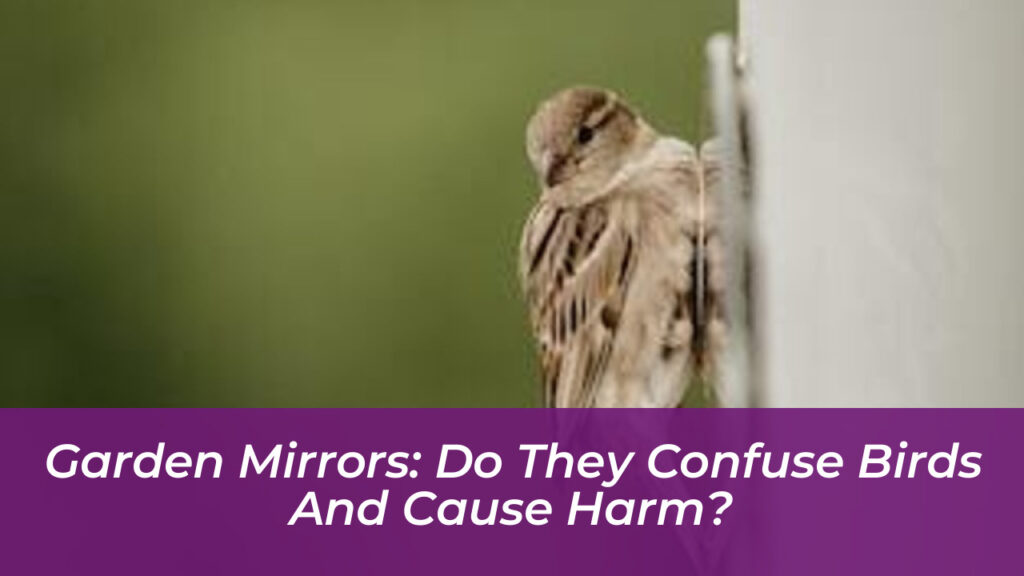
Transforming an outdoor space with reflective decor can elevate a standard backyard into a luminous, seemingly endless sanctuary. Yet, adding these shiny accents often sparks unexpected drama among local wildlife. If you have ever watched a robin frantically pecking at a polished glass panel or flying repeatedly against a shiny boundary, you have witnessed firsthand an avian encounter gone wrong. Property owners frequently ask whether these decorative features create hazardous illusions for visiting wildlife.
Understanding avian perception reveals why these shiny decorations cause distress. Birds lack the cognitive ability to recognize self-imagery, meaning they interpret polished surfaces in entirely different ways than humans do. Examining avian psychology, behavioral triggers, and safe styling methods allows you to maintain a gorgeous yard while protecting your feathered visitors.
How Avian Visual Systems Interpret Reflections
To understand why garden mirrors cause distress, you must first examine how birds experience sight. Avian vision ranks among the most sophisticated in the animal kingdom, evolved specifically for detecting motion, tracking flying insects, and spotting predators from vast distances. Most species possess lateral eye placement, granting them a panoramic field of vision approaching 360 degrees. However, this biological design comes with distinct trade-offs in depth perception and cognitive processing.
When a bird encounters a pristine, flat reflective surface outdoors, its brain does not register the concept of manufactured glass. Instead, the visual cortex processes the bouncing light as a genuine continuation of the physical environment, or worse, as an entirely separate living organism occupying the same airspace. Because birds operate largely on instinct rather than abstract reasoning, they fail to comprehend that the image before them is a mere duplicate of their own physical form.

The Root of Territorial Aggression
One of the most intense reactions triggered by outdoor reflective items is aggressive territorial defense. Breeding seasons place intense hormonal demands on songbirds, driving males to aggressively patrol and protect nesting grounds from potential rivals. When a male cardinal, robin, or sparrow spots a clear duplicate staring back from a decorative wall hanging, it perceives a direct threat to its territory and mate.
This misidentification sparks a cascade of defensive actions:
- Fierce Pecking: Birds will strike the glass repeatedly with their beaks, attempting to drive away the perceived intruder.
- Vocal Displays: Territorial chirps, aggressive calls, and warning songs are directed continuously at the silent image.
- Physical Body Slams: Driven by adrenaline, individuals may hurl themselves directly against the surface, risking structural injury.
Unlike real territorial disputes, which end when a rival backs down and flies away, the reflection never retreats. This stalemate locks the bird into an endless loop of confrontation. Days spent battling a phantom rival drain vital energy reserves needed for foraging, feeding nestlings, and escaping real predators.
Collisions and Spatial Illusion Hazards
Beyond territorial battles, polished glass creates dangerous spatial deceptions. When an outdoor ornament reflects the surrounding blue sky, overhead clouds, or dense canopy foliage, birds perceive an open flight path. Flying at high speeds through familiar surroundings, they assume continuity between the physical trees and the mirrored image.
This misjudgment leads directly to high-velocity impacts. The resulting trauma can range from minor wing bruising and disorientation to fatal neck fractures and internal hemorrhaging. Yards featuring large, unshaded glass elements near heavy foliage or bird feeding stations experience a higher frequency of accidental strikes.
Factors That Intensify Avian Confusion
Not every reflective setup provokes identical reactions across all species. Several environmental and physical factors dictate the severity of the interaction:
- Placement Height: Units positioned directly at typical bird flight paths or near ground-level shrubbery trigger more frequent collisions.
- Size and Scale: Large panels project monumental “rivals” or massive open-sky illusions, provoking stronger behavioral shifts than small, fragmented pieces.
- Sun Angle: Direct sunlight striking a polished surface creates blinding glares that completely mask the physical barrier from flying wildlife.
Practical Strategies for a Bird-Friendly Yard
You do not have to abandon all reflective styling to protect local wildlife. Thoughtful design modifications allow you to preserve aesthetic depth while keeping feathered visitors out of harm’s way.
Modifying Existing Reflective Surfaces
If you already have decorative glass elements installed outdoors, minor adjustments can drastically reduce wildlife risks:
- Apply Breaking Patterns: Use specialized exterior UV stickers, translucent film, or non-toxic paint dots spaced closely together across the surface. These markers disrupt the continuous image without ruining the overall aesthetic.
- Introduce Physical Barriers: Plant dense climbing vines, decorative iron latticework, or hanging baskets directly in front of the glass to fragment the reflection.
- Adjust Tilt Angles: Re-angle wall-mounted panels downward toward the ground rather than outward toward the horizon, eliminating sky reflections.
Exploring Safe Alternative Materials
Homeowners seeking luminous backyard aesthetics without the ecological hazards can substitute traditional glass with safer, innovative alternatives:
| Alternative Material | Aesthetic Effect | Impact on Wildlife |
|---|---|---|
| Frosted Glass Panels | Diffuses light gently and brightens dark corners | Zero reflection of rival birds or open sky |
| Mosaic Tile Art | Adds colorful patterns and rich texture to blank walls | Breaks up light without creating mirror duplicates |
| Polished Metal Sculptures | Provides metallic sheen and contemporary focal points | Distorts images completely, preventing territorial triggers |
Seasonal Considerations and Monitoring
Bird behavior shifts dynamically throughout the year. Springtime breeding cycles heighten hormonal aggression, making territorial birds exceptionally vulnerable to mirror encounters during these months. Meanwhile, autumn and spring migration periods increase general flight activity, raising the statistical probability of structural collisions.
Establish a routine of observing how local wildlife interacts with your outdoor decor. If you notice persistent songbirds lingering near a specific wall feature or exhibiting erratic defensive habits, take immediate action by covering the surface or relocating it to a more sheltered zone. Cultivating a thriving, sustainable backyard ecosystem requires balancing human design desires with the natural instincts of native wildlife.