Cleaning tools are notoriously difficult to manage because of their awkward shapes and long handles. When left to lean against a wall, they inevitably slide, fall, and create a visual mess that makes even a clean room feel chaotic. Establishing a dedicated system for your mops and brooms is one of the most effective ways to streamline your household chores. By treating your cleaning cupboard as a functional station rather than a dumping ground, you save time and protect your equipment from unnecessary wear.
The Foundations of Effective Cleaning Storage
Before you purchase hardware or drill holes, you must evaluate your specific environment. The best storage system accounts for three primary factors: the frequency of use, the available footprint, and the drying requirements of your tools. If you use a mop daily, it needs to be at the front of your storage zone. Conversely, seasonal items can occupy higher, less accessible shelves.
Airflow is perhaps the most overlooked element of cleaning cupboard design. If you store a damp mop head inside a sealed, dark closet, you are creating a breeding ground for mildew. Always ensure your storage choice allows for ventilation. If your closet is tight, consider installing a small battery-operated motion-sensor light or a moisture-absorbing desiccant pack to maintain a fresh environment.
Vertical Solutions for Tight Spaces
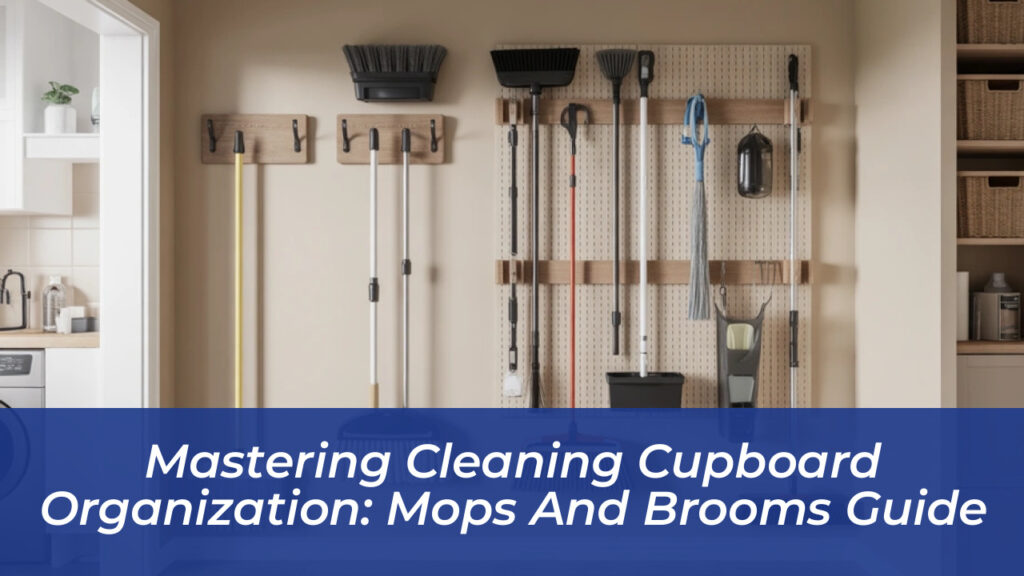
When floor space is at a premium, looking upward is the only logical move. Vertical storage transforms dead wall space into a high-efficiency zone. Wall-mounted tracks are the gold standard here because they allow you to adjust the position of hooks as your tool collection changes. By lifting handles off the floor, you prevent the bristles of your brooms from bending and fraying, which extends the life of your cleaning equipment.
Wall-Mounted Track Systems
These systems typically consist of a horizontal rail with adjustable clips. They are ideal for laundry rooms or garage walls where you have a long, flat surface. The ability to slide the clips means you can accommodate a thick-handled push broom next to a slim microfiber mop without the heads colliding.
Adhesive Grippers for Rental Homes
If you cannot drill into your walls, high-quality adhesive grippers are a reliable alternative. These grippers use tension to hold handles firmly in place. While they may not support the weight of heavy-duty industrial mops, they are perfect for standard household brooms, dusters, and lightweight mops. Ensure the surface is thoroughly cleaned and dried before application to guarantee a long-lasting bond.
Utilizing Overlooked Real Estate
Every home has hidden storage areas that go unused. The back of a utility room door or the side wall of a tall pantry cabinet can house your most-used tools. By installing a simple rack on the back of a door, you keep your mops tucked away from the main living area while ensuring they are only a step away when a spill occurs.
- Door-Mounted Racks: Use the interior side of your cleaning closet door to hang dustpans, handheld brushes, and spray bottles.
- Corner Tension Rods: In a pinch, a tension rod installed in a corner can act as a secondary support to prevent long handles from slipping.
- Cabinet Side Panels: If you have a freestanding cabinet, mount hooks on the exterior side panel to keep frequently used brooms within arm’s reach.
The Logic of Categorization
Organization is not just about where things go; it is about how they are grouped. A well-organized cupboard keeps like-items together. If you have a mop, a bucket, and a bottle of floor cleaner, these three items should ideally reside within the same vertical footprint. This reduces the search time associated with starting a cleaning task.
The most successful storage systems are those that require the least amount of effort to maintain. If it takes more than three seconds to hang up a broom, you will eventually stop doing it.
Advanced Storage Techniques for Heavy-Duty Tools
For those with garages or dedicated utility rooms, heavier tools require more robust solutions. Slat wall panels are an excellent investment for heavy-duty cleaning equipment. These panels are designed for workshops and can easily bear the weight of heavy-duty push brooms, squeegees, and wet mops. Because the hooks are modular, you can rearrange your wall layout seasonally, perhaps moving outdoor cleaning tools to the front during the spring and summer months.
Pegboard Customization
Pegboards provide the highest level of customization for smaller cleaning accessories. You can outline the position of each tool with a marker or tape to ensure that every family member knows exactly where each item belongs. This visual cue is particularly helpful in busy households where multiple people share cleaning duties.
Maintaining Your Cleaning Station
Once you have installed your hardware, the maintenance phase begins. A cleaning cupboard can quickly revert to a state of disorder if you don’t perform a quarterly audit. During these checks, inspect your mop heads and broom bristles. If a tool is worn out, discard it rather than letting it take up space. Keep a small bin or basket at the bottom of your cupboard for rags and microfiber cloths; this prevents them from being stuffed into corners or draped over mop handles, which restricts airflow.
The “One-In, One-Out” Rule
To prevent the accumulation of unnecessary cleaning gadgets, adopt a strict policy. If you buy a new specialized mop, remove the old one that it replaces. This prevents the tool creep that often leads to overcrowded closets and broken storage racks.
Common Pitfalls to Avoid
Many people make the mistake of hanging tools too close together. If your mop heads are touching, they cannot dry properly, and they will likely tangle every time you pull one out. Aim for at least three to four inches of space between each tool handle. Additionally, avoid storing heavy items on thin, plastic hooks that are not rated for the weight. Always check the weight capacity of your hardware before mounting your equipment to avoid accidents.
Finally, consider the height of your storage. If you hang your mops too high, you will struggle to lift them out, leading to frustration. If you hang them too low, the heads will drag on the floor, defeating the purpose of keeping them off the ground. Aim to mount your racks so that the bottom of the mop or broom head sits approximately two to three inches above the floor surface.
By implementing these strategies, you move beyond simple storage and create a system that actively supports your home maintenance routine. A tidy, accessible cleaning cupboard is not just a luxury; it is a fundamental component of an efficient, stress-free home.