
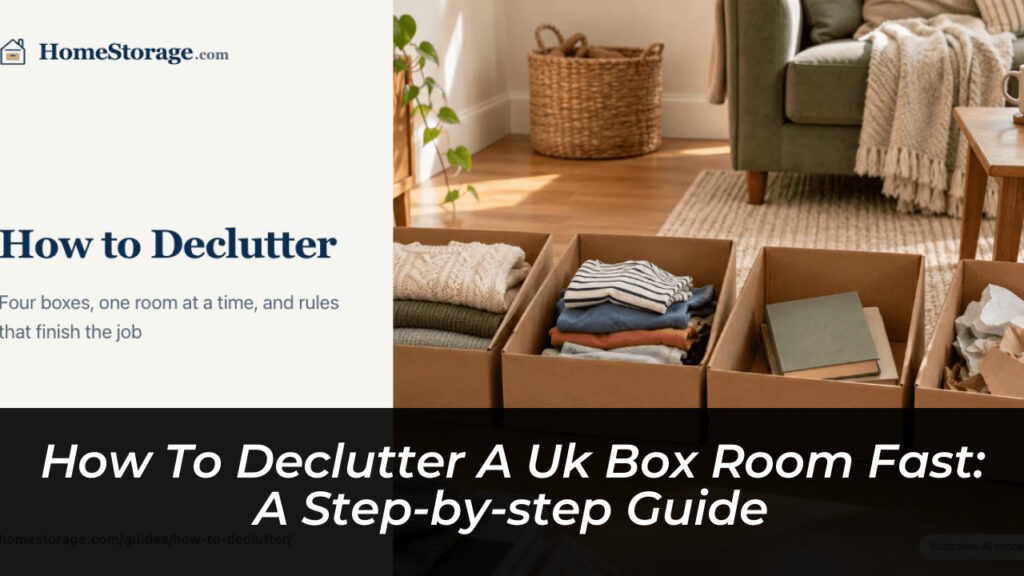
The UK box room is a notorious architectural challenge. Often relegated to a dumping ground for seasonal decor, outgrown clothes, and items that lack a home, this small space quickly becomes a source of household stress. Transforming it from a storage graveyard into a functional bedroom, office, or dressing area requires a shift in strategy. Instead of a marathon clear-out that leaves you exhausted, use a tactical approach designed for tight quarters.
Establishing Your Staging Area
Before you lift a single item, set up a processing hub. In a box room, you do not have the luxury of spreading out. If you sort items while sitting in the middle of the room, you will inevitably shuffle piles from one corner to another. Clear a space in the hallway or an adjacent room to serve as your sorting zone. This keeps the box room floor clear, allowing you to move freely and see your progress.
Gather your supplies first: heavy-duty bin bags for rubbish, sturdy boxes for donations, and a dedicated container for items that belong in other rooms. Resist the urge to buy fancy storage solutions yet. You cannot measure or plan for furniture until you know exactly what remains after the purge. Focus entirely on extraction, not containment.
The Four-Stream Sorting Method
Speed depends on your ability to make rapid decisions. When you pick up an object, you have ten seconds to assign it to one of four streams. If you hesitate, you are likely keeping it out of guilt-the primary cause of clutter.
- Keep: Items used regularly or those with genuine, daily value. If it doesn’t serve a purpose, it stays only if it has a designated home.
- Donate: Usable items that no longer fit your life. Move these directly into bags and place them near the exit immediately.
- Sell: Only choose this for high-value items, and only if you are committed to listing them within 48 hours. If it is low-value, move it to the donation pile to save yourself the administrative headache.
- Recycle/Dispose: Broken or damaged items. Remove these from the room as soon as the bag is full.
Tackling the Room in Zones
To avoid feeling overwhelmed, divide the room into four quadrants. Start with the most visible surface-usually the bed or the top of a chest of drawers-and work your way to the floor. This creates an immediate visual win that builds momentum.
The Surface Sweep
Clear all flat surfaces first. Remove books, stray cables, and decorative items that have accumulated. By clearing these areas, you immediately change the atmosphere of the room. A clear surface makes a small space feel twice as large, providing the psychological boost needed to tackle deeper storage like wardrobes or under-bed drawers.
The Deep Storage Purge
Once surfaces are clear, move to the closed storage. Empty one drawer or one shelf at a time. Do not empty the entire wardrobe at once, or you will be buried in fabric. Handle one category, such as bedding or winter coats, and make your decisions. If you haven’t worn or used an item in over a year, let it go. Be ruthless with duplicates; you rarely need three spare sets of bed sheets for a single bed.
Managing Bulky Items
Decluttering projects often stall because of piles of rubbish left in hallways. If you have an old mattress, a broken desk, or a collection of black bags, you must have an exit strategy. A project is not complete when the room is sorted; it is complete when the items have physically left your property.
Schedule your charity pickups or local council bulky waste collections before you even start the physical work. For items that cannot be donated, check your local council’s website for collection services. If you are dealing with a large volume of waste, consider a professional clearance service to ensure items are disposed of legally and responsibly, preventing the risk of fly-tipping.
Optimizing for Future Use
Once the room is empty, define its primary function. If it is a guest bedroom, prioritize floor space and a comfortable bed. If it is a home office, ensure the desk is positioned to utilize natural light. Defining the room’s purpose makes it much easier to keep it clear in the future.
Use vertical space to your advantage. Install high-level shelving for items used infrequently, such as seasonal decorations or archived paperwork. Keep the floor as clear as possible to maintain a sense of openness. When you do purchase storage, choose dual-purpose items, such as an ottoman with internal storage or a bed frame with built-in drawers.
Maintaining the Result
Decluttering is a process, not a one-time event. To prevent your box room from reverting to a dumping ground, implement a “one-in, one-out” rule. If you bring a new item into the room, an old one must leave. This simple habit forces you to evaluate the value of every new addition.
Perform a quarterly “mini-reset.” Set a timer for 30 minutes every three months to go through the room and remove anything that has drifted in from other parts of the house. By keeping these sessions short, you avoid the need for another major overhaul. Remember, the goal is functionality, not perfection. If the room serves its purpose and you feel a sense of relief when you walk past the door, you have succeeded.