
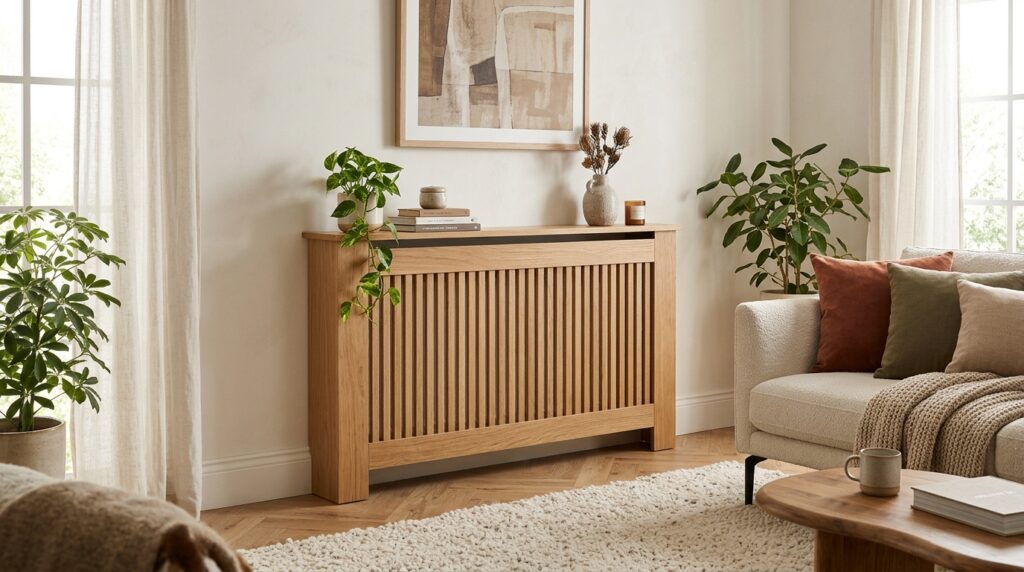
Radiator covers offer an easy way to transform an eyesore into a stylish piece of furniture while providing a handy shelf and extra protection for children and pets. However, wrapping a heating appliance in a decorative box raises an important practical question: do radiator covers block heat?
The short answer is yes, they do restrict some heat. Because a cover acts as a physical barrier, it inevitably interferes with how warm air moves through a room. Yet, the real-world impact varies wildly depending on materials, clearance gaps, and ventilation design. A well-constructed cabinet allows warmth to flow naturally, whereas a solid wooden box with zero airflow can severely drive up your energy bills.
How Radiators Actually Heat a Room
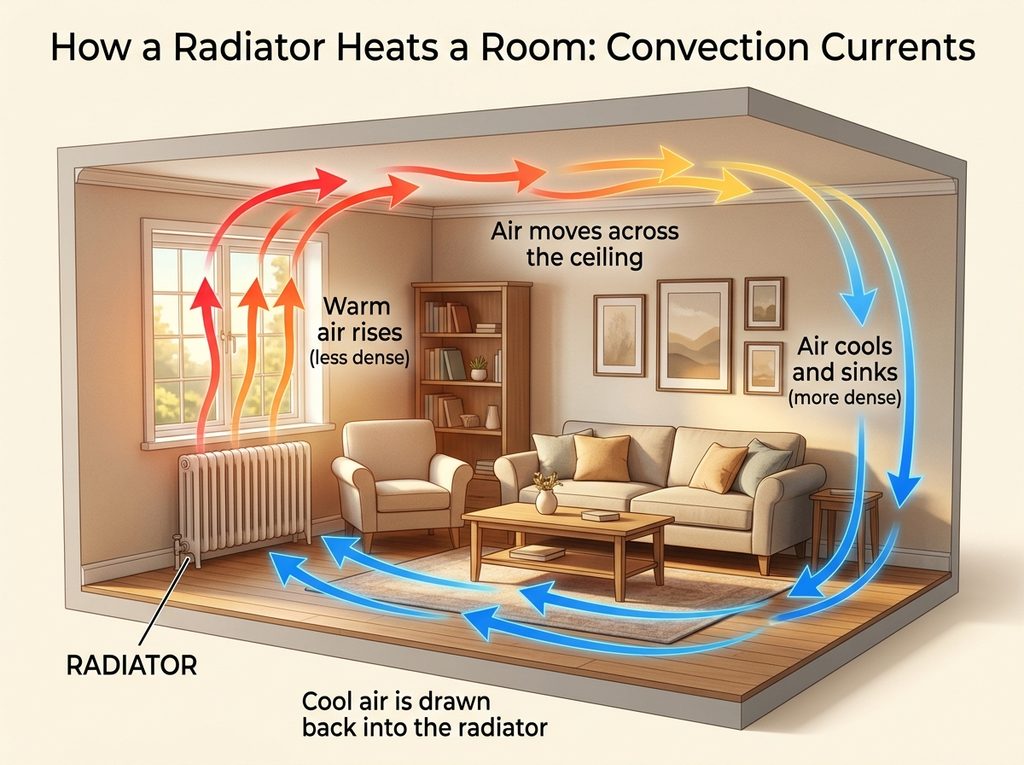
To understand why covers affect temperature, you first need to look at how modern panel radiators operate. Despite their name, standard home radiators heat rooms primarily through convection rather than direct radiation.
Hot water flows through internal channels, warming the metal panels. This metal heats the air in direct contact with it. Because warm air is less dense than cool air, it rises rapidly toward the ceiling. As it ascends, cooler air is drawn in from floor level to take its place, establishing a continuous loop known as a convection current.
Only a small fraction of the output is actual radiant heat-infrared energy that warms objects and people directly in its path. If a physical enclosure stands in the way of this cycle, it can choke the airflow and disrupt the entire heating process.
The Science: How Much Heat Do Covers Really Block?
Research into domestic heating efficiency consistently shows that traditional, poorly ventilated covers can reduce heat output by up to 40 percent. When warm air becomes trapped inside a tight, enclosed space, the radiator transfers far less useful warmth into the living area.
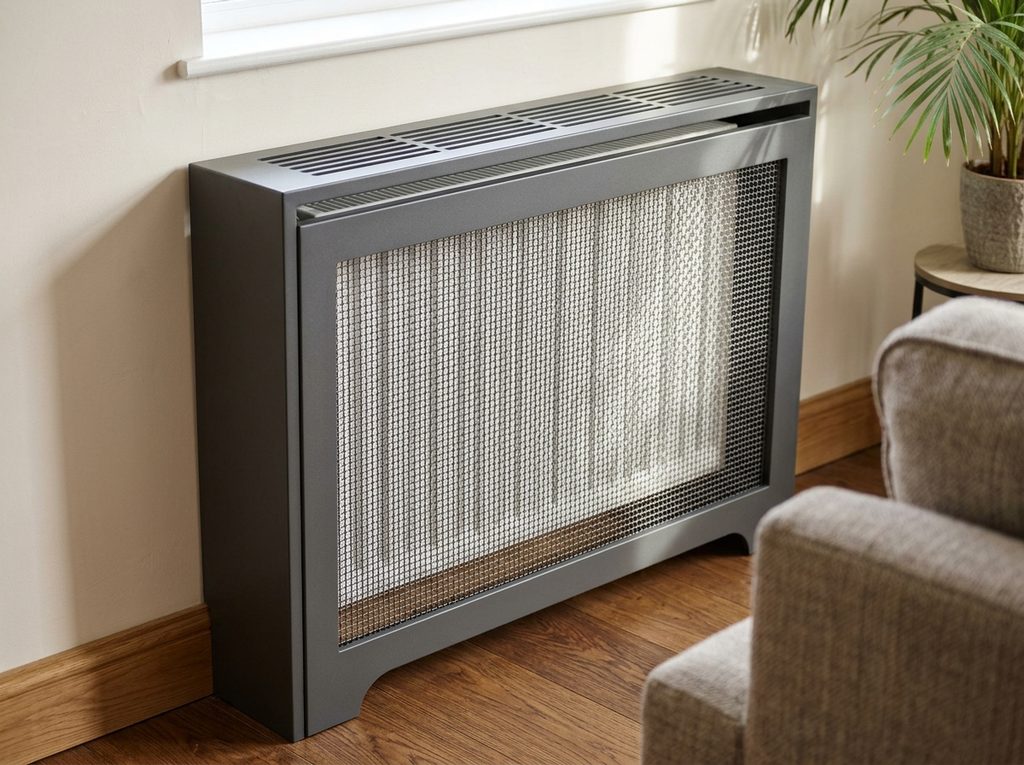
Conversely, better-designed alternatives-such as perforated metal covers or slatted wooden cabinets with ample breathing room-show a much smaller efficiency penalty, sometimes restricting output by as little as 10 to 15 percent. Independent studies on low-temperature hot water radiators confirm that ventilation and spatial clearance matter far more than the raw material of the cover itself.
When airflow is restricted, your boiler has to work harder and run longer to reach the target temperature set on your thermostat, directly translating to higher heating costs over the winter months.
Key Factors That Determine Heat Loss
Not all radiator enclosures perform equally. Several design choices dictate whether a cover will maintain a comfortable room temperature or choke your heating system:
- Ventilation Openings: Grilles, louvers, and laser-cut patterns at the bottom and top allow cool air to enter and warm air to escape freely.
- Internal Clearance: A tight fit suffocates the appliance. Adequate space is required on all sides to let convection currents form.
- Material Choice: Materials like galvanised steel conduct heat well, while thick, solid timber acts as a stronger insulator, trapping heat inside.
- Solid Shelving: A massive, overhanging top shelf can deflect rising heat sideways or downward instead of letting it disperse into the room.
Ideal Clearance Measurements for Efficiency
To minimize heat loss, proper sizing is non-negotiable. Heating experts recommend maintaining specific minimum clearances between your radiator and the inside of the cover:
- Width: At least 50mm (5cm) of total extra width to accommodate the body and side valves.
- Height: At least 30mm (3cm) of vertical clearance above the top panels.
- Depth: At least 30mm (3cm) of space between the front grille and the radiator surface.
Leaving these strategic gaps ensures that air can circulate smoothly without choking the convection cycle.
Can a Cover Actually Improve Efficiency?
While most covers cause a slight drop in performance, certain features can counteract this effect and optimize heat distribution.
A standard wall-mounted radiator often loses valuable energy backward, warming the external brickwork rather than the living space. Fitting a heat-reflecting foil panel directly to the wall behind the radiator bounces that infrared energy back into the room. Many quality covers include this reflective backing as a standard feature.
Additionally, well-designed angled grilles can direct warm air forward into the lower half of the room rather than letting it shoot straight up to the ceiling where it goes to waste.
Common Pitfalls to Avoid
If you are planning to install or keep a radiator cover, watch out for these common mistakes that compromise heating efficiency:
- Blocking Thermostatic Valves: If your TRV is completely enclosed inside a cabinet, it will measure the hot air trapped within the cover rather than the room temperature, causing the valve to shut off prematurely.
- Placing Furniture Too Close: Pushing a heavy sofa or a long set of curtains directly against the front of the cover blocks airflow entirely.
- Ignoring Underlying Issues: If a room is cold because your radiator is full of sludge or trapped air, putting a decorative cover over it will only make a bad situation worse.
Weighing the Pros and Cons
Deciding whether to use a radiator cover comes down to balancing aesthetic desires against thermal efficiency.
| Advantages | Disadvantages |
|---|---|
| Hides dated or ugly metal panels | Can reduce overall heat output |
| Provides a useful display shelf | Risks trapping heat if poorly ventilated |
| Protects children from hot surfaces | May interfere with thermostat readings |
| Improves overall room aesthetics | Requires careful measuring and fitting |
For most households with well-functioning central heating systems, a properly ventilated cover with generous slots and a reflective backing offers a sensible compromise. The minor reduction in heat output is often a worthwhile trade-off for enhanced home safety and a cleaner interior design.