
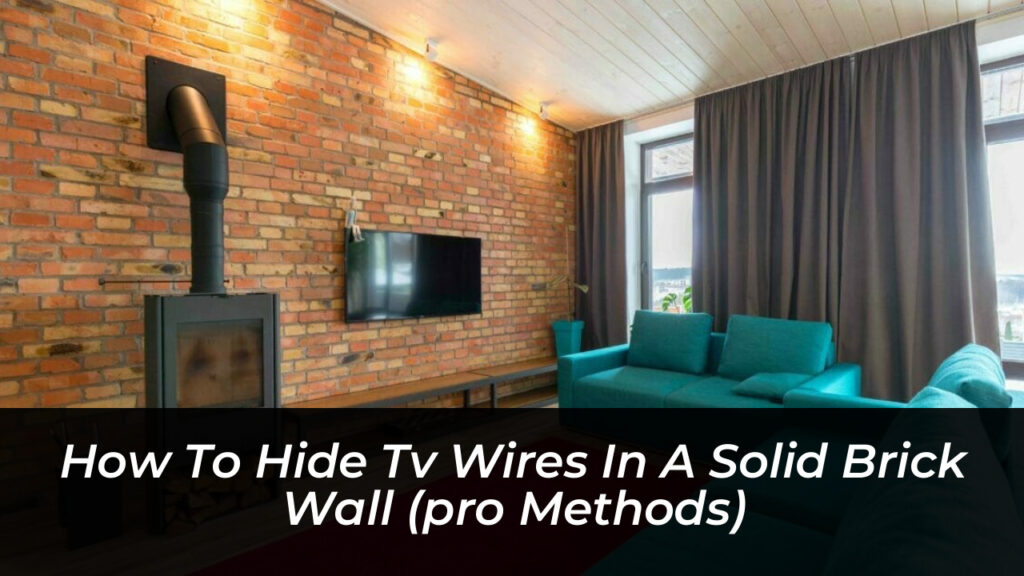
Mounting a flat-screen television on a solid brick wall creates a stunning focal point, but dangling black cables instantly ruin the aesthetic. Unlike standard drywall construction, you cannot simply fish cables through an interior air cavity. Solid masonry leaves nowhere for wires to hide behind the surface, forcing you to choose between surface-mounted concealment kits or intensive structural work.
The Masonry Challenge
Drywall installations rely on open stud bays that make dropping cables straightforward. Solid brick, concrete, or stone walls offer zero interior clearance. Brick is solid all the way through, meaning every single cord must either run across the face of the masonry or be permanently embedded by cutting deep channels into the stone.
Before grabbing any tools, evaluate your priorities. Are you renting and unable to modify the wall? Do you want a temporary fix, or are you willing to invest time in a permanent solution? The correct strategy depends heavily on your wall type, your budget, and your DIY comfort level.
Method 1: Paintable Surface Raceways (The Best DIY Option)
For most homeowners and renters, a surface-mounted cable raceway provides the cleanest visual upgrade without requiring masonry bits, angle grinders, or mortar patching. These flat plastic or metal channels attach directly to the brick surface, enclosing the power cord, HDMI cables, and optical lines safely inside.
To execute this method cleanly:
- Measure the exact distance from the bottom of your wall-mounted TV down to your baseboard outlet or media console.
- Cut your plastic raceway to length using a hacksaw or heavy-duty utility shears.
- Clean the brick dust off the installation path so adhesives or masonry anchors hold securely.
- Attach the raceway to the wall using a combination of strong double-sided mounting tape and masonry screw anchors placed in the mortar joints.
- Snap your cables inside the channel and secure the front cover.
The secret to making a raceway look professional on brick is color-matching. Buy a paintable primer-coated raceway kit, take a small paint sample of your wall to your local hardware store, and paint the plastic channel to match. When painted carefully, the raceway blends into the background from a normal viewing distance.
Method 2: Mortar-Line Camouflage
If you have exposed red or reclaimed brick, a straight plastic channel running vertically across the middle of individual bricks will stand out immediately. You can drastically minimize this visual footprint by altering your routing path.
Plan your cable path to follow existing mortar joints. Most brick walls feature horizontal and vertical mortar lines every few inches. Running your flat cords or a narrow slim-profile raceway directly along a deep mortar shadow tricks the human eye. Paint the surface cover to match the exact shade of the grey or tan mortar rather than the brick face. To the casual observer, the installation simply reads as part of the wall’s natural texture.
Method 3: Chasing Channels Into the Brick (The Permanent Pro Finish)
If you demand a completely invisible, flush finish and own your home, you can chase channels directly into the brickwork. This technique mimics standard professional electrical installations but requires specialized heavy-duty masonry tools.
This process is messy, loud, and physically demanding. Here is what a professional masonry wire chase involves:
- Safety First: Put on safety goggles, a high-efficiency dust mask, and heavy work gloves. Masonry dust is hazardous to inhale.
- Layout Marking: Use a chalk line and level to mark straight parallel lines where your cables will run from the TV mount down to the lower outlet box.
- Cutting: Use an angle grinder equipped with a diamond cutting disk to score the brick along your chalk lines, cutting to a depth that accommodates your electrical conduit.
- Chiseling: Use an SDS-plus rotary hammer drill or a manual cold chisel and hammer to clear out the brick and mortar between your cuts, creating a clean trough.
- Conduit Installation: Place flexible electrical PVC or metal conduit inside the channel to protect the wires. Secure it using masonry fasteners.
- Patching: Fill the channel back in using matching mortar mix or high-strength wall patch compound, feathering the surface smooth so it matches the surrounding brick texture before painting.
Alternative Creative Solutions
If cutting brick or dealing with surface raceways sounds like too much trouble, several alternative tactics keep your entertainment center looking tidy:
Use Adjacent Drywall: If your brick fireplace or accent wall borders a standard drywall partition, route your cables sideways behind the TV mount and into the adjacent drywall cavity where fishing wires is simple.
Construct a False Wall: Many modern living rooms utilize a wood-paneled or shiplap feature wall built directly over the solid brick structure. This creates a hidden air gap behind the new panels, allowing complete freedom for running power and media cables anywhere you want.
Decorative Disguise: If all else fails, position tall indoor plants, floating wooden shelving, or hanging macrame pieces strategically below the TV to break up the vertical drop of any visible cords.
Important Electrical Safety Reminders
No matter which hiding method you choose, never run standard flexible appliance power cords or extension cords inside an enclosed wall cavity or sealed conduit without proper ratings. Standard flexible cords are not rated to handle trapped heat within enclosed spaces, creating a severe electrical fire hazard. Always ensure your setup complies with local building codes, and consult a licensed electrician if you need to install new electrical outlets closer to your masonry-mounted television.