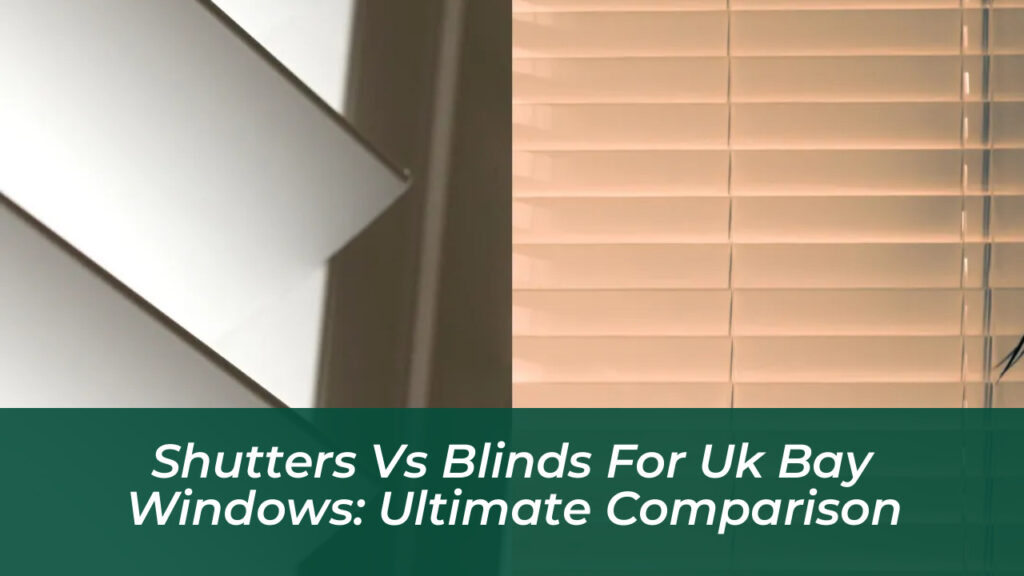
Bay windows are a defining feature of British homes, catching the eye whether they grace a Victorian terrace in London, a 1930s semi in Manchester, or a newer build. Yet their sharp angles, multiple glass panes, and protruding shapes make dressing them a notorious puzzle. Weighing window shutters against blinds for a UK bay window means balancing everyday light control, lasting durability, upfront cost, and overall style.
The Unique Challenges of UK Bay Windows
A standard flat window accommodates almost any off-the-shelf blind or curtain pole without fuss. A bay window, by contrast, relies on three, five, or seven individual panes set at distinct angles. This geometry changes how light enters the room, how privacy works, and how window dressings must be mounted.
Off-the-shelf blinds rarely work here. Hanging three separate roller blinds inside a bay frame leaves gaps at the angled joins where sunlight bleeds through and prying eyes can peek in. Made-to-measure solutions are essential to handle tight angles, awkward handles, and opening sashes. Both shutters and bespoke blinds can be manufactured to fit these spaces, but they treat the room in fundamentally different ways.
Plantation Shutters for Bay Windows
Plantation shutters are often seen as the gold standard for bay windows, particularly in older properties. Because they are custom-built as a continuous framework connected by specialized corner posts, they wrap around bay angles without leaving awkward gaps.
Aesthetics and Architectural Integration
Shutters do more than just cover a bay window; they amplify its architecture. By following the structural lines of the room, they read as a permanent, high-end fixture rather than a temporary soft furnishing. This clean look instantly boosts kerb appeal from the outside, which is why estate agents frequently point out shutters as a major selling point in UK property listings.
Light Control and Privacy
The tilting louvres on shutters offer fine control over incoming light. If a front-facing bay window looks straight onto a busy pavement, tilting the louvres upward floods the ceiling with natural daylight while completely blocking the view into the ground-floor living space. For even more flexibility, tier-on-tier shutters let you open the top panels independently of the bottom ones.
Insulation and Energy Efficiency
Older UK properties with single- or double-glazed bay windows lose plenty of heat during chilly winters. Solid timber or waterproof faux-wood shutters create an extra physical barrier against drafts, helping to trap warmth and keep room temperatures steady.
Blinds for Bay Windows
Blinds remain a hugely popular choice for UK homes, prized for their design versatility, softer textures, and gentler initial price tag.
Styles and Customisation
Blinds open up a wide range of fabrics, textures, and operational styles:
- Roman Blinds: Bring warmth, softness, and rich fabric patterns that soften the hard angles of a room.
- Roller Blinds: Offer a sleek, minimal look that fits contemporary apartments or kitchen bays.
- Venetian Blinds: Use adjustable slats made from aluminum or wood, offering a similar look to shutters at a fraction of the cost.
- Pleated or Cellular Blinds: Ideal for awkward glazing shapes, featuring honeycomb air-trapping pockets that boost thermal retention.
Cost and Installation Simplicity
For anyone dressing multiple rooms at once, blinds are much kinder to the wallet. While bespoke blinds still require accurate measuring for a clean bay fit, standard designs are generally easier to install as a DIY weekend project than the precise carpentry and frame alignment needed for heavy shutter systems.
Direct Comparison: Shutters Versus Blinds
| Feature | Plantation Shutters | Bespoke Blinds |
|---|---|---|
| Lifespan | 20+ years with minimal wear | 5 to 12 years depending on fabric and material |
| Light Management | Exceptional (precise angle tilting) | Good, but often limited to up or down |
| Bay Shape Fit | Seamless continuous framework with corner posts | Individual panels with minor gaps at the angles |
| Upfront Cost | Higher initial investment | More budget-friendly and accessible |
| Maintenance | Quick wipe down with a microfiber cloth | Varies; fabric blinds are more prone to staining |
Which Option Wins for Your Room?
The right choice ultimately depends on how you use the room and your long-term plans for the property.
Choose shutters if: You are dressing a front-facing living room or dining room bay where exterior kerb appeal, maximum daytime privacy from passing foot traffic, and a permanent architectural upgrade matter most. They are a long-term investment built to handle heavy daily use.
Choose blinds if: You need budget flexibility, prefer softer fabric textures in a bedroom, or require absolute blackout performance for better sleep. Blinds also suit anyone who likes to update their interior color schemes frequently, as swapping out a set of fabric blinds is far easier and less costly than replacing custom-fitted timber structures.
Take a moment to watch how sunlight moves across your bay through the changing seasons. A west-facing bay catching intense summer glare benefits enormously from the adjustable louvres of shutters, whereas a home office needing quick light adjustment might find a sleek roller or Venetian blind to be the most practical daily companion.