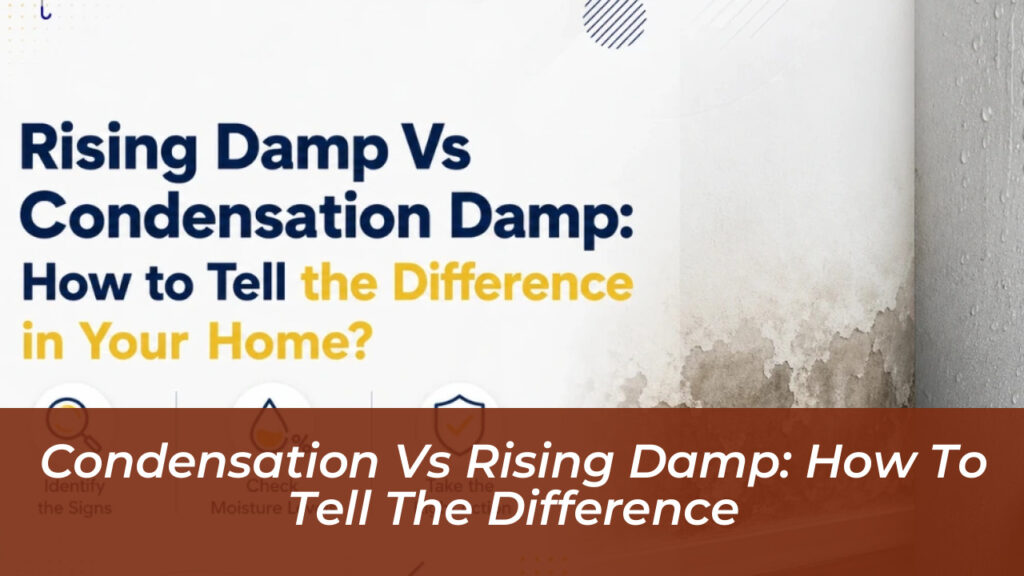
Discovering damp patches on your walls can instantly cause panic. You might notice peeling wallpaper, a musty odor, or dark patches creeping across the room. Naturally, your first instinct is to grab a sponge or look up a quick fix. However, if the underlying cause is misdiagnosed, treating the symptoms becomes an endless cycle of wasted time and money. The two most frequently confused culprits in residential properties are condensation and rising damp. While both create unsightly damage and threaten indoor air quality, they originate from entirely different sources and demand completely opposing remedies. Understanding how to tell them apart is the single most effective step you can take before hiring a contractor or buying specialized treatments.
Homeowners often default to assuming any moisture problem is standard surface condensation. Conversely, aggressive damp-proofing sales pitches frequently convince vulnerable buyers that a harmless patch of winter moisture is actually catastrophic rising damp requiring expensive chemical injections. Cutting through this confusion requires a clear look at the physical mechanics, distinct visual patterns, and environmental triggers associated with each type of moisture.
What Is Rising Damp and How Does It Happen?
Rising damp is a genuinely structural issue caused by groundwater moving upward through porous building materials. Bricks, mortar, and stone act like natural sponges through a physical process known as capillary action. Water from the soil is drawn vertically through tiny pores in the masonry, slowly working its way up the wall.
Most modern and well-maintained properties feature a damp-proof course (DPC). This is a continuous horizontal waterproof barrier-often made of slate, heavy-duty plastic, or a chemical damp-proof membrane-built into the walls a few inches above ground level. The DPC blocks moisture from traveling higher into the living spaces. When this barrier fails, becomes damaged, bridges with external soil, or was entirely absent in older heritage buildings, groundwater moves freely into the structure.
Because gravity and capillary limits restrict how far water can travel upward, true rising damp rarely climbs higher than one meter from the floor. It develops gradually over months or years, which is why it often goes entirely unnoticed until aesthetic damage reaches the surface of interior plaster.
What Is Condensation Damp and Why Does It Form?
Condensation damp behaves according to entirely different rules of building physics. Instead of water entering your home from the ground or through exterior masonry, condensation forms from moisture already trapped inside your living spaces.
Everyday human activities release enormous amounts of water vapor into the air. Taking a hot shower, boiling water on the stove, using a tumble dryer, and even breathing while sleeping all contribute to indoor humidity. Warm air has a high capacity for holding moisture. When that warm, humid air comes into contact with a cold surface-such as single-glazed window panes, uninsulated exterior walls, or cold water pipes-its temperature drops rapidly. Cold air cannot hold as much moisture as warm air, forcing the water vapor to transform back into liquid droplets.
Modern energy efficiency measures, such as installing airtight double glazing and sealing drafts, can inadvertently exacerbate condensation if adequate mechanical ventilation is missing. Unlike structural damp issues, condensation is highly reactive to daily habits and seasonal weather shifts, typically peaking during cold winter months when windows remain tightly shut.
Comparing Visual Signs: How to Tell Them Apart
Examining the location, shape, and physical texture of the damp patch provides immediate clues regarding its origin. Taking a systematic approach to inspection prevents costly misdiagnoses.
Location and Height on the Wall
- Rising Damp: Strictly confined to the lowest sections of ground-floor walls. It will almost never appear on upper floors or extend higher than approximately one meter above the skirting boards.
- Condensation: Can appear anywhere temperature differentials occur. It frequently manifests in upper room corners, around cold window reveals, behind large wardrobes pushed against exterior walls, and occasionally on ceilings.
Pattern and Spread
- Rising Damp: Leaves a distinct horizontal tidemark running parallel to the floor. The staining follows a consistent, uniform height across the affected masonry.
- Condensation: Produces irregular, droplet-streaked patterns or spotted black mold colonies. The shape shifts depending on where cold spots and airflow dead zones exist.
Surface Texture and Material Impact
- Rising Damp: Carries ground salts (nitrates and chlorides) upward into the plaster. As moisture evaporates at the surface boundary, these salts crystallize, leaving a white, powdery residue known as efflorescence. The plaster often feels damp deep within the core, and skirting boards frequently suffer from wet or dry rot.
- Condensation: Remains largely superficial. The surface often feels wet or slimy to the touch, and black mold spores thrive on organic components of wallpaper and paint without necessarily rotting the underlying brickwork immediately.

Can You Have Rising Damp and Condensation Simultaneously?
Yes, property owners frequently deal with a compounding hybrid scenario, particularly in older Victorian or Edwardian brick-built homes. When rising damp compromises the lower section of a wall, it significantly increases the thermal conductivity of that masonry. Wet bricks lose their insulating properties and become profoundly cold.
As indoor warm air circulates through the room, it encounters these localized cold zones created by the rising damp below. Consequently, condensation forms directly over and around the rising damp zone. In these complex cases, treating only the ventilation will fail because the structural moisture remains, and applying a damp-proof course alone will not stop the surface condensation fed by high indoor humidity.
Diagnostic Steps Before Committing to Treatment
Rushing to hire a contractor without gathering diagnostic evidence is a recipe for inflated repair bills. Before signing any service agreements, perform these basic checks:
- Evaluate the Weather Correlation: Does the damp patch worsen immediately after heavy rainfall or stay constant year-round? Rising damp and plumbing leaks fluctuate with weather or groundwater tables, whereas condensation responds immediately to indoor heating and ventilation changes.
- Check the External Ground Levels: Walk outside the affected wall. Is the exterior pathway, flower bed, or patio sitting higher than your indoor damp-proof course? High ground bridging allows water to bypass the DPC entirely, mimicking rising damp.
- Inspect Drainage and Gutters: Look for overflowing gutters, cracked downpipes, or defective exterior render. Water splashing against the outside wall causes penetrating damp, another frequent imposter often misdiagnosed as rising damp.
- Monitor Indoor Humidity: Place a digital hygrometer in the room. Relative humidity consistently exceeding 60 percent signals a severe risk of condensation-driven mold growth.
Tailored Remediation Pathways
Because the root causes are fundamentally different, applying a one-size-fits-all remedy guarantees failure. Match the treatment directly to the diagnosed cause.
Corrective Actions for Rising Damp
Rising damp demands structural intervention to sever the capillary pathways. If your damp-proof course has failed, a specialist may need to inject a chemical damp-proof cream into the mortar lines or install a physical damp-proof membrane. Salt-contaminated plaster must be hacked off and replaced with a specialized, breathable, salt-retardant render. Never use standard gypsum plaster over an area recovering from rising damp, as residual salts will pull moisture from the air and ruin the finish.
Corrective Actions for Condensation
Condensation requires moisture management and thermal improvement rather than structural surgery. Upgrading background ventilation by installing passive trickle vents, adding mechanical extractor fans in high-moisture zones like kitchens and bathrooms, and ensuring adequate whole-house airflow makes a massive difference. In stubborn cases, utilizing dehumidifiers or installing positive input ventilation (PIV) systems effectively purges stale, humid air. Insulating cold exterior walls or upgrading to thermally efficient glazing raises surface temperatures above the dew point, permanently halting droplet formation.
When to Call an Independent Professional
While DIY diagnostics help narrow down the problem, certain situations require expert evaluation. If the damp is spreading aggressively, if structural timber shows signs of decay, or if you receive a quote for expensive chemical DPC treatments from a company that sells only one specific product, seek a second opinion. Always look for certified surveyors accredited by independent trade bodies like the Property Care Association (PCA) who offer unbiased, comprehensive diagnostic surveys rather than sales-driven assessments.
Taking the time to accurately differentiate between condensation and rising damp saves you from unnecessary expense and structural distress. By matching the appropriate remedy to the true source of moisture, you safeguard your property’s long-term health, protect your indoor air quality, and ensure your home remains a dry, comfortable sanctuary.