
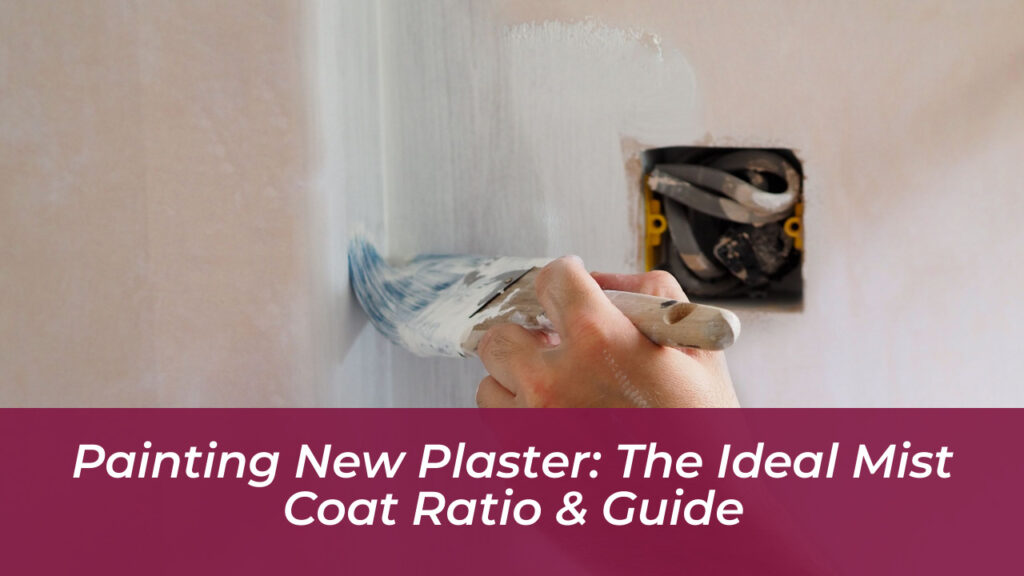
Painting straight onto fresh plaster is one of the fastest ways to ruin a decorating project. Because new plaster is intensely porous and highly permeable, it acts like a dry sponge, sucking the moisture straight out of standard paint. This leaves the pigment stranded on the surface without any chemical bond, leading to bubbling, cracking, and sheets of paint peeling away from the wall. Applying a proper mist coat solves this problem by sealing the surface and creating a stable anchor for your final topcoats. Getting that foundation right depends entirely on understanding the correct paint-to-water ratio.
What Is a Mist Coat and Why Is It Essential?
A mist coat is simply a very thin, watery layer of emulsion paint applied directly to bare, unpainted plaster. Unlike primers that sit as a distinct film, a properly mixed mist coat physically seeps into the microscopic pores of the fresh plaster. As the water evaporates, it draws the paint particles deep into the substrate, locking them into the wall.
Skipping this step or using the wrong type of paint guarantees failure. Never use vinyl-based, silk, or acrylic paints for this initial layer. These formulations form a hard plastic skin as they dry, preventing the plaster from breathing and stopping the paint from gripping the wall.
The Ideal Mist Coat Ratio Explained
There is plenty of conflicting advice regarding the exact proportions of paint and water, but industry standards generally fall between a 70% to 80% paint concentration. The goal is a liquid consistency similar to single cream or thin soup-runny enough to soak in, but with enough pigment to leave a faint, chalky residue.
- Standard Emulsion Mix: 4 parts water-based matt paint to 1 part clean water (roughly an 80:20 ratio).
- Thicker Contract Matt: 3 parts paint to 1 part water (roughly a 75:25 ratio).
- Alternative Two-Coat Method: Some trade professionals apply an initial 50:50 coat followed by a second 75:25 coat for maximum security on highly absorbent surfaces.
Always check the manufacturer instructions printed on your paint tin. Some modern formulations have specific dilution guidelines, while specialized trade paints require no thinning at all.
How to Tell If Your Plaster Is Dry Enough
No mist coat ratio will save your walls if the plaster underneath is still holding moisture. Freshly applied plaster must dry completely before any liquid touches it. Depending on humidity, temperature, and ventilation, this process takes anywhere from one to four weeks.
Look closely at the colour of the walls. Fresh plaster starts as a dark, patchy brown. As it dries, it transitions into a uniform, pale pink colour with zero dark damp patches remaining. Rushing this stage traps moisture behind the paint film, causing unsightly white salt deposits known as efflorescence.
Step-by-Step Guide to Applying a Mist Coat
Applying thinned paint is notoriously messy because the watery consistency increases the risk of splatters. Proper preparation makes the entire process straightforward.
1. Prepare the Surface
Scrape away any stubborn plaster burrs or high spots using a filling knife or scraper. Avoid aggressive sanding on bare plaster, as this can polish the surface and prevent paint adhesion. Lay down heavy-duty dust sheets and tape up skirting boards and sockets.
2. Mix the Paint Accurately
Pour your chosen water-based matt emulsion into a clean bucket or paint kettle. Use a measuring jug to add clean tap water according to your chosen ratio. Stir the mixture thoroughly with a paddle attachment or mixing stick for at least two minutes until completely smooth.
3. Cut In and Roll
Start by using a 4-inch synthetic brush to cut in along the ceiling line, corners, and skirting boards. For the main wall areas, load up a medium-pile 9-inch roller. Work in systematic sections, rolling the paint evenly across the wall without overworking the surface.

4. Allow Proper Drying and Curing Time
A mist coat usually dries to the touch within one to two hours due to the rapid absorption of water by the plaster. However, you must leave the room well-ventilated and allow the coat to cure for a full 24 hours before assessing the finish or applying further layers.
How to Test Your Mist Coat
Before moving on to your decorative topcoats, perform a quick adhesion test. Press a strip of low-tack masking tape firmly onto the dried mist coat, rub it down, and peel it off quickly. If the tape comes away clean, the plaster is successfully sealed and ready for action. If paint flakes off onto the tape, the mist coat was either too thick or applied over damp plaster, requiring light remediation before you paint your final colour coats.