
Arranging furniture in a compact square room often feels like solving a geometric puzzle, especially when your favorite piece is an L-shaped sofa. Many people assume a bulky sectional will instantly overwhelm a tight layout. However, placing a corner sofa thoughtfully in a small square room can actually unlock hidden floor space, improve traffic flow, and create a genuinely cozy atmosphere.
The Proportions of a Square Room
Square rooms present a distinct design challenge because all four walls share identical dimensions. This symmetry can make furniture arrangement feel rigid if you push every item against the perimeter. When placing a corner sofa, your main goal is to break up those boxy lines while preserving an open center.
Before moving any heavy furniture, measure both the walls and the exact footprint of your sofa. Remember to account for clearance around doorways and windows. A common mistake is buying a sectional without verifying which side the chaise rests on, which can trap you in an awkward traffic bottleneck.
Primary Layout Strategies for Corner Sofas
1. Anchoring the Corner
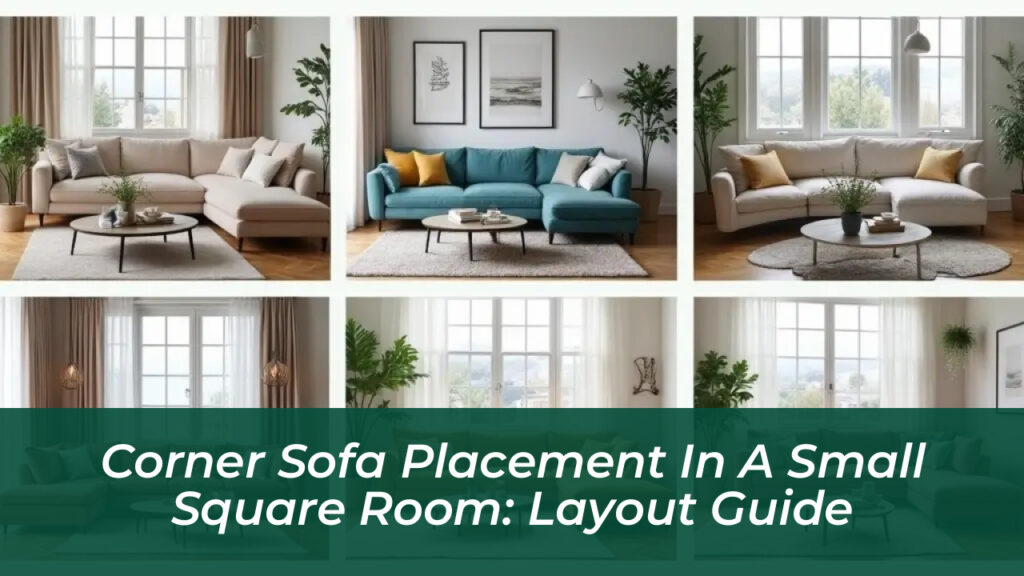
The most intuitive approach is pushing the sofa directly into the room’s physical corner. This instantly frees up the maximum amount of central floor space, making the room feel larger. Just make sure that nearby doors or heating vents remain unblocked. Pairing this setup with a streamlined coffee table helps maintain visual breathing room.
2. Floating the Sectional to Define Zones
In a multi-functional square room, pushing your sofa against the wall isn’t mandatory. Pulling the sofa slightly away from the walls and floating it creates a distinct perimeter for your living zone. This layout works wonderfully if your room doubles as a home office or reading nook, allowing the back of the sofa to serve as a natural room divider.
3. Facing the Focal Point
If your room features a fireplace, a media console, or a large window, orient your corner sofa to face that specific feature. Even in a small space, angled placement works wonders. Positioning the sofa diagonally across a corner softens sharp right angles and introduces dynamic visual movement.
Maximizing Functionality and Flow
Once you settle on a layout, the surrounding elements dictate how spacious the room feels. Avoid blocking natural light sources with high-backed sections of the couch. If the back of your sofa faces the main entryway, choose a low-profile model that maintains sightlines across the entire room.
- Lighting Placement: Combine floor lamps behind the sofa with wall sconces to eliminate dark, cramped corners.
- Table Selection: Opt for round or oval coffee tables to contrast against the sharp angles of the square room and the sectional frame.
- Under-Sofa Clearance: Select furniture with slightly elevated legs to allow light to pass underneath, tricking the eye into perceiving a larger floor area.
Choosing Complementary Accessories
To keep a small square room from feeling cluttered, keep your textile and color palette cohesive. Light neutral upholstery like soft gray, cream, or warm beige reflects natural sunlight and expands the perceived boundaries of the room. Introduce texture through knitted wool throws, linen accent pillows, or a low-pile area rug that anchors the seating arrangement without overwhelming the floor.
By thoughtfully assessing your room dimensions, experimenting with angled or floating configurations, and keeping surrounding decor light and purposeful, your corner sofa can become a space-saving asset rather than a spatial hazard.