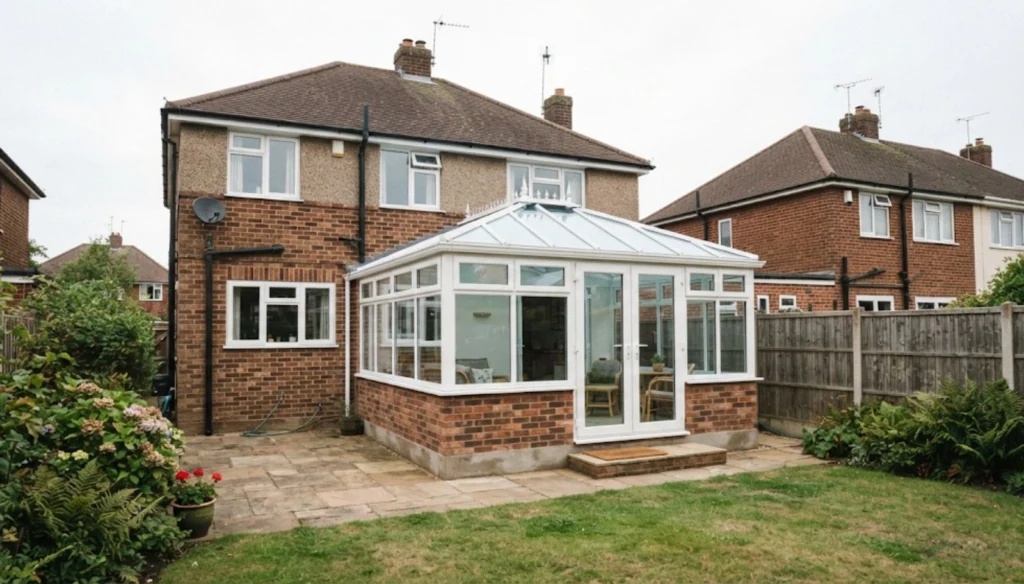
If you have just received a stack of conservatory quotes, or you are about to start contacting installers, knowing how to compare companies, specifications, and prices can be overwhelming. Choosing a builder is not just about finding the lowest number on a piece of paper; it is about ensuring structural integrity, energy efficiency, and legal compliance.
This guide explains exactly what to check before accepting a quote, how to navigate UK property regulations, and what you should realistically expect to pay in 2026.
What to Check Before Choosing a Conservatory Company
Before comparing designs or prices, establish who you are actually hiring and what responsibility they will take for the work.
Check credentials and certification
Check whether the installer is registered with an appropriate recognised certification, trade or workmanship scheme for the type of work being carried out. Do not assume that membership of a scheme such as FENSA or CERTASS automatically means the conservatory itself is covered, as scheme scopes and the type of work covered vary.
Ask exactly what certification, building-control approval or compliance documentation you will receive when the work is complete, as buyers, solicitors or lenders may ask for evidence that the work was properly certified.
Understand planning permission vs building regulations
Do not assume that “no planning permission needed” means “no building rules apply”. These are separate issues: planning permission controls whether the development is allowed, while building regulations deal with how the work is constructed and whether it meets applicable technical standards.
Note: Planning and building regulations differ across England, Wales, Scotland and Northern Ireland. This guide’s regulatory information is primarily based on England.
Under Planning Portal guidance for England, conservatories are subject to extension planning rules, though many fall under permitted development.
A typical conservatory can be exempt from building regulations if it is ground-level, single-storey, less than 30 square metres in floor area, separated from the house by external-quality doors, windows or walls, and has an independent heating system with separate temperature and on/off controls. The glazing and any fixed electrical installations must also meet applicable building regulations requirements.
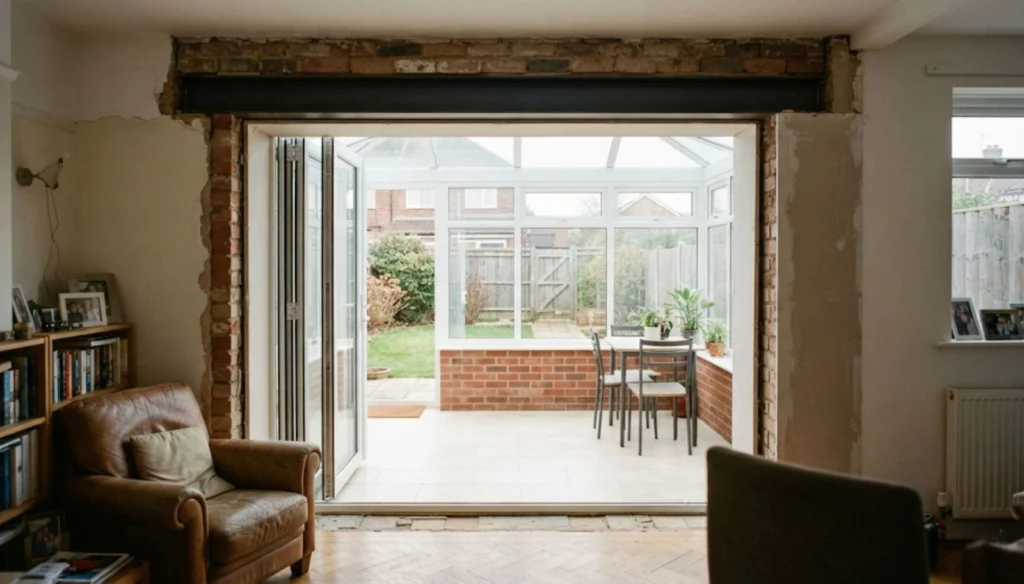
Furthermore, if you plan to create a new structural opening between the house and conservatory, separate building regulations approval will be required even where the conservatory itself is exempt.
Ask who handles the base and groundwork
Problems can arise when groundwork and installation are poorly coordinated. Ask the company who is responsible for digging the footings and laying the base, and how the two stages are managed. If they use sub-contractors, clarify who holds the ultimate responsibility if something goes wrong.
Check the guarantee and insurance-backed protection
An insurance-backed guarantee (IBG) can provide additional protection if the installer later ceases trading. However, do not assume all policies are identical. Check who provides the policy, exactly what work it covers, and what the conditions are for making a claim.
Look at recent local installations
Seeing recent work in person, where possible, gives you a much better indication of the installer’s workmanship than relying on brochures alone. Ask the company for addresses of recent installations in your area.
Local vs National Conservatory Companies
When searching for the best conservatory companies near me, you will likely encounter a mix of large national brands and local independent installers.
National companies often have streamlined processes and may offer flexible finance options. Local installers, on the other hand, rely heavily on their regional reputation and can sometimes offer a more bespoke service. Neither is inherently better than the other; your decision should be based on the quality of their survey, the clarity of their quote, and their references.
The size, location, frame material, roof type, foundations, access, and glazing specification can move the quote substantially. The surrounding landscape and outdoor area can also influence how the finished conservatory fits into the rest of the property.
Questions to Ask Before Accepting a Quote
Before making a decision, ask potential installers these specific questions:
- Who is responsible for the foundations and base?
- Who handles building control applications if they are required?
- Will the existing house opening be altered, and how does this affect building regulations?
- What exact glazing specification is included in the price?
- What roof system is being quoted?
- Who provides the guarantee, and is it insurance-backed?
- Who installs and certifies the electrics?
- What happens if the ground conditions require additional work?
- What exactly happens if the final cost is higher than the quotation? (Clarify how variations are approved and whether written consent is required before additional work starts.)
What Should a Conservatory Quote Include?
A single total price written on a piece of paper is not sufficient. Your written quotation should itemise the following:
- Foundations and groundwork
- Base and dwarf wall construction
- Frame materials and style
- Glazing specification (e.g., U-values, self-cleaning glass)
- Roof system
- Doors and hardware
- Gutters and downpipes
- Electrics and lighting
- Plastering and internal finishes
- Waste removal and skip hire
- Building control or planning application fees (where applicable)
- Guarantees and warranty terms
- VAT
- Clear details of any exclusions (what is not included)
Ask the installer to identify any provisional sums or allowances separately rather than presenting them as fixed costs.
uPVC vs Aluminium vs Timber
The material you choose will significantly impact the cost, appearance, and maintenance of your conservatory.
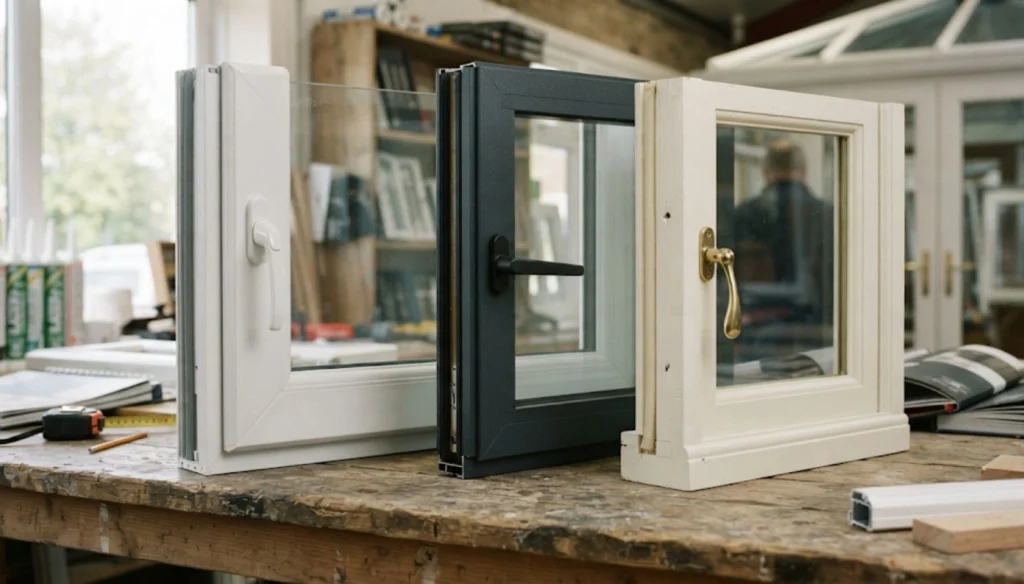
uPVC is the most common and budget-friendly option. It requires minimal maintenance and provides good thermal efficiency, though the frames are generally thicker than other materials.
Aluminium is generally chosen for its strength, slim sightlines, and modern appearance. It usually costs more than uPVC, but its durability and low-maintenance finish make it highly attractive for higher-spec projects.
Timber is often the most expensive of the three frame options, particularly when you choose bespoke joinery or premium hardwood. It offers a beautiful, traditional aesthetic but requires regular maintenance to protect it from the elements.
How Much Does a Conservatory Cost in the UK in 2026?
There is no single UK-wide conservatory price. The size, location, frame material, roof type, foundations, access, and glazing specification can move the quote substantially.
Based on 2026 industry data for a standard 3.5m x 3.5m uPVC installation [Source: Checkatrade 2026 Pricing Guide], typical ranges are approximately:
- uPVC Lean-to: £9,000 to £11,500
- uPVC Edwardian: £10,500 to £12,000
- uPVC Victorian: £12,000 to £13,500
Higher-spec or more complex projects can move into the £15,000 to £25,000+ range.
How Much Does a Conservatory Roof Cost?
The roof is a major factor in both the cost and the usability of the space. A standard polycarbonate roof is the cheapest option, but it generally has weaker thermal and acoustic performance compared to glass or solid roofs.
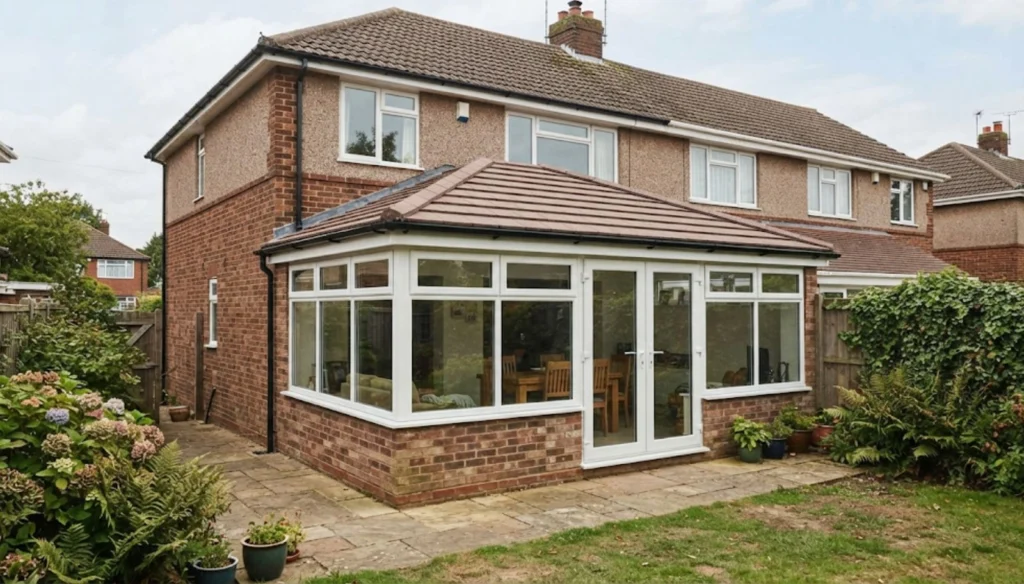
A well-insulated solid roof can improve thermal performance and give the room a more conventional extension-like feel. For a typical replacement, current UK pricing guides put solid-roof costs around £5,000 to £7,000, although larger or more complex projects can reach £10,000 or more.
You should have the existing frames and foundations assessed by a suitably qualified structural professional before replacing the roof, because they may not have been designed to carry the additional load.
Red Flags to Watch For
Watch out for these warning signs during the quoting process:
- Cash-only demands: Be cautious if a company insists on cash and is unwilling to provide a proper receipt or written payment record. Where the transaction qualifies, paying by credit card can provide additional protection under Section 75 of the Consumer Credit Act. A normal bank transfer does not automatically provide the same protection.
- No identifiable business address: Be cautious if the installer provides only a mobile number and cannot give you a verifiable business name, address and contact details.
- Lack of a proper survey: A proper site survey should include accurate measurements and an assessment of factors such as ground levels, access and drainage before a final quote is issued.
Supply-and-Fit vs DIY
While DIY kit conservatories appear cheaper initially, they require a high level of competence. You must still manage or pay for digging footings, pouring concrete, plastering, electrical work, and determining whether building regulations or other approvals apply. For most homeowners, using a professional supply-and-fit company can simplify the project because one contractor is coordinating the different stages of the build.
Before You Sign the Contract
Trading Standards guidance commonly advises consumers to obtain at least three written quotes so they can compare prices and specifications accurately.
Furthermore, pressure selling is a clear warning sign. If a salesperson insists on a “today only” discount, do not be rushed. For qualifying contracts agreed in your home, consumer rules generally provide a 14-day cancellation period, although exceptions and special rules can apply. The trader must provide the required cancellation information in a form you can keep.
Frequently Asked Questions
What should I compare when getting conservatory quotes?
Don’t compare the headline price alone. Check that each quote includes the same frame material, glazing specification, roof system, foundations, drainage, electrics, internal finishes, waste removal, VAT and any applicable fees. Otherwise, a cheaper quote may simply be missing work included by another installer.
Do I need planning permission for a conservatory?
Not always. Many conservatories fall under permitted development rights, meaning you do not need formal planning permission, provided they meet specific size and placement limits. However, listed buildings, properties in conservation areas and homes affected by other planning restrictions may have additional requirements. Always check with your local planning authority before starting work.
Can I put a solid roof on my existing conservatory?
Yes, but it is not as simple as just swapping the roof. A solid tiled roof is significantly heavier than polycarbonate or glass. You should have the existing frames and foundations assessed by a suitably qualified structural professional before replacing the roof, because they may not have been designed to carry the additional load.
How long does it take to build a conservatory?
Once the design is finalised, materials are available and any necessary permissions or approvals are in place, on-site construction for a straightforward project often takes around 3 to 5 weeks, although the timeline can be shorter or considerably longer depending on the design, groundwork, manufacturing, permissions and weather.
Final Thoughts
Choosing the right conservatory company requires patience and due diligence. By taking the time to understand the difference between planning and building regulations, asking the right questions about groundwork and guarantees, and insisting on fully itemised quotes, you protect yourself from unexpected costs and poor workmanship. Do not rush the process; a well-built conservatory should provide useful additional space and comfort for many years.