
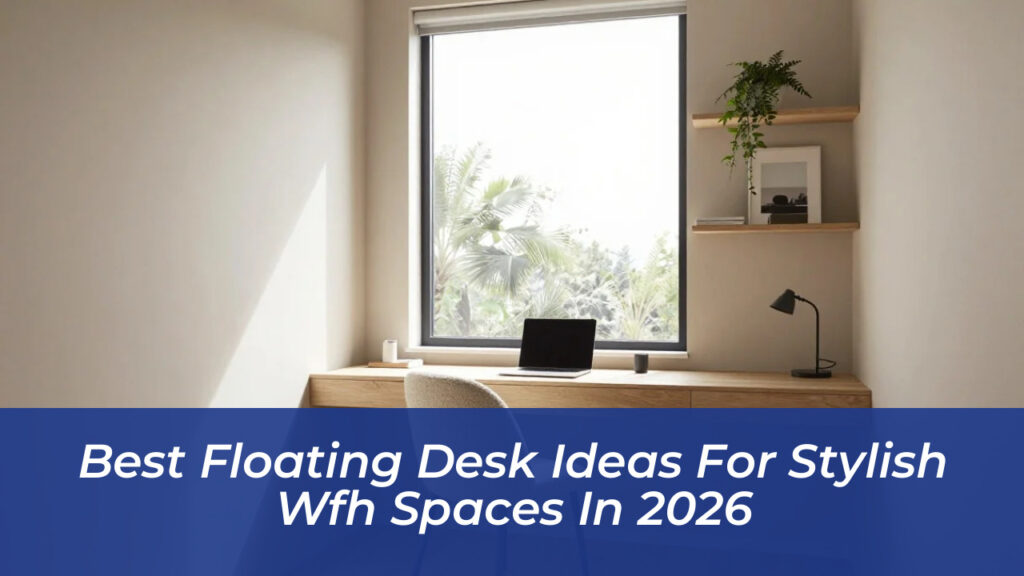
Working from home in a compact space often feels like a constant battle against bulky furniture. When your living room doubles as a corporate office or your bedroom requires a functional nook that vanishes by five o’clock, standard floor-standing desks simply take up too much physical and visual real estate. A floating desk changes the equation entirely by anchoring directly to wall studs, eliminating legs and framework to keep floor lines completely open. This minimalist approach creates an illusion of expansive square footage while delivering a rock-solid, professional workstation.
Why Floating Desks Define Modern Small Space Design
Traditional office furniture demands anywhere from fifteen to twenty square feet of dedicated room clearance, including the swing radius of your chair and bulky side cabinets. Wall-mounted alternatives require zero floor footprint for the structure itself. The only item touching the ground is your chair, which means you can easily vacuum underneath, tuck storage ottomans completely out of sight, or reclaim the room for walking pathways when work hours conclude. Beyond the undeniable functional benefits, a raw-edge slab of solid walnut, oak, or maple mounted flush against drywall reads as architectural built-in shelving rather than temporary office clutter.
In apartments and multi-purpose rooms, visual weight matters just as much as physical dimensions. Heavy, dark wood desks visually anchor a room down and make compact layouts feel cramped. Floating surfaces utilize negative space effectively, allowing natural light to sweep unobstructed across hardwood floors or area rugs. Whether you need a streamlined command center in a studio or a discreet study zone in a guest bedroom, these wall-mounted configurations provide the ideal middle ground between productivity and aesthetic harmony.
1. The Minimalist Solid Wood Wall Ledge
For tight living room walls or narrow entryways, a slim, single-board floating desk keeps your home feeling open and breathable. You might have forty inches of usable wall space between a doorway and a window, but bringing in a traditional desk would immediately block foot traffic. A shallow wooden shelf styled to match your existing trim creates an intentional landing pad for a laptop without overwhelming the walkway.
Key Design Considerations for Slim Ledges
- Ideal Dimensions: Aim for a depth of eighteen to twenty inches. Anything shallower than sixteen inches makes positioning an external mouse and keyboard frustratingly cramped.
- Material Selection: Opt for solid hardwood boards between one-and-a-quarter and one-and-a-half inches thick to prevent sagging under the weight of forearms and monitors.
- Surface Finish: Semi-matte natural oils or low-sheen polyurethanes hide fingerprints significantly better than glossy laminates.

When installing a slim wooden ledge, matching the timber species to your existing furniture creates a curated, high-end feel. If your media console features warm walnut tones, carrying that exact grain onto the wall unifies the entire room.
2. The Space-Saving Fold-Down Workstation
Bedrooms that double as home offices present a unique psychological challenge. Staring at an open laptop and tangled phone chargers right before sleep makes it difficult for your brain to wind down. A fold-down wall desk solves this problem by completely disappearing when your workday ends.
These units feature hinged surfaces supported by heavy-duty gas struts or soft-close hardware. When open, they provide a sturdy platform for daily tasks; when closed, their flat exterior face resembles a simple cabinet panel, a decorative memo board, or a piece of wall art. Inside the concealed cavity, you can store a compact Bluetooth keyboard, a notepad, and pens, keeping your bed and soft furnishings safely isolated from office reminders.
3. Transforming Awkward Alcoves and Niches
Many homes feature strange architectural quirks-such as chimney recesses, dead corners between structural pillars, or shallow hallways-that leave homeowners scratching their heads. Spanning a custom-cut floating desktop wall-to-wall inside an alcove turns dead space into the most productive spot in the house.
Building a niche workspace allows you to utilize vertical real estate effectively. Because the side walls provide extra stability, you can easily stack ten-to-twelve-inch deep floating shelves above the main desk surface for books, reference manuals, and trailing plants. Integrating an under-shelf LED lighting strip with a warm color temperature (around 3000K) eliminates dark shadows and prevents your monitor from causing eye strain during late-night projects.
4. The Window-Ledge Command Center
Placing your workspace directly in front of a window offers unbeatable natural light, but traditional desk arrangements usually block radiators, force awkward screen glare, or trap drapery in a messy heap.
A window-ledge floating desk is custom-mounted just an inch or two below the existing sill, allowing full-length curtains to hang gracefully without puddling on your tech gear. To manage high-exposure sun angles, pair this setup with light-filtering solar shades that cut harsh screen glare while preserving outdoor views. If your home features baseboard heating or floor vents below the window, choose a slatted desktop design or leave a two-inch gap at the back edge to ensure proper airflow.
5. The Wraparound L-Shaped Corner Floating Desk
When a single straight board no longer accommodates your workflow, but you refuse to crowd the room with a massive executive corner desk, a wall-mounted L-shape offers the ultimate compromise. By using the walls as structural support, an L-shaped floating desk provides separate zones for computing on one side and paperwork or printing on the other.
Keep depths modest-twenty inches on the primary monitor run and twelve to fifteen inches on the return shelf-to preserve comfortable chair movement and prevent the corner from feeling restrictive. A mitered corner joint executed by a skilled woodworker elevates the piece from a basic DIY project into a custom architectural feature.
Engineering Your Floating Desk for Maximum Weight Capacity
Unlike standard floating shelves designed merely to hold lightweight books or decorative ceramics, a floating desk must withstand dynamic loads. You will lean your forearms on the edge, press down when standing up, and potentially mount heavy multi-monitor arms. Proper installation is non-negotiable.
Never rely exclusively on drywall anchors for a full-size workspace. Your desk must anchor securely into wooden wall studs spaced sixteen inches apart. For wider spans exceeding forty-eight inches, utilize heavy-duty steel brackets rated for two to three times your expected total load, or invest in a robust French cleat mounting system that distributes weight evenly across multiple studs.
| Desk Style | Recommended Depth | Weight Capacity Range | Primary Use Case |
|---|---|---|---|
| Slim Wall Ledge | 16 – 18 inches | 40 – 60 lbs | Laptop work, hallway charging stations |
| Standard Solid Wood Slab | 20 – 24 inches | 70 – 120 lbs | Full-time remote work, single monitor |
| Wraparound L-Shaped | 18 – 20 inches | 100 – 180 lbs | Multi-monitor setups, dual-user spaces |
Conquering Cable Clutter: The Secret to Professional Aesthetics
The single biggest factor that separates a magazine-worthy floating desk from an eyesore is cable management. Because your desk floats freely without a back panel or modesty board, every single cord running down to the wall outlet remains fully visible unless you intentionally hide it.
Achieving a completely clean aesthetic requires a multi-step approach:
- Under-Desk Trays: Mount a metal mesh wire tray directly to the underside of your desktop to cradle bulky power strips, power bricks, and excess cord lengths.
- Paintable Cord Covers: Run a slim, paintable plastic raceway vertically down the wall from the desk edge to the baseboard outlet, matching the exact hue of your wall paint.
- Wireless Peripherals: Transition to a wireless keyboard, mouse, and headset to instantly eliminate three of the most troublesome desktop cords.
- Single-Cable Hubs: Utilize a USB-C docking station mounted discreetly beneath the desk surface, allowing you to connect your laptop via one single cord rather than plugging in five individual peripherals every morning.
Ergonomic Considerations for Fixed Wall Heights
Freestanding desks often feature adjustable hand cranks or electric motors, but a floating desk is permanently mounted at a single height. Getting that initial measurement right is crucial for preventing chronic shoulder and wrist strain during long hours of remote work.
To determine your optimal mounting height, sit upright in your chosen task chair with your feet resting flat on the floor and your thighs parallel to the ground. Bend your elbows at a comfortable ninety-degree angle so your forearms rest horizontally. Measure the vertical distance from the floor up to the underside of your elbows. For most adults, this measurement falls between twenty-eight and thirty inches, though taller individuals over six feet often prefer thirty-two inches. Take your time, double-check your measurements with a spirit level, and drill with absolute confidence.
By blending smart space planning with durable solid wood materials and rigorous cable management, your new floating workspace will deliver the professional performance of a dedicated corporate office while keeping your home feeling spacious, calm, and impeccably organized.