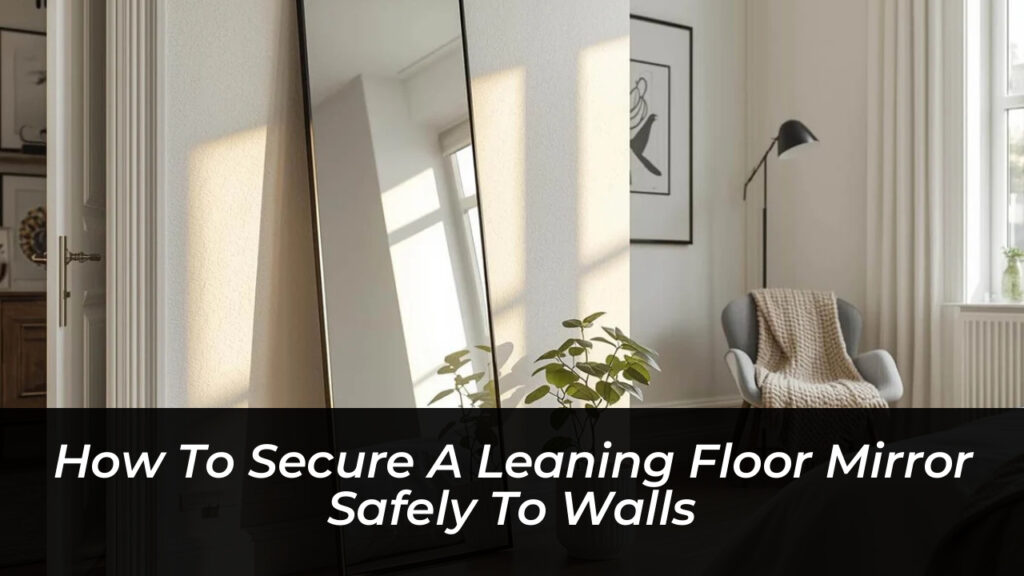
Leaning floor mirrors bring an instant sense of space and natural light to a room, offering a full-length view for your daily outfit check. Yet, that effortless lean hides a significant safety hazard if left unanchored. Whether you share your home with energetic children, playful pets, or live in an area prone to minor tremors, taking the time to secure your mirror properly is essential. Modern interior styling should never compromise safety, and anchoring a leaning mirror requires only basic household tools and a few minutes of your time.
Assessing Your Mirror and Wall Conditions
Before driving a single screw into the drywall or peeling back adhesive strips, you need to understand the structural realities of your hardware. Mirrors vary wildly in weight, frame integrity, and backing construction. A lightweight wooden frame behaves entirely differently than a massive, cast-iron statement piece weighing over eighty pounds.
Start by evaluating the weight class of your mirror. Lightweight options under thirty pounds offer more flexibility, including renter-friendly mounting solutions. Mid-weight mirrors spanning up to seventy-five pounds demand solid mechanical anchoring. Anything heavier than seventy-five pounds requires heavy-duty wall anchors and direct connection into framing studs.
Next, inspect your walls. Drywall remains the standard in modern construction, but it crumbles under unexpected torque unless paired with proper toggles or anchors. Plaster offers a harder, more brittle surface that fractures easily. Solid brick or concrete requires specialized masonry bits and hammer drills. Locating your wooden wall studs with a reliable magnetic or electronic stud finder provides the ultimate anchor point for any heavy installation, ensuring your hardware holds firm under pressure.
Method 1: Securing with Heavy-Duty Furniture Straps
Furniture straps designed for baby-proofing dressers and bookshelves provide a versatile, reliable, and reversible method for securing standard leaning mirrors. They distribute tension evenly and allow the mirror to maintain its signature angle without slipping forward.
Step-by-Step Installation
- Position the Mirror: Lean your mirror against the wall in your preferred spot. Stand back to verify the angle and ensure it sits balanced on the floor surface. Mark the top center frame point on the wall with a pencil.
- Locate Studs: Scan the wall below your pencil mark using a stud finder. Mark any discovered stud locations. If studs do not line up precisely with your center point, heavy-duty drywall anchors will serve as reliable alternatives for lighter frames.
- Install Wall Hardware: Position your wall bracket roughly halfway down the height of the mirror. This placement catches the frame mid-fall without creating an awkward upper gap against the wall. Drill pilot holes and screw the bracket firmly into the stud or insert your rated drywall anchors first.
- Attach Frame Hardware: Flip the mirror around. For wooden frames, screw the corresponding bracket directly into solid wood backing, avoiding thin decorative trim. For metal frames, thread straps through existing loops or secure with industrial adhesive plates cleaned first with rubbing alcohol.
- Connect and Tension: Return the mirror to its leaning position. Thread the strap through the wall bracket, pulling it snug. You want enough tension to prevent a forward tip, but not enough to lift the base off the floor. Test the setup by giving the top frame a gentle tug.
Method 2: Maximum Stability with L-Brackets
When dealing with oversized, exceptionally heavy floor mirrors, nylon straps may not provide the rigid hold you desire. L-brackets offer a mechanical stop that locks the top of the frame into a fixed spatial relationship with the wall, making tip-overs virtually impossible.
To execute this installation, measure one-third of the way in from each outer edge of your mirror frame. Transfer these exact measurements to the wall using a level to guarantee horizontal alignment. Mount heavy-duty L-brackets directly into underlying wall studs using structural screws. Alternatively, deploy toggle bolts rated for at least 150 percent of your mirror’s total weight to spread the load across hollow drywall.
Engage the mirror by resting or locking the upper frame against the bracket lips. This method requires a second set of hands during the final mounting phase, but it delivers unmatched peace of mind for high-traffic entryways or active family rooms.
Method 3: Renter-Friendly No-Drill Solutions
Rental agreements often forbid drilling holes into walls, leaving tenants searching for alternative ways to style full-length mirrors safely. While you should never rely solely on adhesives for heavy glass pieces, a dual-point system utilizing heavy-duty Command strips and floor friction works exceptionally well for lightweight decor.
Clean both the wall surface and the upper back of the mirror frame with isopropyl alcohol to eliminate invisible dust and oils. Apply heavy-duty adhesive strips to the top anchor points, pressing firmly for thirty seconds. Allow the adhesive to cure for a full hour before leaning the mirror back into place.
To complete the system, address the base of the mirror to prevent sliding.
Method 4: Preventing Base Slippage with Floor Pads
A wall anchor stops a mirror from tipping forward, but it does nothing if the base of the mirror slowly migrates across slick hardwood or tile floors under daily vibration. Adding friction to the bottom edge protects your flooring and keeps your styling sharp and intentional.
Several specialized materials prevent unwanted sliding:
- Rubber and Silicone Grippers: These sticky pads adhere directly to the bottom corners of the mirror frame, locking it in place on hardwood, laminate, or vinyl flooring.
- Cork Cushioning Pads: Cork offers natural friction while protecting delicate wood floors from scratching against heavy frames.
- Rubber Drawer Liners: Cut small strips of ribbed rubber drawer liner and tuck them discreetly beneath the bottom edges of the frame for an instant, budget-friendly grip.
- Carpet Grip Tape: If your mirror rests on wall-to-wall carpeting, specialized carpet tape anchors the frame base directly to the fibers, preventing the shifting common on plush pile.
Comparing Mirror Securing Methods
| Securing Method | Best For | Drilling Required? | Weight Capacity |
|---|---|---|---|
| Furniture Straps | Most homes, kids, and pets | Yes (Small holes) | Up to 60 lbs |
| L-Brackets | Heavy statement mirrors | Yes (Heavy-duty) | 75 lbs and above |
| Adhesive Strips | Renters and light frames | No | Under 30 lbs |
| Floor Grippers | Preventing base slide | No | All weights (as supplement) |
Strategic Placement for Enhanced Safety
Hardware security forms your primary line of defense, but strategic room placement reduces accidental impacts altogether. Tuck your leaning mirror into natural architectural alcoves or low-traffic corners where foot traffic remains minimal. Avoid positioning large floor mirrors directly adjacent to active entry doors where swinging handles could strike the glass.
If you choose to style a leaner mirror on top of a heavy dresser or mantelpiece, always combine base-anchoring earthquake putty with an upper furniture strap. Dressers present unique tipping hazards when drawers extend outward, shifting the center of gravity forward and destabilizing any unattached mirror resting on top.
Frequently Asked Questions
Can you lean a floor mirror without any wall attachments?
While physically possible, leaning a mirror without securing it creates a severe safety hazard. Consumer safety commissions consistently warn against unanchored tall furniture and mirrors due to tip-over risks involving children, pets, and accidental bumps.
What is the strongest anchor for an extra-heavy mirror?
L-brackets screwed directly into vertical wood studs provide the strongest mechanical hold available. If studs are unavailable at your desired styling location, heavy-duty toggle bolts rated for hollow walls offer superior weight distribution compared to standard plastic anchors.
How do I secure a mirror inside a tight corner?
Corners naturally offer enhanced stability. Use furniture safety straps angled toward both intersecting walls to establish a dual-point anchoring system. This prevents the mirror from sliding laterally or tipping outward from the corner vertex.
Do adhesive strips ruin painted drywall?
Quality adhesive strips engineered for heavy wall hanging feature stretch-release tabs that pull away cleanly without peeling paint or tearing drywall paper, provided you follow the manufacturer removal instructions precisely.