
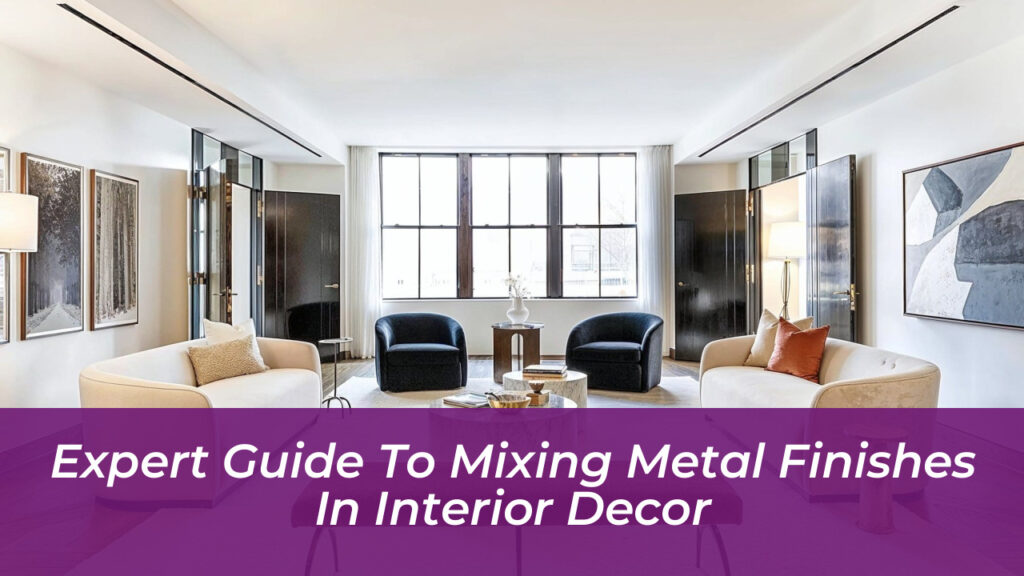
Stepping away from matching, uniform hardware packages is one of the most liberating choices you can make for your home. Sticking to a single finish throughout an entire room or house often results in a flat, sterile look reminiscent of a builder-grade catalog. When you learn the nuances of mixing metal finishes in interior decor, you unlock a dynamic way to add spatial depth, character, and tactile warmth to your living spaces.
Far from being a chaotic free-for-all, curating a balanced metal scheme relies on deliberate proportion, clear hierarchies, and an understanding of undertones. Whether you are planning a complete kitchen renovation or simply looking to refresh your living room with updated accessories, this guide will walk you through everything you need to know to blend metals like an experienced professional.
Why Mixing Metals Creates Depth and Dimension
When every fixture, hinge, light switch, and drawer pull matches down to the millimeter, the human eye has nowhere to rest. A uniform environment lacks visual friction. Introducing a secondary or tertiary metal finish creates distinct layers that catch light differently and define individual surfaces.
Consider how natural and artificial light interact with various surfaces. A polished chrome faucet gleams sharply under under-cabinet lighting, while a nearby unlacquered brass pendant lamp casts a soft, inviting golden glow downward. This interplay between reflective and matte textures introduces tactile diversity without relying solely on color fabrics or paint. It establishes a lived-in authenticity that suggests a home was curated thoughtfully over time rather than purchased in a single afternoon.
The Foundational Rules of Cohesive Metal Blending
Successful interior styling always operates under organizing principles, and working with mixed metals is no exception. Sticking to a few core guidelines ensures your space reads as high-end and purposeful rather than haphazard.
1. Limit Your Palette to Two or Three Finishes
Restraint is your greatest ally. In most residential rooms, two metals form a confident conversation, while three build a complete composition. Pushing past three distinct finishes risks tipping the space into visual noise. Remember to count every visible element honestly: matte black, oil-rubbed bronze, brushed nickel, and polished brass are entirely different visual entities to the eye.
2. Establish a Clear Hierarchy Using the 60/30/10 Rule
Equal splits between competing metals breed confusion because the eye cannot find a resting point. Instead, apply the classic decorating formula used for color schemes:
- 60 Percent Dominant Finish: This primary metal anchors the architecture and major fixtures, such as your main cabinet hardware, plumbing faucets, or primary door knobs.
- 30 Percent Secondary Finish: This supporting metal provides contrast and appears on secondary elements like lighting fixtures, furniture frames, or architectural brackets.
- 10 Percent Accent Finish: This final touch appears sparingly in decorative objects, picture frames, or unique accent hardware to add a spark of unexpected interest.
3. Balance Warm and Cool Undertones
Metals carry distinct temperature signatures. Warm metals include satin brass, unlacquered brass, copper, and bronze, while cool metals encompass polished chrome, brushed nickel, and stainless steel. Matte black acts as a versatile neutral that bridges both worlds. The most striking combinations pair warm tones against cool backdrops, such as brass sconces flanking a cool marble-tiled bathroom mirror.
4. Repeat Every Finish at Least Twice
A single isolated metal element reads as an installation error or a misplaced sample. If you introduce an antiqued brass cabinet pull on a kitchen island, make sure that same finish echoes elsewhere in the room-perhaps in a flush-mount ceiling light or a decorative tray on the coffee table. Distance and spacing matter more than strict symmetry, but repetition is what weaves the individual pieces into a single design system.
Navigating Specific Finishes and Their Roles
Before selecting your pairings, it helps to understand how specific metal finishes behave within an architectural space.
- Satin and Unlacquered Brass: The undisputed kings of modern warm styling. Satin brass offers a soft, forgiving matte glow that resists fingerprints, while unlacquered brass evolves over time into a gorgeous, darkened living patina.
- Polished and Brushed Nickel: Polished nickel provides a warmer, softer alternative to chrome with a subtle cream undertone. Brushed nickel remains the durable, fingerprint-hiding workhorse of transitional design.
- Chrome: Crisp, highly reflective, and unapologetically bright. Chrome excels in contemporary, minimalist, and classic black-and-white marble bathrooms.
- Matte Black: Graphic and anchoring. Black hardware serves as the ultimate punctuation mark, separating competing metals and grounding light-heavy color palettes.
- Oil-Rubbed Bronze: Deep, dark, and rich with undertones of copper or gold peeking through the edges. Perfect for traditional, craftsman, and rustic interiors.
Room-by-Room Strategy: The Kitchen
The kitchen is naturally predisposed to mixed metals because stainless steel appliances immediately establish a cool, industrial baseline. Rather than fighting your appliances, let them act as the functional neutral.
In a transitional kitchen, you might pair stainless steel appliances with a dominant finish of satin brass across your perimeter cabinet pulls and sink faucet. To add depth, hang burnished bronze or matte black pendant lights over the kitchen island. If you want a subtle accent, use polished nickel latches on glass-front upper cabinets or incorporate a matching pot filler over the range.
Pay close attention to large focal objects like range hoods. A massive metal hood cannot easily change teams; it must either merge cleanly with your dominant finish or stand alone as an intentional statement piece.
Room-by-Room Strategy: The Bathroom
Because bathrooms concentrate multiple functional elements within a compact footprint, they offer the highest reward for bold metal styling. Fixtures such as the shower trim, sink faucet, vanity mirror frame, towel bars, and sconces all sit within close proximity.
A foolproof formula for bathrooms is to keep all wet-zone plumbing (the sink faucet and shower valve trim) in a timeless finish like polished nickel or chrome. Then, shift your dry-zone accessories-such as the mirror frame, wall sconces, and cabinet hardware-into satin brass. This creates a high-contrast luxury hotel aesthetic that feels sophisticated rather than sterile.
Room-by-Room Strategy: The Living Room
Living spaces are the easiest places to experiment because metals here appear primarily through movable furniture, lighting, and decor rather than fixed plumbing.
A living room featuring a warm color palette and wood flooring can easily support a black iron coffee table base, an antique brass floor lamp, and subtle silver or nickel-framed artwork on the walls. By anchoring these elements with the 60/30/10 rule, you ensure the room feels cohesive even though the metal components span multiple styles and decades.
If your living room opens directly into an adjacent kitchen or dining area, make sure to borrow at least one metal finish from the kitchen scheme. This thread of continuity creates a harmonious open-concept sightline across the entire main floor.
Common Mistakes to Avoid When Mixing Metals
Even seasoned decorators occasionally miscalculate when blending finishes. Watch out for these frequent pitfalls:
- The 50/50 Split: Dividing your metal choices evenly down the middle between two finishes creates visual tension, making the room look like an unfinished remodel or a change of heart halfway through ordering.
- Undertone Clashing: Putting two warm metals of slightly different yellow-to-orange ratios side by side-such as a bright yellow gold next to an orange-leaning copper-often feels discordant. Separate similar warm tones across the room or insert black between them.
- Ignoring Forgotten Hardware: Ceiling registers, door hinges, window frames, and recessed lighting trims are all metals. While you do not need to replace every builder-grade hinge in the house, be mindful of how existing permanent metal features interact with your new decorative choices.
- Catalog Matching: Buying your faucet, lighting, sconces, and cabinet pulls from the exact same manufacturer collection strips the space of its layered, collected personality. Mixing requires a bit of courage to source from different makers.
A Step-by-Step Action Plan for Your Home
If your home currently features matched, single-finish hardware and you want to transition to a curated mixed look, do not try to change everything at once. Follow this practical roadmap:
- Identify Your Fixed Anchors: Look at elements you cannot or do not want to replace immediately, such as door hinges, window frames, or major appliances. Determine their temperature and finish.
- Choose Your Dominant Finish: Select a primary metal for your main hardware touchpoints based on your home’s overall lighting and color palette.
- Select One High-Impact Swap: Begin your update in a single room by swapping out either your lighting fixtures or your cabinet pulls. Make this change decisive-add the new metal fully to that category rather than scattering single pieces.
- Layer Supporting Decor: Introduce your accent metal through fully changeable items like picture frames, candleholders, decorative trays, or table lamp bases.
- Write a Finish Schedule: Before ordering any new fixtures online, list every metal item planned for the room on a single sheet of paper. Check them against your hierarchy to guarantee your proportions align.
Mastering the art of mixing metal finishes transforms your interiors from predictable showroom displays into layered, personalized spaces filled with depth and character. By respecting undertones, maintaining clear proportions, and repeating your choices with intention, you can create a home that feels both timeless and completely unique to your personal style.