Apartment, House, Office Wood Work: Find a Handyman UK

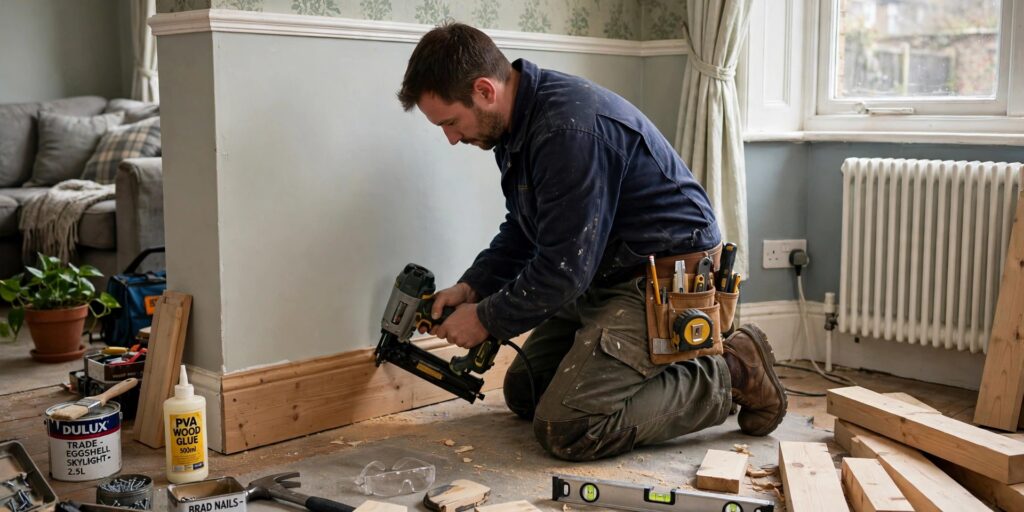
Wood work is the job that turns up everywhere in a British home: the skirting board the dog chewed, the wardrobe that never quite fitted the alcove, the decking that went grey after two wet winters, the office partition that needs moving before Monday. It is also the job most people put off, because finding the right person feels harder than the work itself.
This post covers what counts as wood work in a flat, a house and an office, how it differs between the three, and how to find a handyman or joiner for it on MHDI without wasting a week on phone calls.
What counts as wood work
Wood work covers more than most people think, and knowing the right words for your job is half the battle when you describe it to a tradesperson.
- Fixing and fitting: hanging doors, fitting skirting boards and architraves, replacing a broken stair spindle, repairing a sash window frame.
- Built-in furniture: fitted wardrobes, alcove cupboards, under-stair storage, bookshelves built to fit a wall that is not square.
- Outdoor wood: decking, fencing, pergolas, shed repairs, and replacing rotten fence posts.
- Flooring: laying engineered wood or laminate, repairing floorboards, and fitting thresholds between rooms.
- Office wood work: partition walls, desks, shelving, reception counters, and repairs to existing fitted furniture.
Some of this is handyman work and some is joinery, and the difference matters. A handyman is right for the small jobs: a door that sticks, a shelf that needs hanging, a fence panel that blew down. A joiner is right for the built-in work: a wardrobe fitted to an alcove, a staircase, a set of shelves that has to carry real weight. MHDI lists both, under Handyman Services and Carpentry & Joinery, so you can pick the trade that matches the job rather than the nearest available person.
Apartment, house, office: three different jobs
The same wood work changes character depending on where it happens.
In a flat, the constraints are access and permission. The tradesperson has to get materials through a communal hallway, a lift, or up three flights of stairs, and that affects the price. If you rent, your landlord or letting agent may need to approve anything fixed to the walls, and in a leasehold flat the freeholder may need to approve anything structural. Check before you book, and tell the tradesperson about stairs, parking and access in the first message.
In a house, the work is usually simpler to arrange but bigger in scope. There is room to cut timber outside, space to store materials, and no neighbour below to worry about. The jobs that come up most are the ones the house has been waiting for: the fitted wardrobe in the box room, the decking at the back, the skirting that has never matched since the extension went in.
In an office, the constraint is time. Work often has to happen out of hours, before 9am or after 6pm, because nobody wants a saw running during a meeting. Tell the tradesperson the working hours of the office and whether the work needs to be done in one visit or can be spread across evenings. A partition wall that takes a day in an empty room takes three evenings in a working office, and the quote should reflect that.
How to find a handyman on MHDI
Finding the right person on MHDI takes five minutes if you know where to look.
Step 1: Open the handyman services category if the job is small, or the carpentry and joinery category if it is built-in work. The two categories are separate for a reason, and starting in the right one saves a round of wrong enquiries.
Step 2: Filter by your city. MHDI covers London, Manchester, Birmingham, Leeds, Edinburgh, Glasgow, Bristol, Sheffield, Newcastle upon Tyne, Liverpool, York and Cardiff. A joiner in your city will reply faster and charge less for travel than one two counties away.
Step 3: Compare the profiles, not just the prices. MHDI service pages show a price in pounds, a bookings count, views, reviews and the business profile. A joiner with ten reviews for fitted wardrobes is a better bet for your alcove than a cheaper one with no reviews at all.
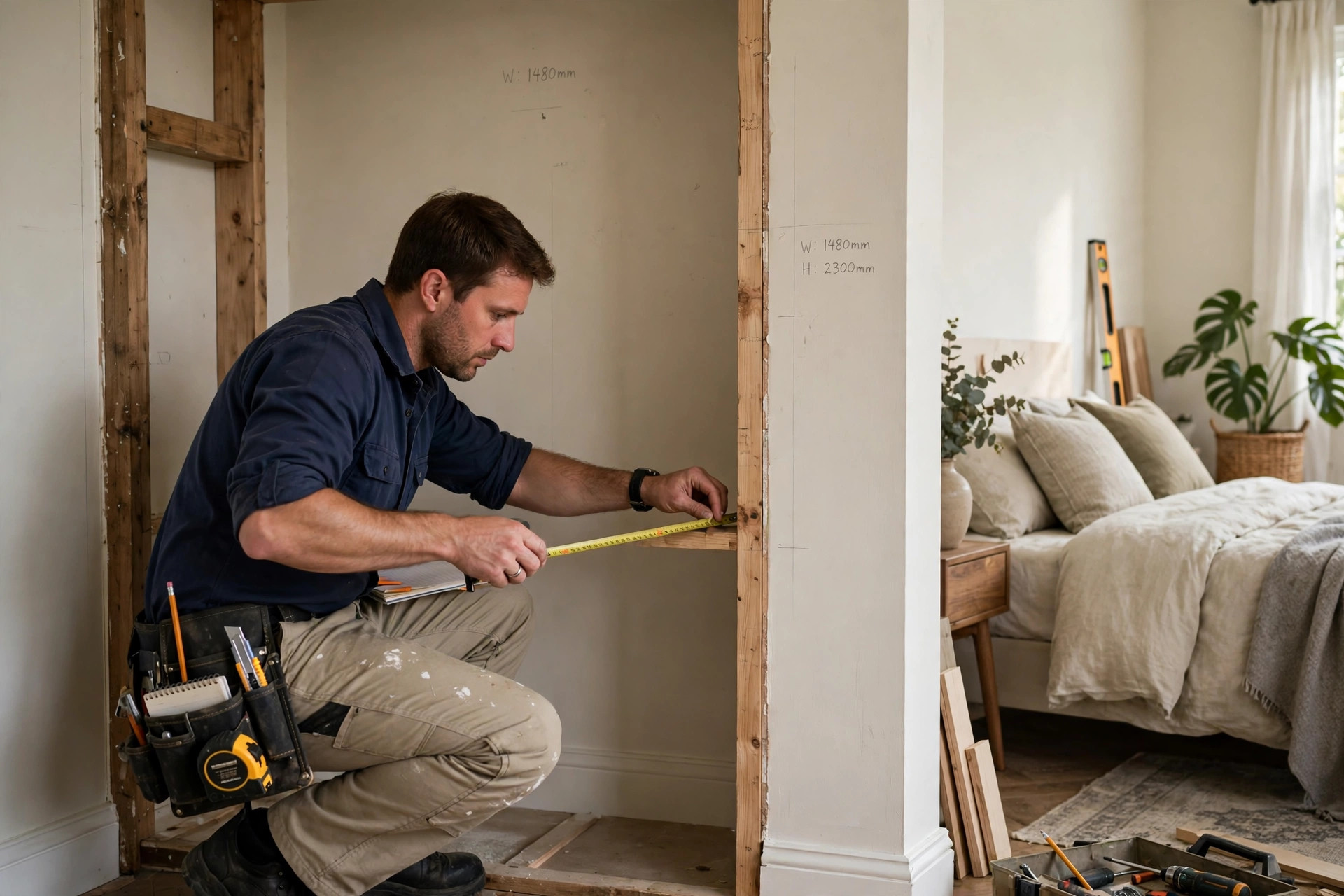
Step 4: Contact one or two, not ten. Send the same short message to each: what the job is, where it is, when you need it, and a photo if you have one. A photo of the alcove, the broken skirting or the garden fence tells a tradesperson more in ten seconds than three paragraphs of description.
Step 5: Agree the scope in writing before the work starts. What is included, what is not, what materials are supplied by whom, and what happens if the wall behind the skirting turns out to be crumbling. MHDI says work is agreed directly between you and the business, so the written agreement is yours to make, and it is the thing that prevents most arguments.
What to ask before you book
Five questions, asked before anyone picks up a saw, will save you most of the trouble people run into with wood work.
- Have you done this exact job before? A fitted wardrobe is not the same as a fence, and the answer tells you whether to proceed.
- What is included in the price? Materials, removal of the old wood, painting or staining, and the fixings. If the price is labour only, say so in the agreement.
- How long will it take, and what happens if it runs over? A day rate means something different from a fixed price, and you should know which one you are paying.
- What happens with dust and mess? Wood work makes dust. Agree who cleans up, and whether dust sheets and extraction are included.
- Is there a guarantee? A tradesperson who stands behind the work will say so without being asked. If the answer is vague, that is an answer too.
Rough idea of costs
These are typical guide ranges for 2026, not quotes. A carpenter or joiner typically charges £25 to £40 an hour outside London, and £40 to £60 an hour in London, with day rates typically £200 to £300 outside the capital and £260 to £380 inside it. A handyman typically charges £45 to £65 an hour in London. Small jobs are often priced per job rather than per hour: hanging a door, fitting a length of skirting, or repairing a fence panel will usually have a fixed price once the tradesperson has seen a photo.
For a bigger job, use the post a job page and describe the work properly. A clear description gets clear quotes, and clear quotes can be compared. It also helps to read the practical guides on the site before you hire, like changing a door handle, garage shelving and re-pointing patio slabs, because they show the level of detail a good tradesperson brings to a job. The MHDI About page explains how the directory works and what its verification promise means.