How to Get Local Customers in UK Without Google Map

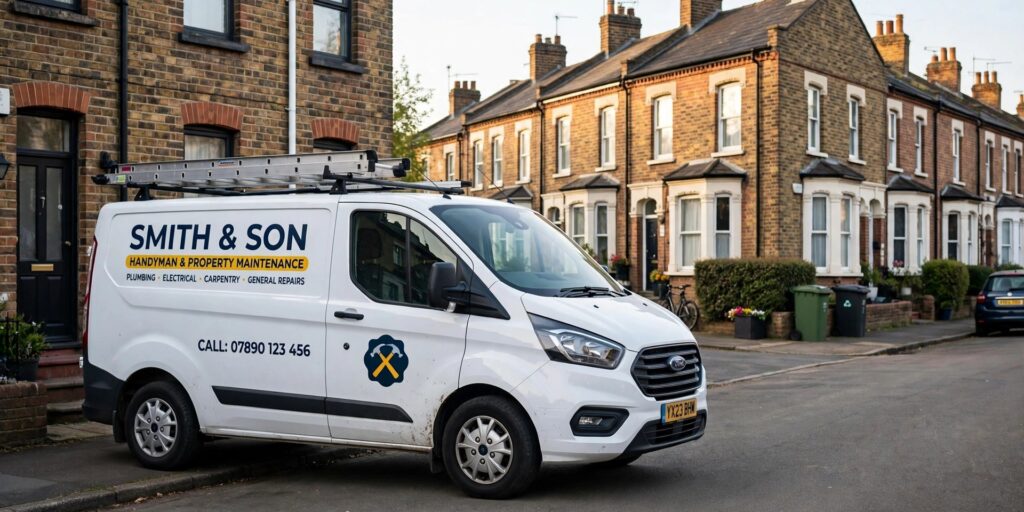
Most advice for local tradespeople starts with the same line: set up a Google Business Profile and wait for the map to send you customers. That works for some businesses and not at all for others. Maybe you work across a whole city and a single map pin does not describe you. Maybe you are new and the map already belongs to businesses with ten years of reviews. Maybe you just do not want your home address on a public map.
Whatever the reason, Google Maps is one channel, not the only channel. This post covers the ways UK tradespeople actually win local customers without it, starting with the one that costs nothing and ending with the ones that cost a little time each week.
1. Get listed where customers already look
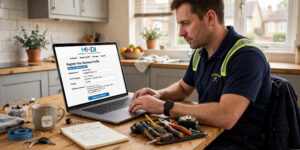
Customers who need a plumber do not always start on a map. They start with a search, a recommendation, or a directory they already know. MHDI is built for exactly that moment: a customer reads an idea for their home, then looks for a local professional to carry it out.
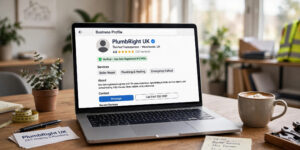
A listing on MHDI puts your business in front of people in your city who are already planning work. The profile shows your services with prices in pounds, your reviews, your opening hours and your contact details, and customers can reach you directly by phone or WhatsApp. You do not need a map pin for any of that. You need the right category and the right city, both of which you choose when you register on the MHDI register page.
MHDI covers twelve service categories, from Painting & Decorating and Plumbing & Heating to Carpentry & Joinery and Handyman Services, and cities including London, Manchester, Birmingham, Leeds, Edinburgh, Glasgow, Bristol, Sheffield, Newcastle upon Tyne, Liverpool, York and Cardiff. A complete listing in the right category and city is the closest thing to a shop window that a tradesperson without a map presence can get.
2. Nextdoor and local Facebook groups
For local work, the most useful websites are often the ones your neighbours already use. Nextdoor is built street by street, and its recommendations carry weight because they come from people who live nearby. Local Facebook groups work the same way: someone posts “can anyone recommend a plasterer in Headingley?” and the names that come back are the ones that get the work.
The way to win there is to be helpful before you are promotional. Answer a question about a leaking tap. Explain why a wall needs two coats. When you do mention your business, mention the specific job and the area, not a sales pitch. Group admins remove adverts quickly, but they rarely remove a tradesperson who answers questions properly. One useful answer a week in a group of a few thousand local people is worth more than a hundred flyers.
3. Paper still works in the right streets
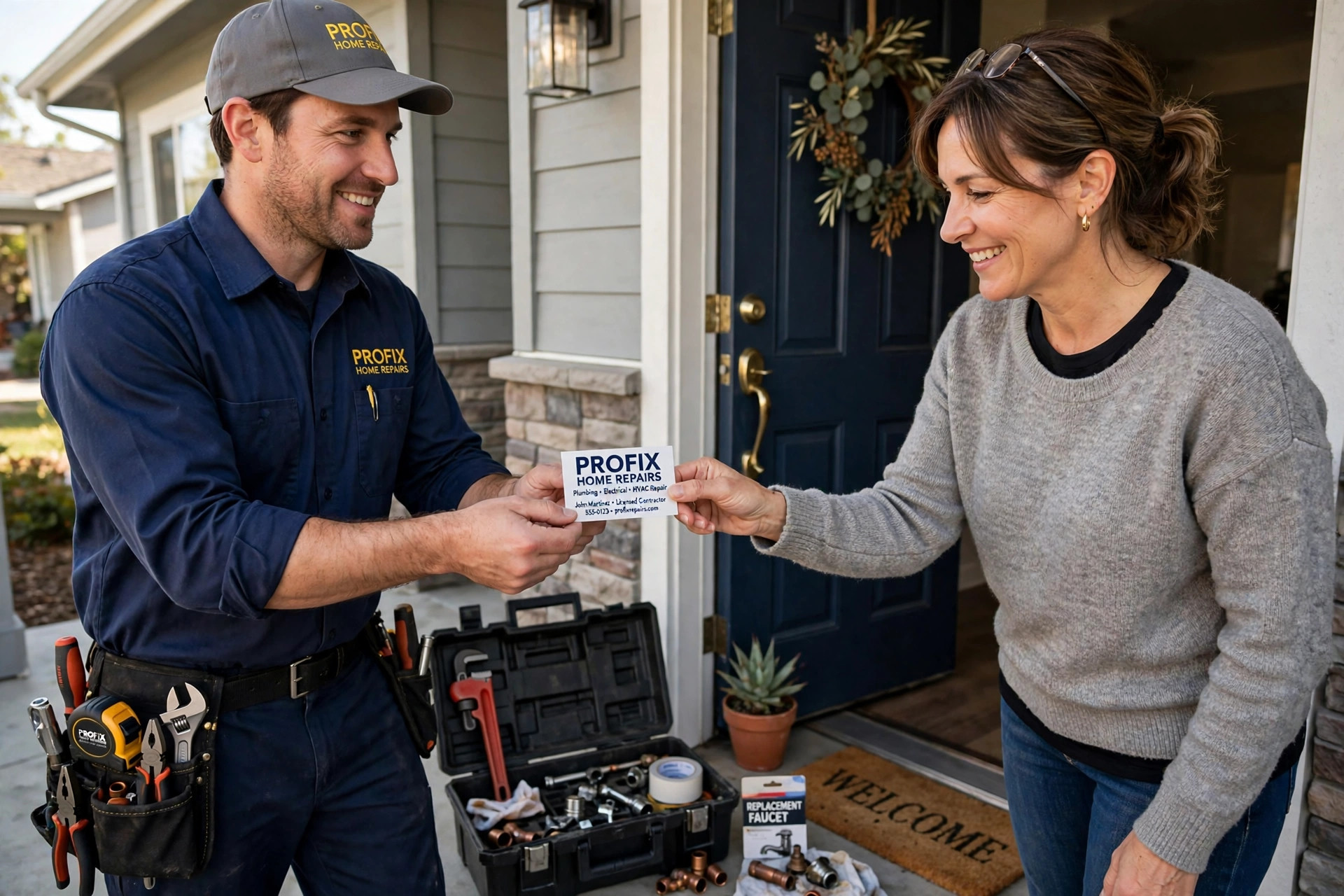
Leaflets have a bad reputation because most of them are terrible. A plain card with a name, a trade, a phone number and three local streets you cover will outperform a glossy flyer every time, because it looks like a neighbour, not a corporation.
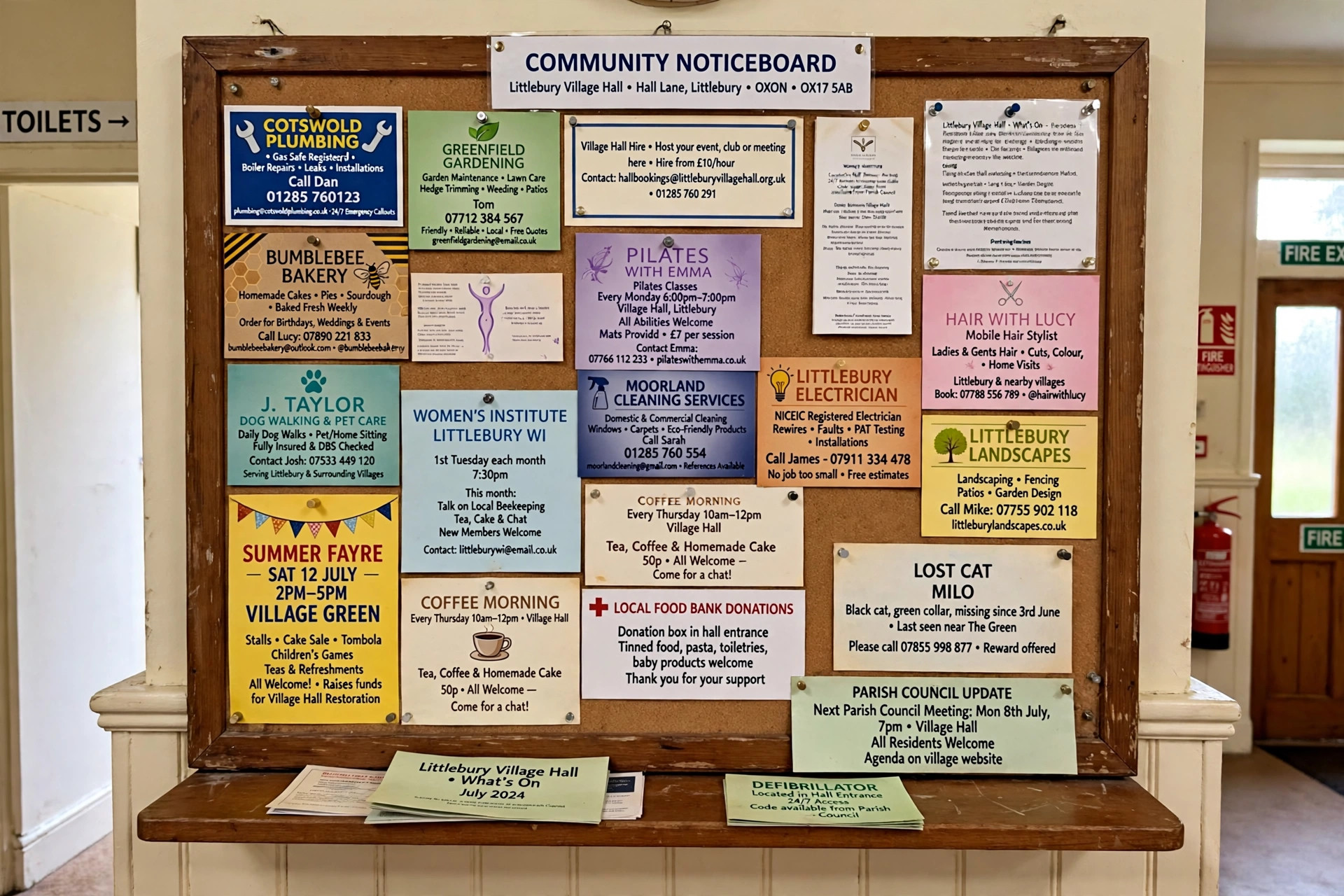
The places that work best are the ones people actually read: the parish magazine, the village hall noticeboard, the community centre, the school gate board, and the noticeboard at the local trade counter. In flats, a card in the lift or the entrance hall works, where the building allows it. The rule is simple: put the card where the customer stands when they notice the problem. A plumber’s card next to a laundrette noticeboard is worth ten cards on a lamppost.
4. Partner with the businesses around you
Other local businesses meet your customers before you do. Estate agents meet people who have just bought a house and need everything fixed. Letting agents meet landlords with a list of repairs. Kitchen showrooms meet people who need a fitter. Paint shops meet people halfway through a job that has gone wrong.
Introduce yourself to five of them in your area and leave a few cards. Offer to be the person they call when their own customer needs a handyman or a carpenter. The return is slow at first and then steady, because a recommendation from an estate agent carries more weight than any advert. Keep it reciprocal: when your customer needs a service you do not offer, send them to the business that sends work to you.
5. Word of mouth, engineered properly
Word of mouth is not luck. It is a system, and the system is short. Do the job well, ask for a review while the customer is happy, and make it easy for them to pass your name on.
On MHDI, that means asking for a review on your profile right after the work is done and sending the link in the same message. The site does not publish fake or paid reviews, so the real ones are the only currency, and a profile with recent, specific reviews is what a new customer trusts. Off the site, it means leaving a couple of cards behind and asking the customer to pass one to a neighbour. Most will, if the work was good and you asked at the right moment.
It also means finishing the small things. Wiping down the worktop. Taking the offcuts away. Sending a message the next day to check everything is fine. Customers do not recommend the cheapest tradesperson. They recommend the one who left the house better than they found it.
6. Your own patch of the internet, without a map
You do not need a website to be found locally, but a small one helps, and it does not need a map on it. A single page with your name, your trade, your town, your services and your phone number is enough, and it gives every other channel somewhere to point. The MHDI profile does most of this job already, which is why a good listing can carry the whole system on its own.
What matters more than a website is that your name, trade and town appear together in the same places: your MHDI profile, your Nextdoor profile, your Facebook page, and the cards you leave behind. When all four say “plumber in York” in the same words, customers find you from any of them. The MHDI About page explains how the directory presents businesses, and the guides customers read, like garage shelving and solar lights for UK winters, show the kind of practical content that brings local customers to the site in the first place. The handyman services category shows how those customers browse once they arrive.