
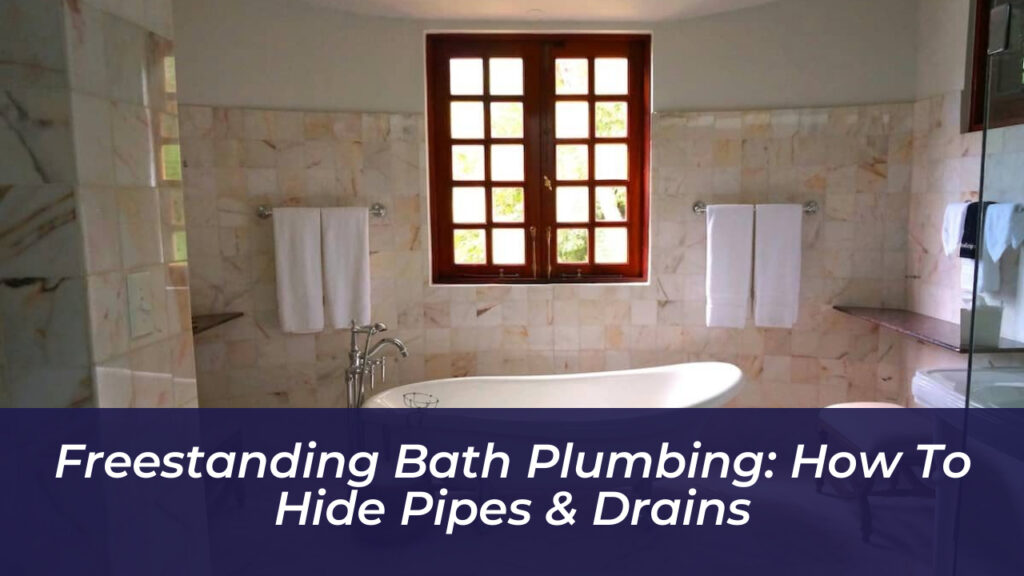
Installing a freestanding bath instantly transforms a bathroom into a luxurious sanctuary, serving as an eye-catching focal point in the room. However, unlike standard built-in tubs that rest flush against drywall, freestanding models leave their water supply lines, waste configurations, and overflow mechanisms completely exposed. Without careful planning, visible pipework can disrupt the clean, elegant aesthetic you spent hours designing. Fortunately, modern bathroom planning offers several sophisticated methods to conceal these essential connections without sacrificing structural integrity or maintenance access.
Freestanding Bath Plumbing Layouts
Before selecting concealment accessories or altering subfloors, you need to understand how water enters and exits a freestanding tub. Standard configurations require hot and cold water supplies paired with a secure waste drainage route. Because these components cannot be hidden inside a conventional wall cavity when the tub sits away from the perimeter, they must be managed directly beneath the floor or through specialized vertical fixtures.
Drainage relies heavily on gravity, requiring a precise path from the tub’s base to the home’s main sewer line. Meanwhile, water supply lines can emerge vertically from the floor or connect via flexible hoses hidden inside decorative outer casings. Recognizing how these elements interact prevents common flow restrictions, slow drainage, and unexpected floor leaks.
Creative Ways to Hide Supply and Waste Pipes
Concealing ugly plumbing without compromising the room’s open layout depends on your bathroom’s specific structural design. Several reliable installation techniques help maintain a polished finish:
Using Floor-Mounted Standpipes
When you opt for floor-mounted taps rather than deck-mounted fixtures, water supply pipes must rise directly from the floorboards. Standpipes provide a seamless metal housing that slips over these vulnerable copper or PEX water lines. Flexible connectors feed right through the center of the standpipe while the faucet mounts securely on top. Available in finishes like brushed nickel, matte black, and polished chrome, standpipes turn necessary utility lines into striking architectural details.
Installing Tap Shrouds for Deck-Mounted Faucets
If your freestanding tub features pre-drilled holes for rim-mounted taps, the exposed pipes underneath the lip can look messy. Telescopic tap shrouds solve this issue by sliding directly over the hot and cold supply lines. These adjustable metal sleeves create a unified vertical column from the floor to the tap body, completely shielding the raw plastic or copper piping from view.
Managing the Waste and Overflow Assembly
Every safe bathtub installation requires an overflow outlet to prevent accidental flooding. On a freestanding tub, this means an exposed overflow pipe typically runs down the outside or back wall of the tub into a shallow-seal bath trap beneath. Choosing matching metallic finishes for your waste trap ensures the hardware coordinates with your faucets, turning functional necessities into cohesive design elements.
Structural Solutions for Extensive Pipework
Sometimes surface-level covers are not enough, especially when routing plumbing across an open room requires significant subfloor adjustments. Major renovations often call for more permanent structural concealment:
- Boxing in Pipes: Building a low-profile wooden or MDF frame around floor pipes creates a neat ledge. This enclosure can be painted to match the baseboards or tiled to blend seamlessly with the surrounding floor.
- Constructing a Raised Floor: Erecting a platform or a gentle step-up creates a hidden cavity beneath the bathtub. All waste and supply lines run safely underneath the subfloor, resulting in a minimalist, uninterrupted aesthetic.
- Strategic Furniture Placement: Positioning vanity units or custom storage cabinets nearby can help shield incoming plumbing lines while adding functional organization to the space.
Best Practices for Leak Prevention and Maintenance
Hiding your plumbing should never make routine maintenance impossible. Always ensure that PTP traps and major shut-off valves remain accessible via removable panels or carefully planned access points beneath the floor.
Before sealing any flooring or boxing structures, fill the bathtub completely and release the water to test every connection. Inspect the waste shoe, overflow gaskets, and supply joints for any signs of slow dripping. Catching a minor seal defect early protects your subflooring from expensive water damage and ensures your new freestanding bath installation lasts for decades.