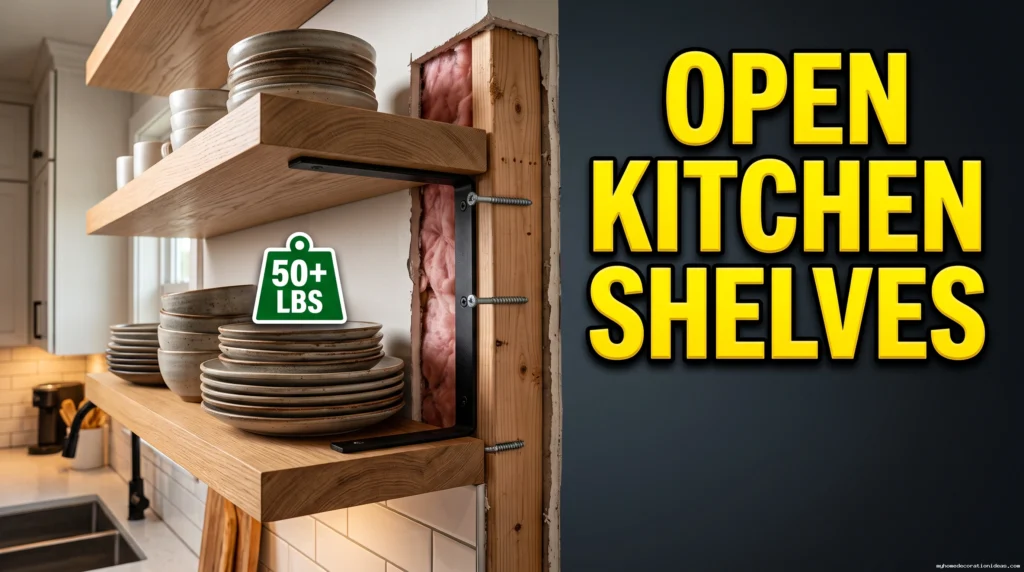
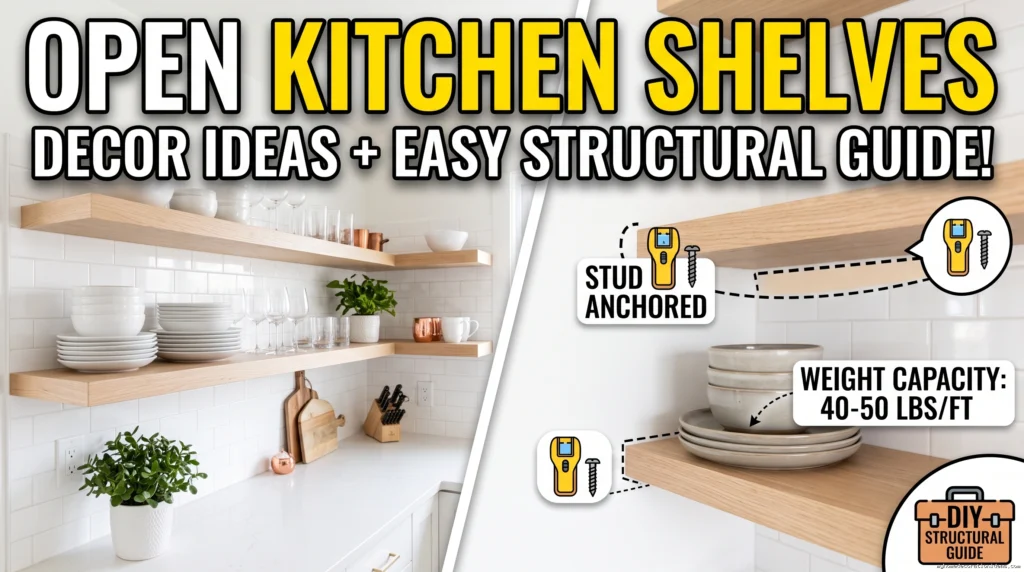
Open kitchen shelving transforms standard cabinetry into an expansive, accessible architectural feature. Eliminating upper cabinet doors increases perceived room volume, improves workflow, and creates dedicated surfaces to display curated dinnerware. Executing open shelf kitchen decor requires balancing structural safety, material performance, and visual design rules. This complete guide explores load-bearing engineering, material durability, styling compositions, functional zoning, and long-term maintenance practices required to build a lasting display.
Structural Foundations and Hardware Safety for Open Kitchen Shelving
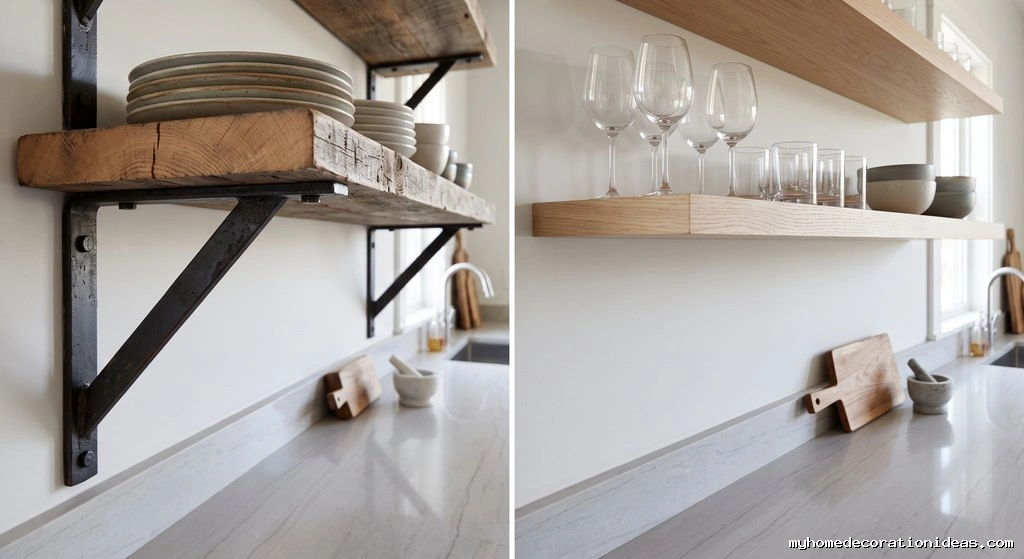
Open shelving in a kitchen must support substantial weight. A single stack of twelve ceramic dinner plates weighs between 15 and 22 pounds. Adding glassware, cast iron cookware, and stoneware quickly subjects shelves to severe static loads. Structural integrity requires proper anchoring directly into wall framing members to prevent dangerous failures.
Wall Stud Alignment and Anchor Selection
Mounting open shelves into hollow drywall using standard plastic anchors risks structural failure. Always secure primary mounting brackets directly into wood wall studs using heavy-duty steel lag screws. Standard wall studs sit on 16-inch or 24-inch centers. Use a magnetic or electronic stud finder to locate stud centers accurately before drilling pilot holes.
When studs do not line up with ideal bracket locations, install 3/4-inch plywood blocking behind the drywall during renovation, or use heavy-duty toggle bolts rated for at least 100 pounds of pull-out force per point. Solid blocking distributes dynamic forces across a wider area of the wall assembly.
Heavy-Duty Bracket Systems vs Floating Hardware
Exposed bracket systems provide maximum weight support and distinct visual lines. Matte black iron, brass, and stainless steel brackets anchor directly to the wall face, cradling the shelf board from below. These visible supports deliver high structural reliability for heavy daily utility.
Floating shelves use blind shelf supports, which feature solid steel rods welded to a heavy steel backplate. Slide the shelf board over these blind prongs via precision-drilled internal channels. Blind floating brackets require solid structural anchoring to prevent shelf sag over time under heavy loads.
Weight Capacity Calculations per Linear Foot
Calculate total load expectations before selecting wood species and mounting hardware. A general rule for kitchen open shelving requires support for 40 to 50 pounds per linear foot. Glassware shelves require less structural capacity, while shelves intended for stackable stoneware or Dutch ovens require heavy-duty bracing rated for 75 to 100 pounds per linear foot.
Ensure bracket spacing does not exceed 24 inches on center to prevent shelf deflection across long spans. Using thick stock boards minimizes bowing and ensures long-term flatness.
Shelf Depth and Clearance Metrics
Standard upper kitchen cabinets feature a 12-inch depth, but open shelves operate best at depths between 10 and 12 inches. A 10-inch deep shelf accommodates standard 10.5-inch dinner plates if allowed to overhang slightly, while preventing the shelf from feeling intrusive over countertop work areas.
Maintain a clearance of 18 to 22 inches between the main countertop surface and the bottom of the lowest open shelf. Space upper shelves 12 to 15 inches apart vertically to fit tall glassware and layered stacks.
| Shelf Type | Recommended Depth | Weight Capacity (per linear foot) | Primary Material Options |
|---|---|---|---|
| Standard Floating Shelf | 10 – 12 inches | 40 – 50 lbs | White Oak, Walnut, Maple |
| Heavy-Duty Bracketed Shelf | 12 inches | 75 – 100 lbs | Thick Solid Hardwood, Steel |
| Accent / Spice Shelf | 6 – 8 inches | 15 – 20 lbs | Reclaimed Pine, Steel, Brass |
| Corner L-Shelf | 10 – 12 inches | 35 – 45 lbs | Engineered Hardwood, Milled Oak |
Material Selection and Durability Standards for Kitchens
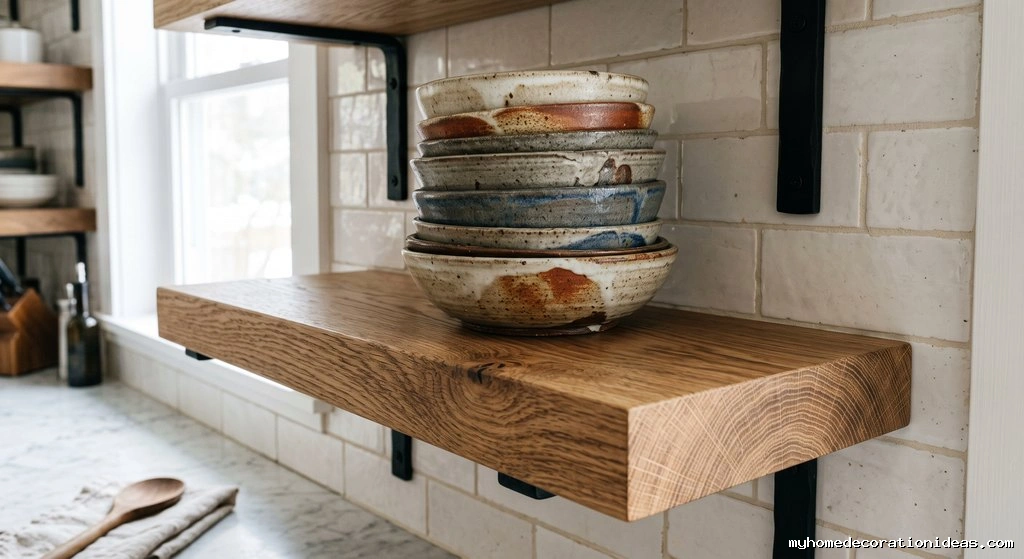
Kitchen environments experience fluctuating moisture levels, heat exposure, and airborne grease residue. Selecting raw or improperly sealed woods leads to warping, staining, and finish degradation over time. Choose dense materials capable of withstanding daily handling and humidity shifts.
Solid Hardwoods and Janka Hardness Ratings
Hardwoods offer structural stiffness and resistance to denting from heavy ceramic bases. The Janka hardness scale measures wood resistance to wear and indentation. White Oak (Janka rating 1,360 lbf) and Hard Maple (Janka rating 1,450 lbf) provide outstanding structural stability and tight grain patterns that resist moisture absorption.
Walnut (Janka rating 1,010 lbf) delivers rich color and high durability, whereas softwoods like Pine (Janka rating 380-540 lbf) dent easily under heavy stoneware. Select quartersawn lumber options when possible, as they offer superior dimensional stability against humidity changes.
Powder-Coated Metal and Industrial Steel
Powder-coated steel and aluminum offer high tensile strength with slim architectural profiles. Steel shelves span longer distances without middle support brackets, maintaining rigid structural lines. The electrostatic powder-coating process creates a non-porous finish that resists rust, scratching, and chemical degradation from cooking oils and steam.
Metal shelves work exceptionally well near cooktops and sink areas where water splashing occurs frequently. Wipe them down easily with standard damp cloths without risking water damage.
Natural Stone and Slab Shelving Options
Carrying countertop materials upward into floating stone shelves creates a continuous, high-end architectural look. Marble, quartzite, and granite slabs used for open shelves require internal steel support armatures built directly into wall framing prior to drywall installation.
Natural stone shelves require non-porous penetrating sealers to prevent oil ring stains from spice containers or cooking liquids. Their heavy weight demands robust wall anchoring to prevent structural failure.
Sealing Coatings for Heat and Steam Resistance
Unfinished wood absorbs airborne oils and humidity, leading to permanent discoloration and wood movement. Protect solid wood shelves with high-performance finishes. Polyurethane topcoats provide a tough, water-resistant barrier ideal for high-moisture kitchens.
Conversion varnishes and hard-wax oils, such as Rubio Monocoat or Osmo, penetrate wood fibers to create a natural matte texture while locking out liquid stains and airborne cooking grease. Apply fresh maintenance coats periodically to preserve finish integrity.
The Art of Visual Composition and Styling Rules
Transforming functional storage into an elegant focal point requires deliberate visual rhythm. Balancing symmetrical and asymmetrical arrangements creates natural flow across wall surfaces. Avoid crowding every inch of board space to maintain an organized atmosphere.
The Rule of Thirds in Shelf Layout
Divide shelf space visually into three equal horizontal sections to manage object placement effectively. Group objects in odd numbers like sets of three or five items, which naturally draw the human eye. Combine items of varying heights within a single display trio to create dynamic vertical interest.
Anchor tall items near structural studs or bracket locations to balance the visual weight of the hardware. Layer flat plates behind smaller bowls to add depth to shallow shelves.
Establishing Visual Anchors with Heavy Ceramics
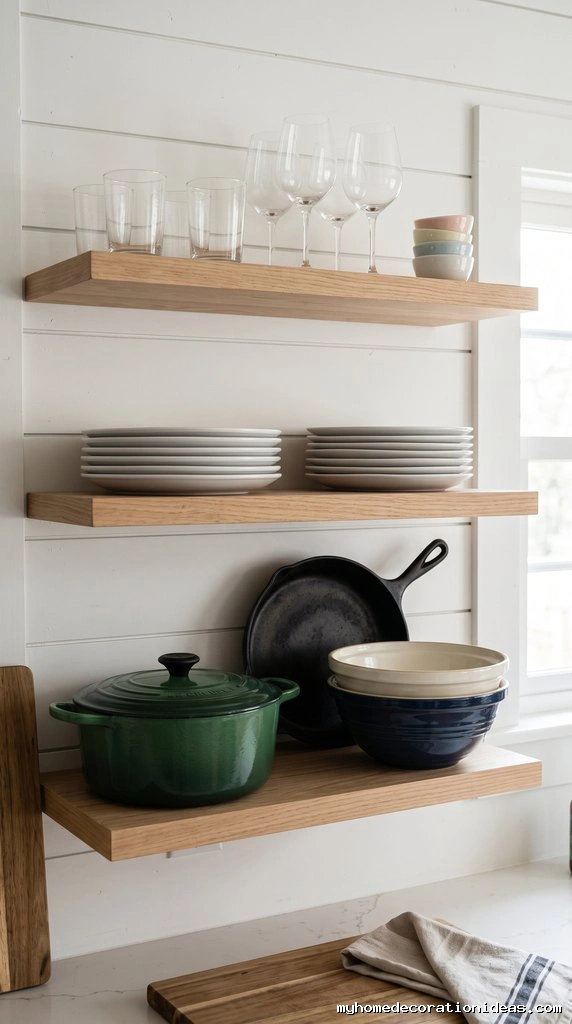
Ground the design by placing heavier elements on lower shelves. Stacking large Dutch ovens, cast iron skillets, and stoneware mixing bowls on bottom tiers establishes a solid foundation for the overall layout.
Position delicate glassware and small ceramic bowls on higher shelves where they appear light and airy. This inverted weight distribution mimics architectural principles of structural stability.
Negative Space Management for Clean Aesthetics
Utilize empty areas around objects to prevent visual clutter and maintain a restful environment. Leave at least thirty percent of each shelf surface completely open and untouched.
Create breathing room between tall groups and low stacks. This deliberate spacing highlights individual decor pieces rather than overwhelming the kitchen walls with clutter.
Functional Zoning Near Cooking and Preparation Areas
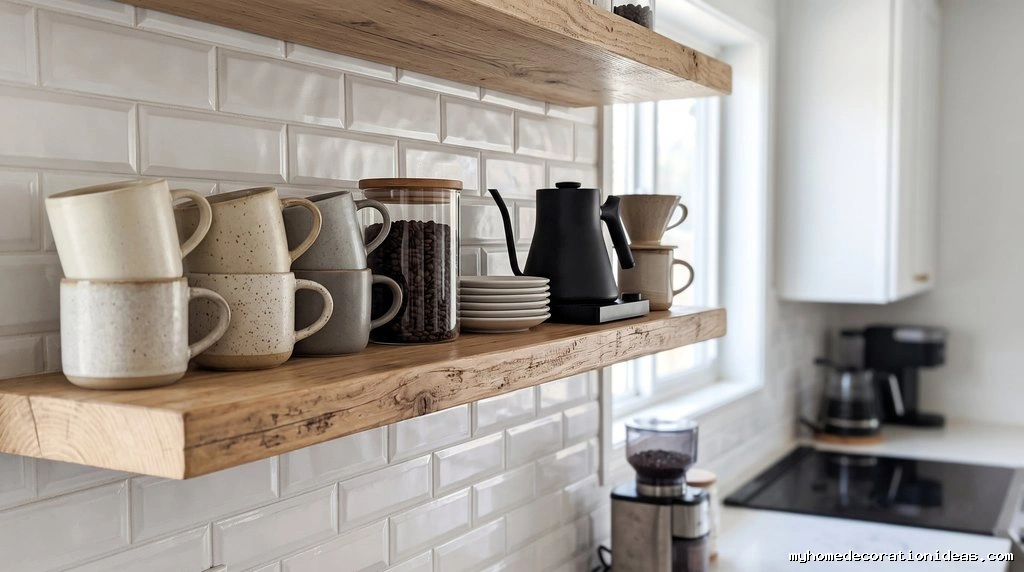
Placing frequently used items within ergonomic reach zones optimizes kitchen workflows. Establish safe distances from high-heat and high-moisture sources to protect stored goods from damage.
Coffee and Beverage Station Configuration
Group mugs, saucers, and coffee canisters near the coffee maker to streamline morning routines. Arrange syrup dispensers and small tools on dedicated low shelves within immediate arm’s reach.
Ensure fast access for morning preparation workflows by keeping filtering accessories and tea tins grouped together in a dedicated beverage zone.
Dinnerware Accessibility and Daily Rotation
Stack everyday plates and bowls at eye level for effortless retrieval during meal times. Rotate seasonal dinnerware to upper or lower storage tiers to keep daily essentials in the primary ergonomic zone.
Keep heavy serving platters within easy reach of the dining table to minimize lifting strain during meal service.
Spice and Cooking Oil Proximity Rules
Maintain safe clearance distances from gas or induction cooktops to protect containers from intense heat and grease splatter. Store dry spices in airtight glass jars protected from direct steam and light.
Utilize shallow 6-inch accent ledges for oil bottles near prep spaces, keeping them away from direct burners to prevent oil degradation.
Maintenance, Grease Mitigation, and Cleaning Schedules
Combating airborne grease accumulation in open-concept kitchen spaces preserves the pristine look of your display items. Protecting wooden surfaces from moisture damage and discoloration requires consistent cleaning habits.
Daily and Weekly Wipe-Down Routines
Use microfiber cloths with mild dish soap to clear surface dust from boards and decorative items. Remove light grease film from metal and glass shelves weekly to prevent sticky residue buildup.
Prevent residue buildup around heavy-use cooking zones by wiping down surrounding surfaces after frying or high-heat cooking sessions.
Deep Cleaning and Re-Sealing Timelines
Strip and re-apply hard-wax oils every twelve to eighteen months on solid wood shelving. Inspect wall bracket screws and anchors for signs of loosening caused by daily vibrations and weight shifts.
Check wood movement and joint stability across solid hardwood boards during seasonal humidity changes. Re-tighten mounting hardware if any minor play develops in the wall brackets.
Managing Airborne Cooking Residue
Optimize range hood ventilation run times during heavy cooking sessions to capture grease before it settles on open shelving. Position delicate paper goods and porous textiles away from active steam and splatter zones.
Select washable dishware that tolerates frequent sanitizing cycles in the dishwasher to keep displayed items clean and safe for food use.
Frequently Asked Questions
How much weight can floating kitchen shelves safely hold?
Standard floating shelves anchored directly into wall studs typically support between 40 and 50 pounds per linear foot. Using heavy-duty internal steel support rods and solid hardwood increases capacity up to 75 pounds per linear foot.
What is the best wood species for open kitchen shelving?
White Oak and Hard Maple rank as top choices due to their high Janka hardness ratings, dense grain structures, and exceptional resistance to moisture absorption and denting.
How high should open kitchen shelves be mounted above the counter?
Mount the lowest open shelf between 18 and 22 inches above the main countertop surface. This provides adequate working room below while keeping everyday items within easy reach.
How do I prevent dust and grease from collecting on open shelves?
Run your range hood every time you cook to capture airborne grease. Regularly rotate and wash your displayed dinnerware and wipe down shelf surfaces weekly with a microfiber cloth and mild soap.
Can I install open shelves on drywall without studs?
Mounting open shelves entirely on hollow drywall without stud engagement is unsafe for heavy kitchen loads. Always anchor brackets into wood studs, use structural plywood blocking, or employ heavy-duty toggle bolts rated for high pull-out forces.
Key Takeaways
- Structural safety requires anchoring shelf brackets directly into wood wall studs or solid plywood blocking.
- Maintain a general load capacity of 40 to 50 pounds per linear foot for standard dishware storage.
- Choose high-density hardwoods like White Oak or Hard Maple with protective polyurethane or hard-wax oil seals.
- Leave at least thirty percent of every shelf open to maintain visual balance and prevent clutter.
- Keep everyday items within an 18 to 22 inch ergonomic zone above counters while staying clear of direct cooktop heat.