
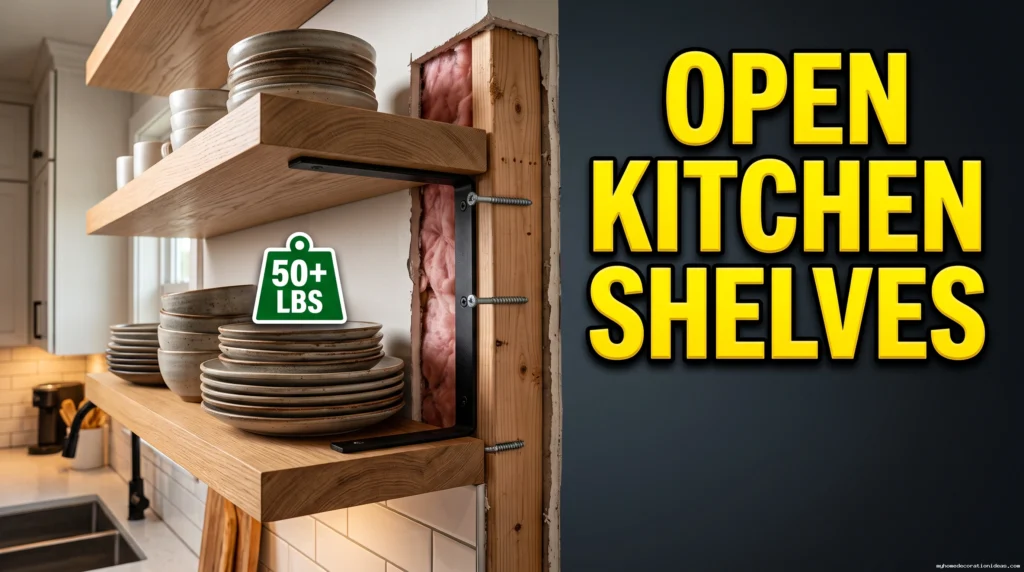
Open kitchen shelving ideas transform cooking spaces from utilitarian zones into curated galleries of culinary function. By eliminating bulky upper cabinetry, homeowners flood their work surfaces with natural light, create an expansive spatial illusion, and establish immediate access to everyday cookware and dining essentials.
Designing an effective open-shelf layout requires balancing structural integrity, material selection, ergonomic zoning, and meticulous styling. Modern interior architecture favors transparency, accessibility, and visual lightness over the heavy, closed-in footprints of twentieth-century cabinetry. Open kitchen shelving traces its roots to traditional sculleries and utilitarian farmhouses where speed of access dictated meal preparation efficiency. Today, this design strategy bridges the gap between commercial restaurant efficiency and residential warmth.
Removing upper cabinets alters the thermal and acoustic dynamics of a room. Sound reverberates differently across exposed drywall or tile backsplashes compared to hollow wooden boxes. , open shelving requires a deliberate curation of belongings. Every plate, bowl, and jar contributes to the visual texture of the interior, demanding a higher standard of organization without sacrificing daily utility.
Structural Engineering and Weight Capacity Fundamentals
Before selecting brackets or wood species, calculate the exact weight loads your shelves must support. A standard stack of twelve heavy stoneware dinner plates weighs approximately twenty-five pounds. Cast iron skillets, ceramic mixing bowls, and Dutch ovens push dead loads past fifty pounds per linear foot. Anchoring methodology must reflect these realistic kitchen demands. If you underestimate the dead weight of your cookware, brackets pull away from the wall framing under torsional force.
Engineering stable ledges means respecting physics. The leverage exerted by a heavy ceramic bowl sitting twelve inches away from the wall multiplies the downward pull on the fasteners. Always distribute heavier items closer to the wall brackets and reserve the outer edges for lighter glassware or decorative pottery.
Stud Anchoring Versus Drywall Toggles
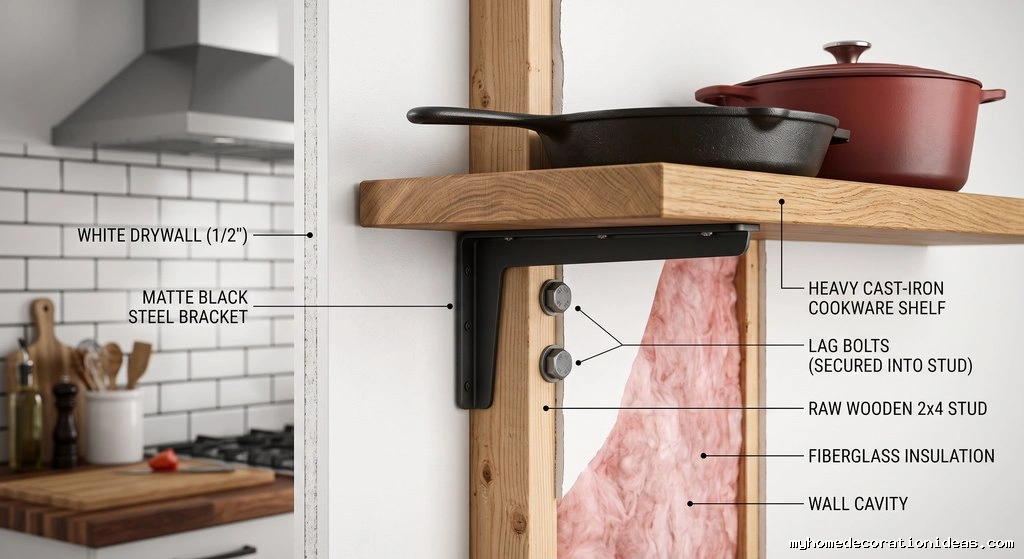
Never rely solely on drywall anchors for kitchen open shelving. Standard gypsum board crumbles under dynamic loads and torque leverage. Always drive heavy-duty structural screws directly into vertical wood wall studs spaced sixteen inches apart on center. When stud placement does not align with your design layout, install an invisible ledger board behind the drywall or deploy heavy toggle bolts rated for shear strength exceeding one hundred pounds.
Plaster walls present unique challenges during installation. Locate hidden plumbing lines and electrical wiring using a digital stud finder before drilling pilot holes. Secure mounting plates with a minimum of three penetration points per bracket to prevent lateral shifting over time.
Calculating Bracket Spacing and Span Limits
Solid wood boards experience natural deflection under load. To prevent sagging, position support brackets no more than thirty-two inches apart for one-inch thick hardwood shelves. For heavier materials like granite or quartz ledges, reduce bracket spacing to twenty-four inches. Ensure your brackets feature diagonal gussets or heavy backplates that distribute downward force across a wider surface area of the wall framing.
Deflection formulas dictate that doubling the thickness of a shelf increases its load capacity by a factor of eight. Choose boards that measure at least one and three-quarter inches thick if you plan to store heavy iron skillets without intermediate brackets cluttering the visual line.
Material Selection Guide for Open Shelving
Choosing the correct raw material dictates both the aesthetic classification and the functional lifespan of your kitchen shelves. Hardwoods offer exceptional load-bearing performance, while engineered products provide dimensional stability in humid environments. Your choice must harmonize with existing countertops, flooring, and hardware finishes.
Consider the daily maintenance profile of each material. Unsealed softwoods absorb moisture quickly, leading to warping or staining near prep sinks, while coated metals and tempered glass resist water intrusion effortlessly.
Solid Hardwoods: Oak, Walnut, and Maple
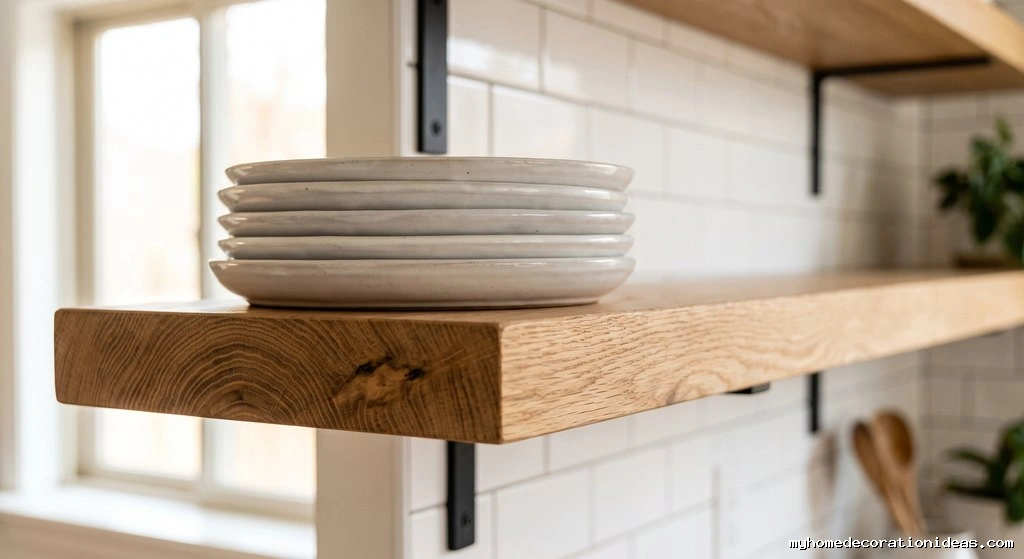
White oak and red oak provide unmatched rigidity and a pronounced grain pattern that hides minor surface abrasions. Walnut delivers deep, chocolate brown tones that ground modern and transitional spaces. Maple offers a fine, uniform texture with high impact resistance, making it ideal for busy family kitchens where dishes slide in and out continuously.
Rustic Reclaimed Timbers
Reclaimed barn beams and old-growth pine inject instant history and organic warmth into stark, contemporary white kitchens. These timbers feature authentic saw marks, nail holes, and surface checks. Seal reclaimed wood with a matte polyurethane or hardwax oil to prevent moisture absorption and grease penetration while preserving its raw tactile appeal.
Industrial Metals and Glass Shelves
Stainless steel, blackened iron, and tempered glass create streamlined, contemporary profiles. Glass shelves maximize vertical illumination by allowing ambient light to pass through multiple tiers. Pair glass with perimeter LED strip lighting to produce a glowing display case effect that elevates glassware collections.
Wood Species Deep Dive: Characteristics and Performance
Every wood species reacts differently to kitchen microclimates characterized by fluctuating humidity, steam, and airborne cooking oils. Understanding these properties ensures your investment stands the test of time.
Pine Characteristics and Limitations
Pine remains a popular, affordable softwood favored for DIY projects. Its pale color and prominent knots suit casual country and farmhouse aesthetics. However, pine possesses lower density. It dents easily and can sag under heavy loads of cast iron cookware. Treat pine with penetrating oils or clear sealants to protect its porous cellular structure.
Cherry Aging and Durability
Cherry wood is prized for its fine grain and rich, warm reddish undertones that darken gracefully over decades of UV exposure. As a hard domestic timber, cherry resists warping and provides excellent structural strength for heavy dinnerware stacks.
Exotic and Specialty Woods: Koa and Padauk
Koa features exquisite shellac qualities and a complex interplay of red and yellow golden hues. African Padauk boasts a striking crimson-orange color that stabilizes into a deep rich brown over time. Both options offer exceptional density and decay resistance for high-end custom kitchens.
Layout Configurations and Kitchen Flow
Arranging open shelving requires careful analysis of workflow triangles and architectural constraints. Poorly placed shelves block natural light or interfere with upper task lighting.
Linear Runs Above Countertops
Maintaining vertical clearance between your countertop and the bottom shelf is crucial. Keep a minimum of eighteen inches of space to accommodate small appliances like espresso machines and stand mixers. Parallel shelf alignments establish an orderly, uninterrupted storage plane.
Window Framing Configurations
Symmetrical shelf placement around kitchen windows maximizes natural light diffusion while keeping everyday drinkware within arm’s reach. Use slender metal brackets in these areas to minimize visual bulk against the glass.
Maximizing Awkward Corners
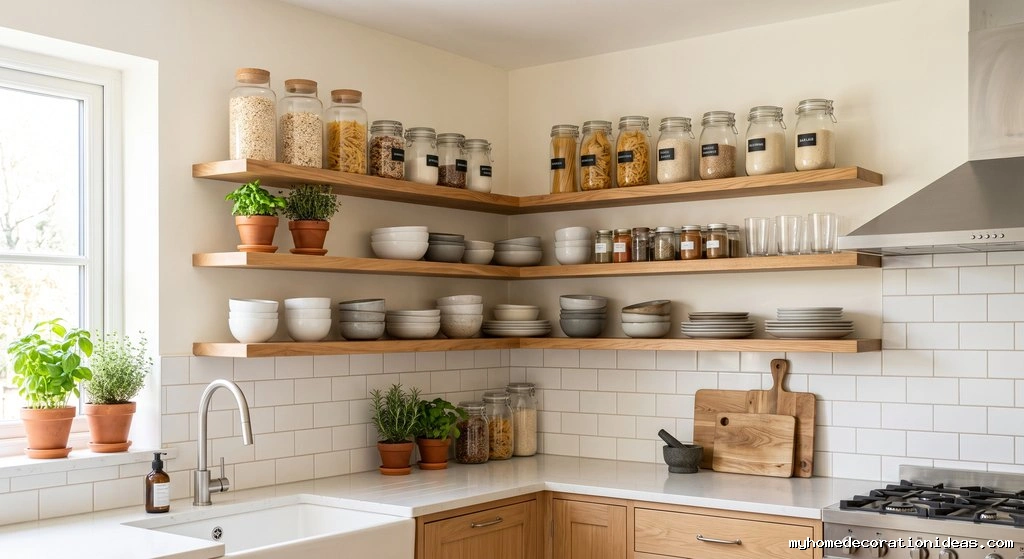
Continuous-angle open shelving for ninety-degree wall junctions softens harsh room geometry. This configuration doubles storage capacity in tight spaces where standard cabinetry fails to fit properly.
Ergonomic Zoning and Workflow Efficiency
Organize your open shelving based on frequency of use and specific culinary tasks rather than random aesthetics.
The Coffee and Beverage Station
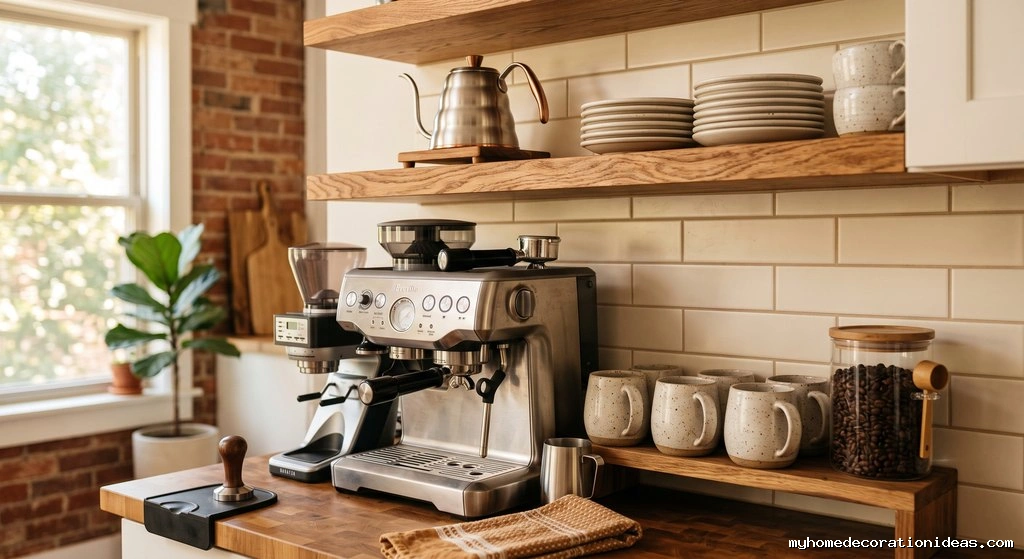
Centralize mugs, saucers, and bean canisters on a lower shelf near your coffee maker. This simple adjustment eliminates unnecessary steps during morning routines.
Cookware Versus Tableware Zoning
Position heavy cast iron and mixing bowls at waist level to protect your back. Separate fine dining displays from daily grab-and-go items by placing formal porcelain on upper tiers.
Maintenance and Grease-Mitigation Protocols
Combatting airborne cooking oils and dust accumulation near cooktops requires proactive maintenance.
Range Hood Proximity Rules
Maintain a minimum safe horizontal distance of twenty-four inches between open shelves and active cooktops. High-velocity ventilation capture zones reduce surface grease accumulation on exposed wood.
Cleaning and Sealing Routines
Apply hardwax oil or matte polyurethane every twelve months to maintain water resistance. Wipe shelves down daily with a damp microfiber cloth to prevent dust from bonding with cooking vapors.
| Wood Species | Density / Hardness | Best Kitchen Application | Maintenance Requirement |
|---|---|---|---|
| White Oak | High (1360 Janka) | Heavy dinnerware & everyday use | Annual hardwax oil wipe |
| Walnut | Medium-High (1010 Janka) | Decorative displays & glassware | Biannual conditioning |
| Pine | Low (420 Janka) | Light accessories & accent pieces | Immediate spill cleanup, clear seal |
| Stainless Steel | Impervious | Industrial prep zones & heavy pans | Daily degreasing spray |
Frequently Asked Questions
How much weight can standard open kitchen shelves hold?
When properly anchored into structural wall studs using heavy-duty brackets, solid hardwood shelves easily support forty to fifty pounds per linear foot. Always check the manufacturer specifications for your chosen hardware.
Do open shelves get greasy near the stove?
Yes, airborne grease settles on surfaces near cooking zones. Mitigate this by installing shelves outside the direct thermal plume of the cooktop, maintaining adequate clearance, and using a high-CFM range hood.
What is the ideal thickness for wood open shelving?
One and three-quarter inches is the industry standard for strength and visual weight. Thinner boards measuring three-quarters of an inch require closer bracket spacing to prevent sagging.
How do I style open shelves without cluttering the kitchen?
Group items by color family, mix vertical plates with horizontal stacks, and incorporate functional containers like glass jars to keep the overall look cohesive and deliberate.