
Mirrors do more than check outfits. They manipulate light, alter perceived dimensions, and anchor design aesthetics in interior styling. Selecting and placing bedroom mirrors requires an understanding of scale, reflection physics, and spatial psychology. This guide details structural mirror techniques, frame selections, and placement strategies to turn ordinary sleeping quarters into dynamic, light-filled sanctuaries.
Integrating reflective surfaces alters how the human eye perceives volume and illumination. Light bouncing off a clear glass surface multiplies photons in a room, cutting down the dependence on artificial lighting during daylight hours. Placing a mirror across from a primary light source doubles the luminous output in a bedroom.
The Psychological and Optical Impact of Bedroom Mirrors
Small or narrow bedrooms suffer from claustrophobic layouts. Installing vertical floor mirrors or wide horizontal panels tricks the visual cortex into reading the reflection as additional square footage. A full-length glass pane mounted on a closet door or leaning against a blank side wall creates a vanishing point that expands tight floor plans without demolition.
Window placement dictates mirror positioning. To maximize solar gain, mount a mirror perpendicular or opposite to the bedroom window. This setup catches incoming rays and guides them deeper into dark corners. Avoid placing reflective elements where they capture harsh glare or direct sunlight onto sleeping zones, which causes unwanted morning disruptions.
Choosing the Right Mirror Shape for Your Bedroom Architecture
Geometry dictates mood. Hard architectural lines benefit from soft curves, while sterile square spaces gain character from angular and geometric frames. Match mirror shapes to existing furniture silhouettes for a cohesive design language.
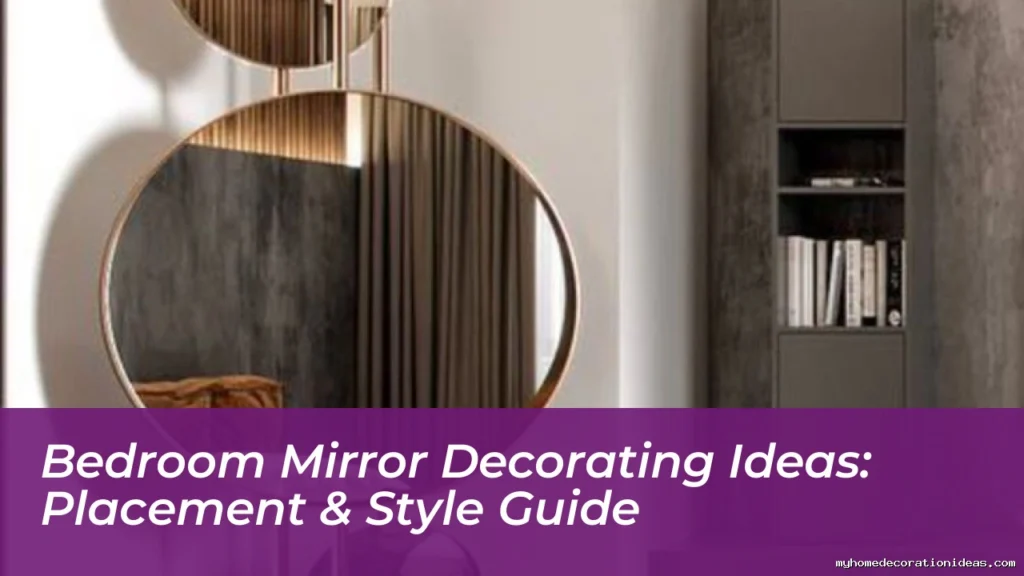
Circular glass breaks up the monotonous boxy lines created by beds, nightstands, and wardrobes. Hanging an oversized round mirror above a headboard or a vintage dresser draws the eye upward and softens sharp corners. Diameters ranging from 36 to 48 inches deliver optimal visual weight without overwhelming standard wall space.
Arched designs mimic classic architectural windows, adding height and elegance to flat walls. Standing floor models measuring 60 to 72 inches tall provide functional full-body checks while introducing a stately, curated aesthetic.
Hexagonal, octagonal, and free-form blob mirrors inject contemporary energy into minimalist sleeping spaces. Grouping smaller geometric mirrors in a modular array creates an eye-catching focal wall that replaces traditional canvas artwork.
Strategic Placement Strategies: Where to Hang and Where Not To
Location determines success or failure in mirror decorating. Improper placement creates visual clutter, awkward reflections, or sleep disruptions.
| Placement Location | Primary Benefit | Design Consideration |
|---|---|---|
| Opposite a Window | Maximizes natural light and expands view | Ensure it does not catch blinding direct glare |
| Above the Headboard | Acts as a statement focal point | Keep weight secure; use heavy-duty wall anchors |
| Directly Facing the Bed | None | Avoid to prevent restless sleep and jarring morning views |
| Inside Closet Doors | Maximal daily utility and hidden profile | Requires sturdy sliding or pivot hardware |
Interior experts advise against positioning mirrors directly opposite the bed. Reflective surfaces bouncing movement back toward the sleeper can trigger subconscious alertness and disturb sleep cycles. Instead, angle mirrors toward adjacent walls, dressing tables, or reading nooks.
Flanking a central bed with matching bedside wall mirrors or slender floor lamps creates visual symmetry. This technique works exceptionally well in master suites, establishing an orderly, upscale hotel vibe.
Frame Materials and Finishes: Matching Your Decor Style
The frame acts as the boundary between the reflection and the room. Selecting the appropriate material ties the mirror into your existing color palette and texture scheme.
Unfinished oak, weathered barn wood, and rattan frames introduce warmth and organic texture. These finishes anchor bohemian, rustic, and farmhouse bedroom schemes, contrasting sharply against crisp white or neutral linens.
Matte black iron, polished brass, and brushed nickel frames elevate modern, industrial, and transitional spaces. Match your mirror frame finish to existing drawer pulls, lighting fixtures, and hardware for a unified aesthetic.
Intricate, carved plaster or gilded frames serve as functional art. In eclectic or traditional bedrooms, a heavily detailed vintage mirror commands attention and injects historical character into plain drywall.
Creative DIY Mirror Upgrades for Personal Expression
Customizing standard, budget-friendly mirrors allows homeowners to achieve bespoke designer looks without high retail costs. Simple modifications yield professional-grade results.
- Purchase an inexpensive, frameless rectangular or round mirror from a home goods supplier.
- Clean the outer glass and edges thoroughly with rubbing alcohol to remove oils and dust.
- Attach wooden molding, trim pieces, or thick nautical rope around the perimeter using heavy-duty construction adhesive.
- Apply custom paint, wood stain, or metallic leafing to the new frame to match your bedroom color scheme.
- Allow the adhesive and finish to cure completely before mounting the piece securely to wall studs.
Create dimensional shadowboxes by mounting a smaller decorative mirror directly over a larger, plain glass base using heavy-duty adhesive strips. This technique works well above bedroom dressers and vanity consoles, creating multi-tiered reflection planes.
Lighting Integration: Backlighting and Sconces
Mirrors require proper illumination to function effectively after dark. Ambient lighting positioned around reflective surfaces eliminates harsh shadows and highlights frame details.
Integrated LED strips hidden behind frosted or offset mirror edges provide clean, shadow-free illumination. These systems offer adjustable color temperatures, shifting from warm relaxation glows to cool functional task lighting.
Mounting hardwired or plug-in wall sconces on both sides of a dresser mirror introduces balanced vertical light. Position fixtures at eye level, roughly 60 inches from the floor, to ensure optimal face illumination during grooming routines.
Maintaining Pristine Reflections and Safe Installation
Dust, fingerprints, and humidity degrade mirror clarity over time. Maintain streak-free glass by using a microfiber cloth and a solution of equal parts distilled water and white vinegar. Avoid spraying ammonia-based cleaners directly onto framed mirrors, as liquid seepage ruins the silver backing over time.
Hang wall mirrors so the center point rests roughly at eye level, about 60 to 65 inches from the floor. Leave at least a 6 to 12-inch clearance gap between the base of the mirror and furniture surfaces like dressers or headboards.
Locate wall studs using an electronic finder for heavy mirrors. Drive structural screws or toggle bolts directly into wood framing to prevent detachment and ensure absolute household safety.
Frequently Asked Questions
Is it bad Feng Shui to have a mirror in the bedroom?
Traditional Feng Shui advises against placing mirrors where they reflect the bed directly, as this is believed to drain personal energy and invite restless sleep. Placing mirrors on side walls or inside wardrobes resolves this issue.
How high should a bedroom mirror be hung above a dresser?
Hang the mirror so the bottom edge sits 4 to 8 inches above the top surface of the dresser. This creates visual breathing room and protects the wood finish from moisture.
What is the best way to clean a foggy bathroom or bedroom mirror?
Use a microfiber cloth dampened with a mixture of equal parts white vinegar and distilled water. Wipe in a grid pattern rather than circles to eliminate streaks.
Key Takeaways
- Mirrors multiply natural light, making compact bedrooms feel bright and spacious.
- Avoid placing reflective surfaces directly across from the bed to support restful sleep.
- Match mirror shapes and frame materials to existing hardware for a cohesive interior style.
- Secure heavy mirrors directly into wall studs using appropriate hardware for safety.
Transforming your sleeping quarters with the right mirror placement and design elevates both functionality and visual appeal. Assess your room layout today, choose a complementary frame style, and watch your bedroom open up to new aesthetic possibilities.