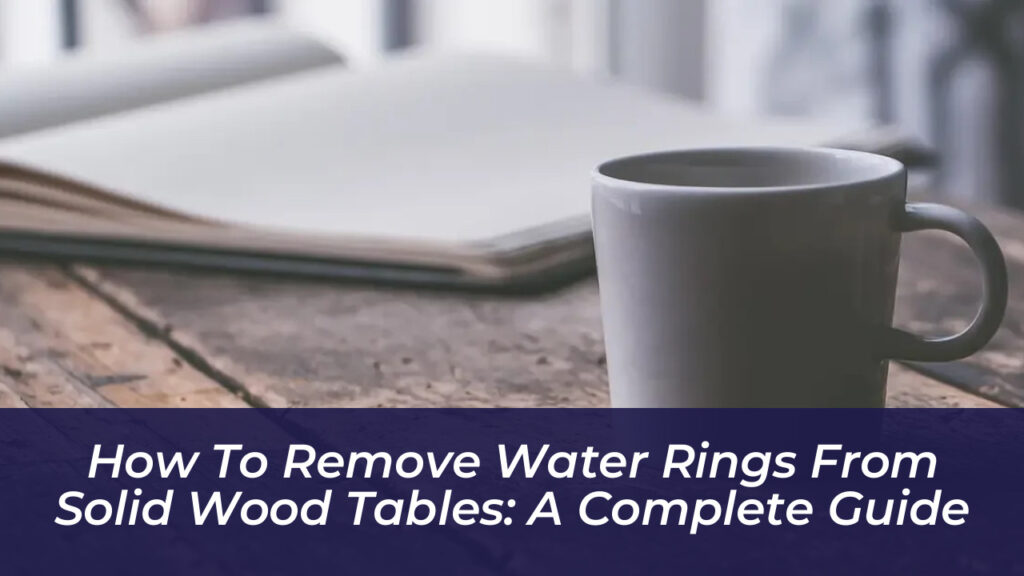
Finding a cloudy white ring on your favorite wood table is a common frustration, but it is rarely a reason to panic. Most water marks are not permanent damage to the wood itself; they are simply moisture trapped within the protective finish. By identifying the type of stain and choosing the right approach, you can restore your furniture’s original luster without calling a professional.
Distinguishing Between Water Rings
Before you start, you must identify what you are dealing with. Water damage on wood generally falls into two categories, each requiring a different strategy.
White Water Rings
These appear as milky, hazy, or white rings. They occur when moisture is trapped between the top layer of the finish and the wood surface. Because the water hasn’t penetrated the wood fibers, these are usually easy to fix. They often respond well to mild heat or oil-based treatments that draw the moisture out.
Dark Water Stains
If the spot is dark brown or black, the situation is more serious. This color shift happens when water has bypassed the finish and soaked into the wood grain, reacting with the natural tannins. These stains are stubborn and often require sanding or wood-bleaching agents.
The Diagnostic Test
Always test your method on an inconspicuous area, such as the underside of the table, first. To see if a stain is surface-level, wipe the area with a slightly damp cloth. If the ring disappears while wet but reappears as it dries, it is a surface-level white ring. If the dark color remains unchanged regardless of moisture, the stain has reached the wood fibers.
Removing White Water Rings
The Iron and Cloth Technique
This method uses gentle, dry heat to turn trapped moisture into vapor so it can escape through the finish.
- Lay a clean, dry cotton cloth-like an old t-shirt-over the stain.
- Set your iron to a low or medium heat setting.
- Ensure the steam function is off and the water reservoir is empty.
- Press the iron onto the cloth for 10 to 15 seconds, keeping it moving to prevent scorching.
- Lift the cloth to check your progress. Repeat if necessary, but never let the iron sit stationary on the wood.
The Oil-Displacement Method
For older or delicate finishes, oils can penetrate the surface and displace trapped water.
- Apply a generous layer of full-fat mayonnaise or petroleum jelly directly onto the ring.
- Let it sit for several hours, or ideally, overnight.
- Wipe away the excess with a soft cloth.
- Buff the area gently with a dry rag to restore the shine.
Baking Soda Paste
For light haziness, a mild abrasive can help. Mix a small amount of baking soda with a few drops of water to create a thin paste. Rub it gently with the grain, use minimal pressure to avoid scratching, and wipe clean with a damp cloth immediately after.
Addressing Stubborn Dark Water Stains
Spot Refinishing
If the stain is localized, you can often repair it without stripping the entire table. Use 220-grit sandpaper to carefully remove the finish over the affected area until you reach raw wood. Once the dark stain is gone, clean the area with denatured alcohol. You will then need to apply a matching wood stain and a new layer of protective topcoat, such as polyurethane or varnish, to blend the repair with the surrounding finish.
Using Wood Bleach
For deep, dark oxidation, oxalic acid (wood bleach) is the industry standard. It neutralizes the dark tannins in the wood. Wear gloves and eye protection, apply the solution, let it dry, and rinse thoroughly. Because this process removes the finish, you will need to re-seal the area once it is completely dry.
Preventing Future Damage
- Use Coasters: Make it a habit to use coasters for all glasses, especially those that “sweat” in warm rooms.
- Use Trivets: Never place hot mugs or dishes directly on a wood surface, as heat can soften the finish.
- Blot Spills Immediately: Never let liquid sit on the surface. Wipe it up with a dry cloth as soon as you notice it.
- Apply Furniture Wax: Apply a high-quality furniture wax every few months to create a moisture-resistant barrier.
- Check Plant Pots: If you keep plants on your table, ensure they are in leak-proof saucers. Even a small amount of condensation under a pot can cause significant damage over time.
When to Call a Professional
If the table is a valuable antique, the finish is a rare material, or the water damage covers a large percentage of the surface, consult a professional furniture restorer. They have the tools to achieve a seamless result without risking further damage to the piece.