Architectural quirks like sloping ceilings and angled windows bring undeniable character to a room, yet they present a distinct design puzzle. Standard curtain rods and off-the-shelf panels rarely align with uneven walls, leaving awkward gaps or drooping fabrics that ruin the visual flow. Addressing these unique spaces requires a blend of precise measurements, specialized hardware, and creative thinking to turn an awkward structural angle into a stunning focal point.
Assessing Your Sloping Ceiling and Window Geometry
Before buying hardware or fabric, evaluate the exact dimensions and geometry of the space. Sloping lines, vaulted expanses, and asymmetrical walls demand careful planning.
- Measure the Frame Width: Record both the widest span at the top of the window frame and the bottom width to check for tapering.
- Calculate the Angle: Measure the vertical distance from the top window frame to the highest point of the sloped ceiling using a steel tape or laser measurer.
- Identify Obstructions: Check for nearby radiators, structural beams, or built-in furniture that might restrict the movement of fabric.

Choosing the Best Hardware for Angled Windows
Standard horizontal rods will fail on a slanted wall because they cannot adapt to changing elevations. Selecting the right hanging mechanism ensures smooth operation and a clean aesthetic.
Flexible Curtain Tracks
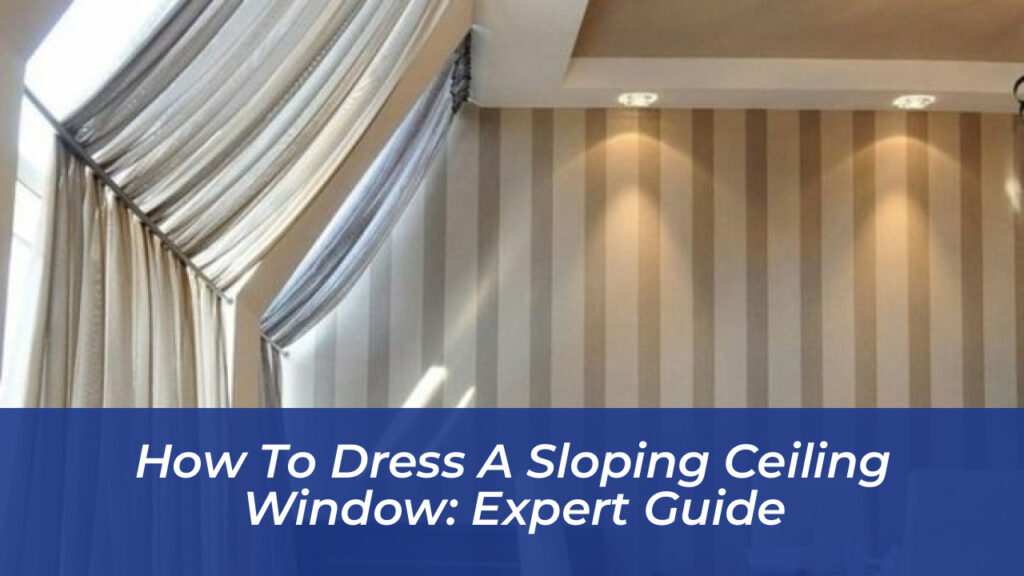
Bendable aluminum or PVC tracks serve as one of the most reliable solutions for angular architecture. These tracks can be physically curved to mirror the exact pitch of your ceiling. They mount flush against the surface, offering a minimalist profile that lets the window remain the star of the room.
Sloped Ceiling Brackets and Custom Rods
If you prefer a classic rod-and-ring setup, look for adjustable extension rods paired with specialized pivoting brackets. These brackets allow the mounting angle to rotate, ensuring the rod follows the precise slant of the ceiling without placing unnatural stress on the wall anchors.
Ceiling-Mounted Systems
In rooms where the window sits directly beneath a steep vault, mounting the treatment directly to the ceiling rather than the wall creates a seamless vertical drop. This technique elongates the apparent height of the room and masks asymmetrical wall heights.
Selecting Fabrics for Function and Style
The angle of a sloping window often means it receives direct, unfiltered sunlight for hours at a time. Fabric choice dictates both room comfort and aesthetic longevity.
- Blackout and Thermal Linings: Essential for attic bedrooms or media spaces to block intense sunlight and trap indoor heat during winter.
- Linen and Cotton: Ideal for living areas and home offices where filtered natural light and an airy, casual ambiance are preferred.
- Velvet and Heavy Brocade: Add weight and luxury while muffling echoes in rooms with high, hard-surface vaulted ceilings.
Step-by-Step Installation Guide
Hanging window treatments on a sloped surface requires patience and accuracy. Follow these steps to secure a professional-grade finish.
- Mark Anchor Points: Hold your track or rod against the ceiling or wall following the angle line. Use a pencil and a laser level to mark bracket positions at even intervals.
- Drill and Secure Anchors: Insert heavy-duty drywall anchors or toggle bolts into the marked positions. Slanted installations experience lateral pull, making secure anchoring mandatory.
- Install the Hardware: Mount the pivoting brackets or bendable tracks securely into the pre-drilled anchors, tightening all screws firmly.
- Hang and Adjust Panels: Thread your curtains onto the rod or attach them to track gliders. Check that the panels overlap correctly and fall evenly along the angle.
- Add Weights and Tiebacks: Sew magnetic or lead weights into the bottom hems if air currents cause the panels to swing. Use decorative tiebacks to secure the fabric neatly when opened.
Alternative Treatments for Extreme Angles
Fabric panels do not suit every angled window layout. If your windows feature sharp, triangular, or trapezoidal frames, alternative treatments offer clean lines and precise light management.
Cellular or pleated shades can be custom-cut to fit precise geometric angles, providing superior insulation and glare reduction. Motorized shades offer an exceptional upgrade for high, hard-to-reach vaulted windows, allowing you to control privacy and light levels with the touch of a remote button or a smartphone app.