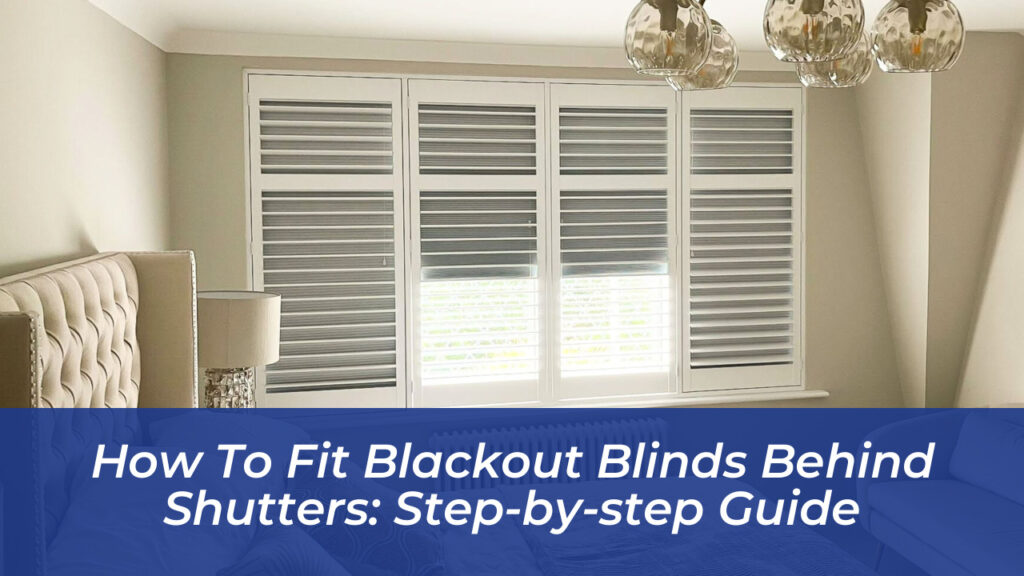
Plantation shutters bring timeless architectural style and precise light control to any interior, but they share one common limitation. Even when fully closed, traditional louvres permit a soft halo of light to filter through the gaps. For shift workers, parents with young children, or anyone seeking absolute darkness for deep sleep, this light bleed can prove frustrating. Fortunately, you do not need to tear out your existing window treatments to fix the problem. By installing blackout blinds discreetly behind your shutters, you can achieve the best of both worlds: the stunning aesthetic of wood or PVC shutters by day, and complete room-darkening performance by night.
Why Combine Shutters and Blackout Blinds?
Pairing a blackout blind with an existing shutter setup solves the inherent light-leakage issues of traditional slatted window coverings without sacrificing home decor. While shutters excel at directing sunlight and providing daytime privacy, they are physically incapable of achieving a true one-hundred-percent blackout rating due to the operational gaps around panels and louvres.
Retrofitting a secondary light-blocking layer introduces several distinct advantages:
- Complete Darkness: The secondary blind covers the primary window glass completely, eliminating the morning halo effect.
- Enhanced Thermal Insulation: Trapping air between the window pane, the blackout blind, and the shutter panel significantly improves window energy efficiency.
- Preservation of Existing Decor: You keep the expensive shutters you already love, avoiding the cost and hassle of a full replacement.
- Dual-Functionality: Roll the blind away during daylight hours to let maximum sun into the room, then drop it down at bedtime.
Assessing Recess Depth and Space Requirements
The entire feasibility of this project hinges on a single physical measurement: your window recess depth. When you mount a blackout blind behind an operational shutter frame, you need adequate space between the window glass and the back of the shutter structure to accommodate both the blind headrail and its side channels.
Standard plantation shutters mounted inside a window recess generally require a minimum depth of 50mm simply to let the louvres rotate freely. Adding a blind directly behind them demands additional clearance:
| Blind Type | Minimum Total Recess Depth Required |
|---|---|
| Slimline Honeycomb Pleated Blinds | 65mm to 70mm |
| Standard Blockout Roller Blinds | 75mm to 85mm |
| Tru-Fit / Perfect-Fit Systems | Clips directly to window sash (minimal recess required) |
Take a steel tape measure and measure from the innermost edge of your shutter frame back to the glass pane. If your measurement falls below the required threshold, standard free-hanging blinds will block your shutter louvres from opening properly.
Checking for Hidden Obstructions
Raw recess depth is only half the battle. Many windows feature physical hardware that intrudes into the installation zone. Before ordering any materials, inspect your window frame carefully for common obstructions:
- Window Handles: Standard protruding crank handles or lever locks will catch on a blind headrail or tear the fabric as it lowers. Consider swapping bulky handles for low-profile, slimline alternatives.
- Winders and Vent Trickles: Manual window winders or security locks can prevent a blind channel from sitting flush against the window reveal.
- Uneven Walls: Older properties often feature out-of-square window frames. Measure the depth at multiple points-top, middle, and bottom-and base your plans on the narrowest measurement.
Selecting the Right Blind Style for the Job
Choosing the correct blind mechanism determines whether your dual-layer window treatment operates smoothly or jams constantly.
Free-Hanging Honeycomb Pleated Blinds
Honeycomb or cellular pleated blinds are exceptionally lightweight and fold into a remarkably compact stack at the top of the window. Their single or double-cell structure also adds a valuable layer of thermal insulation. Because they operate on tension cords or simple pull mechanisms, they fit nicely into shallower gaps than bulky roller tubes.
Roller Blinds with Side Channels
If you want absolute maximum light blockage, a cassette roller blind equipped with side guide channels is unmatched. The fabric locks securely inside vertical tracks, preventing light from leaking around the left and right edges. However, the cassette housing at the top is generally thicker, demanding a deeper window recess.
Tru-Fit or Perfect-Fit Clip Systems
If your window recess is too shallow to fit anything behind the shutter frame, look into tensioned pleated blinds that clip directly onto the window beads using specialized brackets. These move in unison with the window glass itself, sitting completely behind the shutter panels without requiring extra depth in the main wall recess.
Step-by-Step Installation Process
Once you have verified your measurements, cleared any hardware obstructions, and ordered your custom-sized blackout blinds, you can begin the installation process.
- Clear the Workspace: Open your shutter panels fully or remove them entirely by lifting the hinge pins if your specific model allows for easy detachment. This gives you unobstructed access to the window glass and reveal.
- Test Fit the Blind Headrail: Hold the blind headrail or cassette in position directly behind where the shutter frame sits. Ensure it clears any window handles and leaves enough clearance for the shutter louvres to tilt without friction.
- Mark and Drill Fixing Points: Use a pencil to mark your screw holes against the top of the recess or the inside frame. Pre-drill pilot holes to prevent wood splitting or masonry cracking.
- Secure the Brackets and Blind: Screw the mounting brackets firmly into place. Click or slide the blackout blind headrail securely into the brackets.
- Install Side Channels (If Applicable): Peel the adhesive backing or screw in the side guide tracks. Ensure they run vertically straight down the window frame so the blind fabric feeds smoothly without snagging.
- Rehang and Test: Reattach your shutter panels if you removed them. Lower the blackout blind completely while keeping the shutter closed to inspect for any stray light leaks. Adjust tension or alignment as needed.
Alternative Solutions If Depth Is Lacking
If your window recess is rigidly shallow and physical alterations like swapping window handles are impossible, you do not have to abandon your dream of a dark bedroom. Consider these reliable workarounds:
External Recess Blinds: Instead of mounting the blackout blind behind the shutters inside the recess, mount a sleek roller blind on the wall directly above the outside of the window frame. During the day, roll it up so it hides cleanly above the trim; at night, drop it down over the entire shutter structure.
Pairing with Blockout Curtains: Hang a ceiling-mounted curtain track just outside the window frame and pair your shutters with heavy floor-length blackout drapes. This creates a luxurious, hotel-style aesthetic that softens the structured lines of the shutters while trapping escaping light effectively.
By carefully measuring your recess, accounting for handle clearances, and selecting a slimline cellular or cassette blind, you can successfully layer blackout functionality behind your plantation shutters and enjoy truly restorative, pitch-black sleep.