
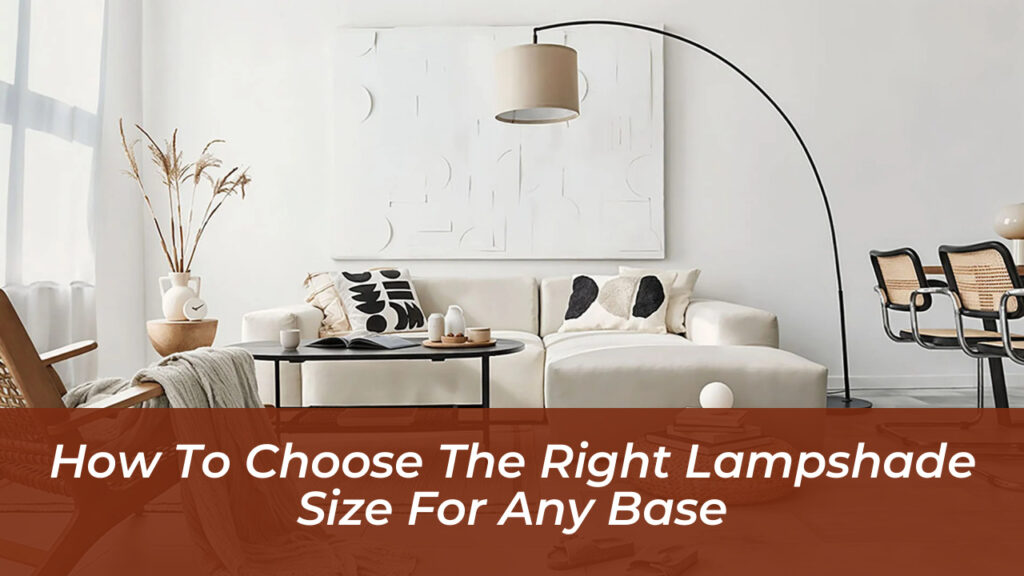
Pairing the right lampshade with a lamp base is one of those subtle interior design details that can completely make or break a room. When the scale is off, an otherwise stunning lamp can look awkward, top-heavy, or surprisingly underwhelming. Yet, finding that sweet spot of proportion often feels like guesswork. Fortunately, professional decorators rely on concrete mathematical ratios and visual guidelines to take the mystery out of the process. By understanding how height, width, shape, and room scale interact, you can transform a disjointed lighting fixture into an intentional statement piece that elevates your entire living space.
The Foundation: Understanding Lamp Proportions
Before diving into styles, fabrics, or colors, you must establish a baseline of proportion between the shade and the base. Think of the lamp as a single sculptural silhouette rather than two separate parts. If the shade is far too wide, it swallows the base entirely. If it is too small, the fixture looks like an amateur DIY project.
The time-tested rule of thumb for height is the two-thirds ratio. Ideally, the vertical height of your lampshade should measure roughly two-thirds (or about 60 to 70 percent) of the height of your lamp base. To measure this accurately, find the distance from the very bottom of the ceramic, wooden, or metal base up to the point where the shade actually attaches-typically the top of the saddle or the base of the socket. Calculating two-thirds of that specific measurement gives you the target vertical height for your shade.
Width is just as critical for achieving a stable, visually pleasing look. As a general standard, the widest part of your lampshade-which is almost always the bottom opening-should measure approximately twice the width of the widest part of your lamp base. For example, if your ceramic gourd base spans six inches across at its widest point, you should search for a shade with a bottom diameter hovering around twelve inches. This double-width rule creates a stable triangular footprint that feels grounded to the eye.
Mastering Accurate Measurements
To shop successfully for a replacement lampshade, you need to gather precise measurements. Eyeballing dimensions online or in a showroom almost always leads to installation disappointment. Grab a reliable steel tape measure and record these three vital dimensions:
- Top Diameter: The edge-to-edge measurement across the top opening of the shade.
- Bottom Diameter: The edge-to-edge measurement across the widest bottom opening.
- Slant Height: The straight-line distance measured along the slanted side of the shade from the top rim down to the bottom rim.
Beyond the shade itself, you must account for the hardware hidden beneath it. The harp-the vertical wire structure that arches over the light bulb-plays a massive role in how high or low your shade sits. When the shade is fully installed, the top rim should rest comfortably at or slightly above the top of the bulb socket. If the harp is too short, the shade sits low and exposes blinding hardware; if it is too tall, unsightly gaps appear between the base and the shade.
Tailoring Sizes by Lamp Type
Different lighting fixtures serve entirely different purposes around the house, which directly influences how you should size and position their shades.
Table Lamps
Table lamps are the workhorses of ambient and accent lighting. For standard bedside tables or living room sideboards, aim for drum or empire shades with a bottom diameter falling between 12 and 16 inches. Ensure that the drop-the vertical height of the shade-is deep enough to completely conceal the bulb and socket assembly from a seated viewing angle. Nothing ruins a cozy evening faster than a harsh glare cutting straight into your eyes from an exposed bulb.
Floor Lamps
Floor lamps operate on a much grander scale and require significantly more visual weight to look intentional. Because they stand tall in open corners or beside substantial armchairs, floor lamp shades frequently measure 18 inches or wider at the bottom. The total height of the shade should generally equal roughly one-third to one-half of the floor lamp’s overall vertical span. A generous shade helps diffuse light outward across the room rather than trapping it in a tight, awkward beam.
Matching Shade Shapes to Base Silhouettes
Proportion is not simply a matter of inches and centimeters; shape geometry dictates how the human eye perceives volume and balance. Pairing conflicting geometries can make a lamp look chaotic unless it is executed as a deliberate avant-garde design choice.
- Round and Gourd Bases: These classic, curved forms look exceptionally natural when paired with traditional empire, bell, or tapered drum shades. The soft curves echo one another to create a harmonious silhouette.
- Square and Rectangular Bases: Geometric bases require matching lines to maintain a clean, modern aesthetic. Pair squared-off ceramic or metal bases with square or rectangular shades whose diagonal dimensions roughly align with the width of the base below.
- Tall, Slender Stick Lamps: Minimalist column lamps need narrow drum shades or slightly tapered cylinders. Avoid overly wide coolie shades, which will cause the slender base underneath to look fragile and unstable.
- Ornate, Sculptural Bases: If your lamp base features intricate carvings, bold colors, or complex textures, let it take center stage. Pair it with a simple, unadorned white or cream drum shade to prevent visual clutter.
Evaluating Light Distribution and Function
The physical size and structural opacity of your lampshade directly control how illumination behaves in your living space. Selecting a massive shade made of heavy, dark fabric might look balanced on a large wooden base, but it will choke out valuable lumens in a dim reading nook.
Consider the functional demands of the room. Task lighting, such as a desk lamp or a reading chair light, benefits from slightly narrower or open-top shades that direct a focused downward beam. Conversely, living room ambient lighting thrives on wider, translucent drum shades crafted from linen, silk, or fine parchment. These materials allow a warm, diffused glow to filter outward through the sides of the fabric while simultaneously bouncing soft light off the ceiling and floor.
Accounting for Room Scale
A lampshade that looks perfectly proportioned on a showroom floor can feel completely wrong once placed inside your home if you ignore the surrounding architecture. Room scale matters immensely.
In compact apartments or cozy, low-ceilinged bedrooms, oversized statement shades can easily crowd the visual field, making the entire space feel cramped and cluttered. Stick to streamlined drum shades or modest empire profiles that blend seamlessly into the room’s footprint. On the flip side, vast open-concept living areas with vaulted ceilings demand bold lighting choices. A small, delicate shade placed on a heavy console table in a cavernous room will simply disappear into the negative space. Do not hesitate to scale up your lampshade diameter if you are styling a large, airy room with substantial furniture.
Common Pitfalls to Avoid
Even seasoned interior enthusiasts occasionally fall into classic styling traps when swapping out old lampshades. Keep these frequent missteps in mind to ensure a flawless result on your first try:
- Ignoring the Harp Adjustment: Buying a gorgeous new shade without checking your harp height often leads to a floating or sunken appearance. Always be prepared to swap out a $5 harp if your new shade requires a different drop length.
- Focusing Exclusively on the Bottom Width: While bottom diameter is critical, ignoring the top diameter on tapered shades can throw off the entire slope and make the fixture look lopsided.
- Forgetting the Purpose: Never sacrifice function for fashion. Choosing a pitch-black, opaque drum shade for a dedicated reading lamp will leave you squinting in the dark.
- Pattern Clashes: Pairing a heavily patterned textile shade with an equally busy patterned base creates intense visual competition. Balance is achieved when one element acts as the hero while the other supports it.
Step-by-Step Selection Summary
When you are finally ready to purchase your next lampshade, run through this quick, foolproof checklist to guarantee a successful pairing:
- Measure the height of your lamp base from the bottom up to the socket, and calculate 60 to 70 percent of that number for your ideal shade height.
- Measure the widest part of your base and multiply it by two to determine your ideal minimum bottom shade diameter.
- Assess the geometric profile of the base and select a matching shade shape (round to round, square to square).
- Verify that your harp and socket hardware will adequately support the new drop length without exposing bulbs or leaving unsightly gaps.
- Factor in room size and lighting functionality to determine whether you need translucent ambient glow or focused task illumination.
Taking a methodical approach to selecting your lampshade ensures that your lighting fixtures do far more than just brighten a dark corner. With the right proportions, your lamps will act as sophisticated design anchors that pull your entire room’s decor together with effortless elegance.